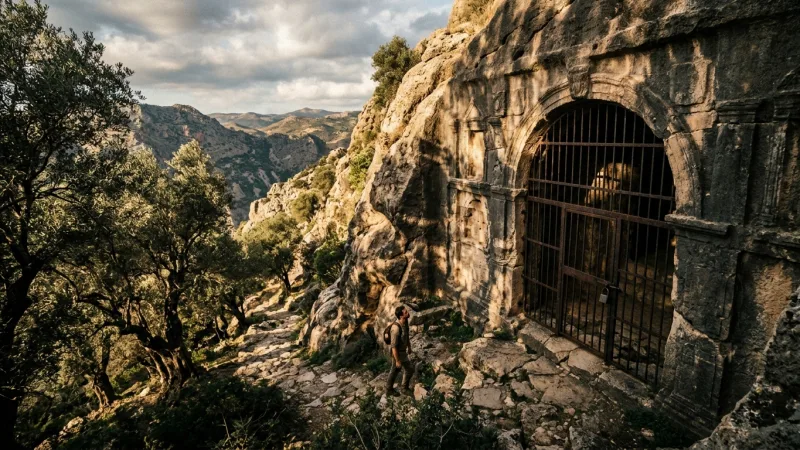
While popular legend identifies these two-room rock chambers as the place where Socrates drank hemlock in 399 BC, modern archaeological consensus reveals they were likely part of an elaborate 4th-century BC dwelling or public bath. However, the site's documented modern history is just as remarkable as its ancient mythology.
During the outbreak of World War II in 1940, staff from the National Archaeological Museum secretly hauled crates containing Greece's most precious antiquities—including Mycenaean gold and classical statues—into the deep recesses of these stone chambers. They sealed the openings behind massive reinforced concrete walls, successfully concealing the nation's cultural heritage from occupying Nazi forces until the war ended.





Buy a compatible power adapter for your trip