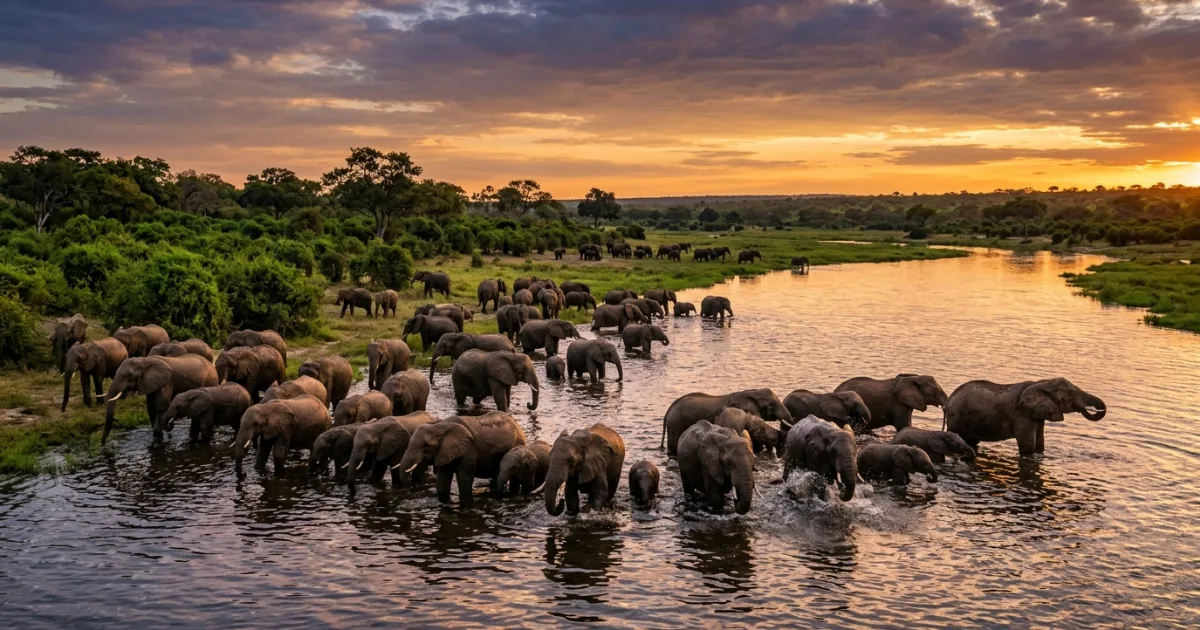
Chobe National Park is divided into four distinct ecosystems, each offering a unique safari experience. The Chobe Riverfront in the northeast is the most accessible and visited area, famous for its large herds of elephants and Cape buffalo that come down to the river to drink during the dry season. The Savuti Marsh in the west is renowned for its high concentration of predators, particularly lions and hyenas, and its dramatic, arid landscape. The Linyanti Swamps in the northwest offer a more remote, exclusive safari experience with excellent wild dog and leopard sightings. Finally, the dry hinterland between Linyanti and Savuti provides a stark contrast with its woodland habitats.
The park's lack of fences allows wildlife to migrate freely across borders into neighboring Namibia, Zambia, and Zimbabwe, forming part of the massive Kavango-Zambezi Transfrontier Conservation Area (KAZA). This immense freedom of movement ensures that the ecosystem remains dynamic and wild. Whether you are gliding silently past a pod of hippos on a river cruise or watching a pride of lions stalk their prey across the Savuti plains, Chobe offers an unparalleled immersion into the African wilderness.
Reasons to Visit
- Witness the largest concentration of African elephants in the world.
- Experience unique water-based safaris on the Chobe River.
- Explore diverse ecosystems ranging from lush floodplains to arid savannas.
- Enjoy exceptional birdwatching with over 450 recorded species.
- Easily combine a trip to Chobe with a visit to nearby Victoria Falls.
Things to Avoid
- Avoid driving in the park without a 4x4 vehicle; the deep sand tracks will cause standard cars to get stuck.
- Do not get out of your vehicle outside of designated picnic sites or safe zones.
- Avoid traveling during the peak rainy season (January-February) if you want to ensure all roads are passable.
- Do not approach wild animals or attempt to feed them under any circumstances.
Local Transportation Tips
Transportation within Chobe National Park is exclusively by 4x4 safari vehicles or specialized safari boats on the river. Most visitors rely on the guided game drives and boat cruises provided by their lodges or local tour operators in Kasane. For those self-driving, renting a fully equipped 4x4 in Kasane, Maun, or neighboring countries is necessary. Kasane itself is small enough that many lodges offer airport transfers, and taxis are available for short trips around town.
Travel Etiquette
- Always listen to your safari guide and follow their instructions immediately.
- Keep noise to a minimum during game drives so as not to disturb the wildlife or other guests.
- Never stand up in a safari vehicle or boat unless the guide explicitly says it is safe to do so.
- Do not use flash photography when photographing animals at night.
- Tip your guides and lodge staff; it is a customary and highly appreciated part of the safari industry.
Recommended Age Group
Chobe National Park offers incredible wildlife experiences, but the rugged nature of safaris means it is better suited for certain age groups.
- Babies (0-2 years): Not Recommended. The extreme heat, risk of malaria, long bumpy drives, and strict lodge age policies make it unsuitable for infants.
- Kids (3-12 years): Recommended. Many lodges in Kasane cater to families, and boat cruises are an excellent, gentle way for children to see wildlife safely.
- Teens (13-19 years): Recommended. Teenagers will be captivated by the adventure, photography opportunities, and close encounters with nature.
- Adults (20-64 years): Recommended. Ideal for adults seeking adventure, photography, romantic escapes, or luxury wilderness retreats.
- Seniors (65+ years): Recommended. With comfortable lodges and accessible boat safaris, seniors can enjoy spectacular wildlife viewing without physical strain.
Accessibility Level: Medium
- Several lodges in Kasane offer wheelchair-accessible rooms and facilities.
- Boat safaris on the Chobe River are generally more accessible for travelers with limited mobility compared to bumpy 4x4 game drives.
- Some specialized tour operators can arrange adapted safari vehicles with ramps or hoists.
- The terrain inside the park is rough and sandy, making independent wheelchair navigation impossible outside of lodge grounds.
Did You Know?
Chobe National Park is home to the Savuti Channel, a mysterious waterway that flows and dries up seemingly independent of rainfall. It can remain dry for decades, turning into a grassy plain, before suddenly flowing again and transforming the landscape into a lush wetland.
Cool Statistics
- Estimated elephant population: 120,000
- Park area: 11,700 square kilometers
- Year established: 1967 (Botswana's first national park)
- Bird species recorded: Over 450






Buy a compatible power adapter for your trip