Disclosure: This site contains affiliate links. We may earn a commission if you make a purchase, at no extra cost to you.

>
>
>
Makgadikgadi Pans

Makgadikgadi Pans

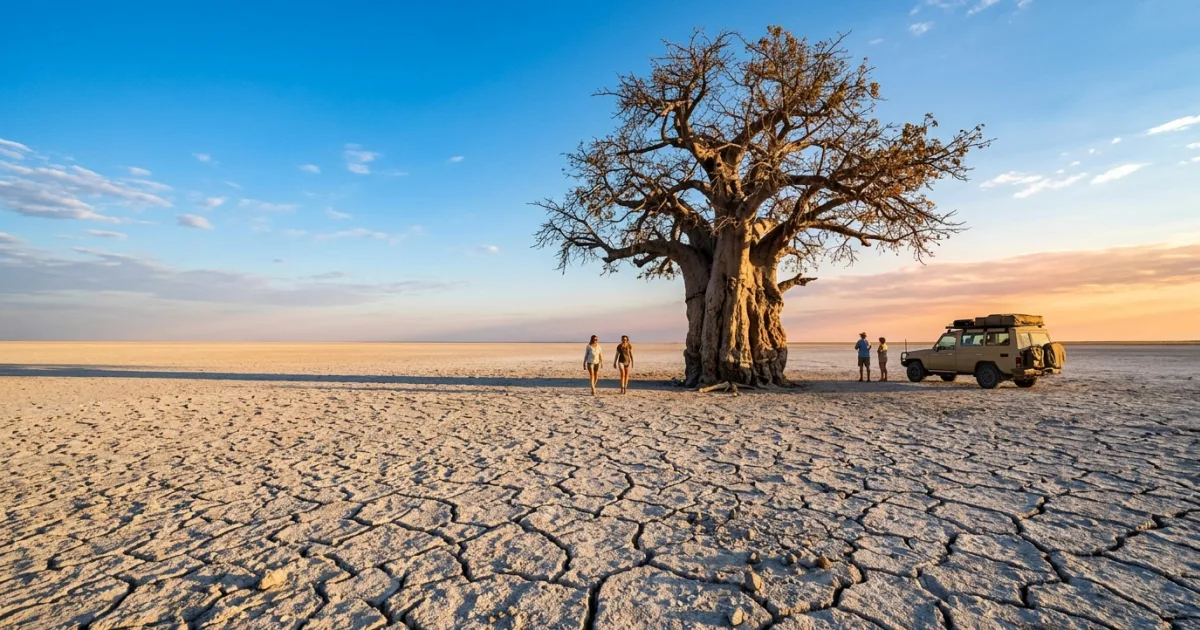
Vast white salt flats of Makgadikgadi Pans with an ancient baobab tree

Makgadikgadi Pans Overview & Key Highlights

Makgadikgadi Pans in northeastern Botswana represents one of the largest salt pan complexes in the world, covering an area roughly the size of Portugal. Once an enormous ancient lake, this stark, sun-baked landscape transforms dramatically with the seasons, offering two entirely distinct travel experiences. During the dry winter months, the pans become a shimmering, desolate expanse of white crust where travelers can ride quad bikes across the void and sleep under incredibly clear, star-studded skies. The sheer emptiness provides a profound sense of isolation and silence that is increasingly rare in the modern world. When the summer rains arrive, the barren crust undergoes a miraculous metamorphosis into a thriving wetland ecosystem. This seasonal flooding triggers the second largest zebra and wildebeest migration in Africa, drawing massive herds and the predators that follow them. Flocks of flamingos and other migratory birds also descend upon the shallow waters of Sua Pan, creating a vibrant spectacle of life against the dramatic skies. Whether exploring the ancient baobab trees of Kubu Island or interacting with habituated meerkats, visitors to Makgadikgadi are guaranteed an unforgettable encounter with one of Africa's most unique environments.

Makgadikgadi Pans Travel Guide: Logistics & In-Depth Tips

The Makgadikgadi Pans are the remnants of Lake Makgadikgadi, a massive inland sea that dried up thousands of years ago. Today, it is a surreal, flat landscape that stretches beyond the horizon, offering a profound sense of space. The area is actually made up of several large pans, including Sua, Nwetwe, and Nxai Pan, interspersed with sandy desert and occasional rocky outcrops like the famous Kubu Island, which is crowned with ancient, gnarled baobab trees.

Beyond the landscapes, the region is famous for its unique wildlife adaptations. It is one of the best places in Africa to see habituated meerkats, who might even use your head as a lookout post if you sit still enough. The elusive brown hyena and the magnificent black-maned Kalahari lion also roam these harsh environments. Whether you are tearing across the dry crust on a quad bike or watching thousands of zebras splash through shallow waters, Makgadikgadi is a destination of extremes and extraordinary beauty.

Reasons to Visit

  • Experience the profound silence and isolation of one of the largest salt flats on Earth.
  • Witness the second largest zebra and wildebeest migration in Africa during the wet season.
  • Interact with habituated meerkats in their natural desert environment.
  • Sleep under some of the clearest, darkest skies in the world, perfect for astrotourism.
  • Explore the mystical Kubu Island, an ancient rock formation covered in massive baobab trees.

Things to Avoid

  • Avoid attempting to drive on the pans during or immediately after the rainy season, as the mud is treacherous and recovery is nearly impossible.
  • Do not travel without sufficient water; the dry heat can cause rapid dehydration.
  • Avoid approaching wild animals on foot unless accompanied by a certified walking safari guide.
  • Do not rely on cell phone coverage, as the vast majority of the pans have zero signal.

Local Transportation Tips

Public transportation does not exist within the Makgadikgadi Pans. Navigation relies entirely on specialized 4x4 safari vehicles or light aircraft. Most travelers book all-inclusive packages where lodges provide all necessary transfers and game drive vehicles. For those self-driving, a fully equipped 4x4, satellite phone, and advanced off-road driving skills are mandatory.

Travel Etiquette

  • Always listen to your safari guide; their rules are in place for your safety and the protection of the wildlife.
  • Maintain silence during game drives and wildlife sightings to avoid stressing the animals.
  • Never leave your tent or room at night without a guide, as wild animals often roam through unfenced camps.
  • Practice 'Leave No Trace' principles, especially when wild camping on the pans.

Recommended Age Group

The Makgadikgadi Pans offer an incredible adventure, but the harsh environment requires careful consideration for different age groups.

  • Babies (0-2 years): Not Recommended. The extreme heat, intense sun, long travel times, and lack of nearby medical facilities make this an unsuitable destination for infants.
  • Kids (3-12 years): Neutral. While older children will love the meerkats and quad biking, the long game drives and extreme temperatures can be challenging for younger kids.
  • Teens (13-19 years): Recommended. Teens will be thrilled by the adventure activities, such as quad biking across the pans and sleeping out under the stars.
  • Adults (20-64 years): Recommended. Perfect for adults seeking off-grid luxury, photography opportunities, and unique wildlife encounters.
  • Seniors (65+ years): Recommended. Luxury lodges provide excellent comfort and specialized service, though travelers should be prepared for bumpy 4x4 rides and extreme heat.

Accessibility Level: Medium

  • Accessibility in the Makgadikgadi Pans is limited due to the remote, sandy, and rugged terrain.
  • Some high-end luxury lodges have adapted specific tents and main areas to be wheelchair accessible, but this must be confirmed prior to booking.
  • Getting into and out of high 4x4 safari vehicles can be challenging for those with limited mobility.
  • Travelers requiring accessible facilities should work with specialized safari operators who can arrange appropriate transport and accommodation.

Did You Know?

The Makgadikgadi Pans are so vast and flat that you can actually see the curvature of the Earth on the horizon. Additionally, the crust of the pan is so devoid of landmarks that it can completely disorient your sense of perspective and distance.

Cool Statistics

  • The Makgadikgadi Pans cover an area of over 16,000 square kilometers (6,200 square miles).
  • The ancient Lake Makgadikgadi, which formed the pans, was once larger than the country of Switzerland.
  • During the wet season, up to 30,000 zebras and wildebeests migrate to the pans.
  • Some of the baobab trees on Kubu Island are estimated to be over 3,000 years old.

Address:

Makgadikgadi Pans, Botswana

Find Nearby Accommodations

Basic Info

address icon

COUNTRY & Region

Botswana,
Africa

ACCESSIBILITY LEVEL​

Medium
Currency icon

LOCAL CURRENCY​

Botswana Pula (BWP)
Price level icon
High
Safety Level icon

SAFETY LEVEL

Duration icon

Recommended Duration

• 1-7 days

Electricity

electricity icon

Electricity

220-240V, 
50Hz
Plug Socket icon

Plug Type

• Type D (Three round pins in a triangular pattern)
• Type G (Three rectangular pins in a triangular pattern)
• Type M (Three round pins, larger)
Plug types
Click To View Plug Types
Makgadikgadi Pans is part of our
Off-Grid Glamping collection

Activities To Do In Makgadikgadi Pans

Best Time To Visit Makgadikgadi Pans

The best time to visit depends entirely on what you want to experience, as the landscape changes drastically between the dry and wet seasons.

  • Dry Season (May to October): Best for quad biking, sleeping under the stars, and experiencing the stark, white emptiness of the pans. Wildlife congregates around the Boteti River.
  • Wet Season (December to March): Best for witnessing the zebra and wildebeest migration, birdwatching (including flamingos), and seeing the pans transformed into a lush wetland.
  • Shoulder Season (April and November): Transitional months where weather can be unpredictable, but offer a mix of dry pans and early/late wildlife movements.

Average Temperatures Per Month

Remember to check the weather forecast a few days before the trip and before heading to the airport.

Safety Level icon

Safety Level

While crime is virtually non-existent in this remote area, safety concerns primarily revolve around the harsh environment and wildlife. Always travel with a guide, carry abundant water, and never drive on the pans during the wet season as vehicles will sink into the mud. Keep a safe distance from wild animals and follow all instructions from your safari guides.

The rating is based on multi-year peace, crime, and security indices. Before you go, always verify current conditions through official government travel advisories.

Emergency Numbers

Police: 999
Ambulance: 997

No internet needed • Includes local translations • Free for TravelingWiz readers

Spoken Languages

English is the official business language and is widely spoken by all guides and lodge staff. Setswana is the national language spoken by the local population.

Learn The Language

  • Dumela (Hello)
  • O tsogile jang? (How are you?)
  • Ke tsogile sentle (I am fine)
  • Ke a leboga (Thank you)
  • Ee (Yes)
  • Nnyaa (No)
  • Ke kopa thuso (I need help)
  • Tsamaya sentle (Go well / Goodbye)
Travel Booking Partner - TravelingWiz

Trip Cost & Budgeting for Makgadikgadi Pans, 2026

Everything you need to know about money while traveling
Is Makgadikgadi Pans expensive for tourists in 2026? Yes, due to its remote desert location and safari logistics, expenses are higher than standard town stays. Based on our Human Verified prices, expect to pay around 32 BWP for a cappuccino, 26 BWP for a local draft beer, and 200 BWP for a main meal at mid-range lodge dining. Use the data table below to calculate your specific daily budget based on your travel style.
Currency icon

LOCAL CURRENCY​:

Botswana Pula (BWP)
Price level icon
High
Lodges accept cards, but cash in Pula is necessary for remote safari park fees, tips, and small roadside purchases.

Per person, per day – pocket cash for small purchases.

Local: 135
Botswana Pula (BWP)
≈ 10 USD

Full daily spend estimation (accommodation, food, transportation, attractions).

Travel Style
Botswana Pula (BWP)
≈ USD ($)
Budget
740
55
Mid-range
1350
100
Comfort
2950
219

The Prices, Daily costs, and calculator results are estimates for planning purposes only. Actual costs may vary based on season, booking timing, personal spending habits, and currency fluctuations. TravelingWiz cannot be held responsible for discrepancies between these estimates and your final trip expenses.

  • • Stay in gateway towns like Gweta or Nata for lower accommodation rates and day-trip access to the pans.
  • • Self-drive in a rented 4x4 and camp at DWNP sites to avoid high-end safari package prices.
  • • Stock up on fuel, supplies, and cash in Maun or Francistown before traveling into remote pan areas.
  • • Visit during the shoulder season for reduced lodge rates and good wildlife viewing along the Boteti River.

Pre-Order Tickets

Avoid disappointment when tickets sell out — and skip the long lines by booking online in advance. You’ll often save up to 20% too.
Save up to 20%

Travel Discounts & Coupons

Save on hotels, attractions, transport, and gear — find verified discounts for smarter travel spending.
Verified Coupons

What To Pack

  • Lightweight, breathable clothing in neutral safari colors (khaki, green, brown) to blend in with the environment.
  • A warm fleece or heavy jacket for the dry winter months, as nighttime temperatures on the pans can drop below freezing.
  • High-SPF sunscreen, a wide-brimmed hat, and polarized sunglasses to protect against the intense glare of the white salt flats.
  • A good quality camera with a zoom lens for wildlife, and a wide-angle lens for the expansive landscapes and astrophotography.
  • Sturdy, comfortable walking shoes or light hiking boots for exploring rocky outcrops like Kubu Island.
  • Insect repellent, especially if visiting during the wet season when mosquitoes are prevalent.
We couldn't find tips for Makgadikgadi Pans.
If you got any, please share

Recommended Itineraries for Traveling to Makgadikgadi Pans

We couldn't find itineraries for Makgadikgadi Pans.
you can contact us for custom trip plan

Food & Drink Highlights

Local Food Overview

Dining in the Makgadikgadi Pans is typically an all-inclusive affair at your lodge or camp, featuring high-quality international cuisine infused with local flavors. Traditional Botswana dishes are often served during special 'boma' dinners under the stars.
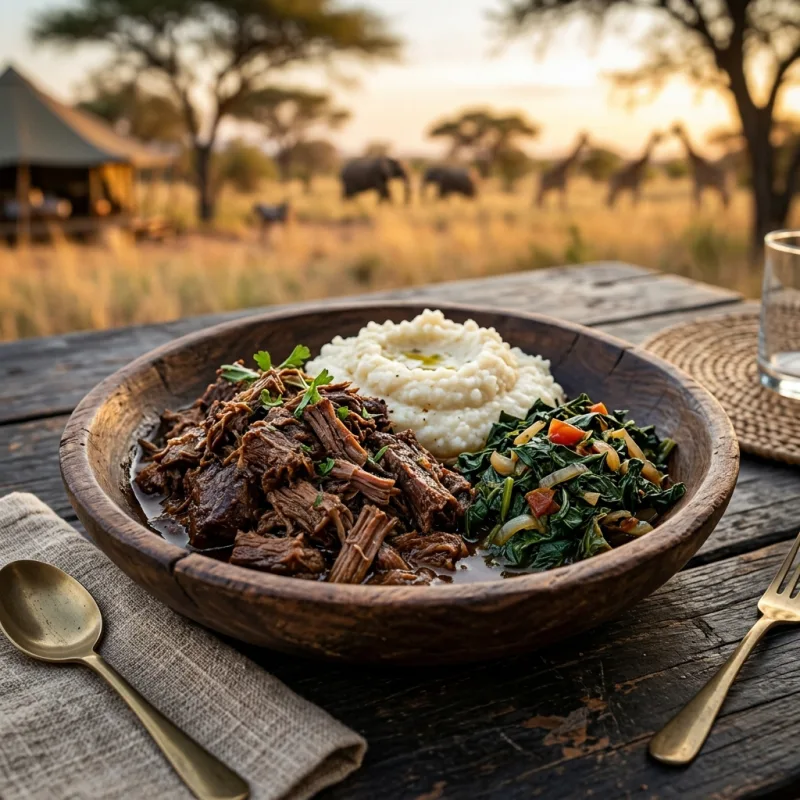
Traditional Botswana Seswaa with pap and greens

Must Try Dish

Seswaa is Botswana's national dish, consisting of beef or goat meat slowly boiled until tender, then pounded and served with thick maize meal. It is a hearty, comforting meal that perfectly caps off a long day of safari adventures.
Food Experiences Title Icon

Food
Experiences

Discover cooking classes, tastings and local food tours

No food experience found
Maya, the human travel expert at TravelingWiz, offering curated, non-AI expertise

Maya’s Final Checklist for Makgadikgadi Pans

Logistics shouldn’t be the focus of your trip—the experience should. I’ve hand-vetted these essential partners to ensure your arrival, stay, and exploration are as smooth as an Athenian breeze.

Where to Stay

From boutique hotels to local apartments—compare thousands of options and find the perfect stay in the best neighborhood.

Air Travel

Getting there should be seamless. Compare the best routes and prices across top airlines to start your journey on the right note.

Local Guides

Connect with experts who know the destination best. Get personalized advice and insider tips to help you plan your perfect trip.

Travel Protection

The “Engineer’s” rule: always have a backup. Secure your trip with a plan that covers every “what if” and unexpected change.

Car Rentals

Explore at your own pace with total freedom. Compare reliable rental options and find the right vehicle for your adventure.

Visa Services

Don’t let paperwork slow you down. Get expert assistance with your application to ensure all your entry documents are in order.

FAQs

Self-driving is possible during the dry season but requires a 4×4, off-road experience, and GPS navigation. Driving on the pans during the wet season is strictly prohibited and highly dangerous as vehicles will sink.
During the dry winter months, mosquitoes are rare. However, during the wet summer months, they are prevalent, and malaria precautions are strongly advised.
Most visitors fly into Maun or Kasane, and then take a light aircraft transfer to their lodge’s private airstrip, or arrange a guided 4×4 transfer.
Yes, sleeping out on the pans under the stars is a popular activity offered by lodges. It is completely safe when organized by experienced guides who monitor the surroundings.

Your Insights Matter

TravelingWiz grows through the stories of our community. If you’ve recently explored ,Makgadikgadi Pans share your tips and stories to help us perfect our guides for the next traveler.

Related Articles

Check out our related articles and blog posts to learn even more about the destination.

No related articles found

Don’t Travel Alone

Share with your friends and family

Where should we send your offline card?

We hate spam just as much as you do

newsletter_consent *