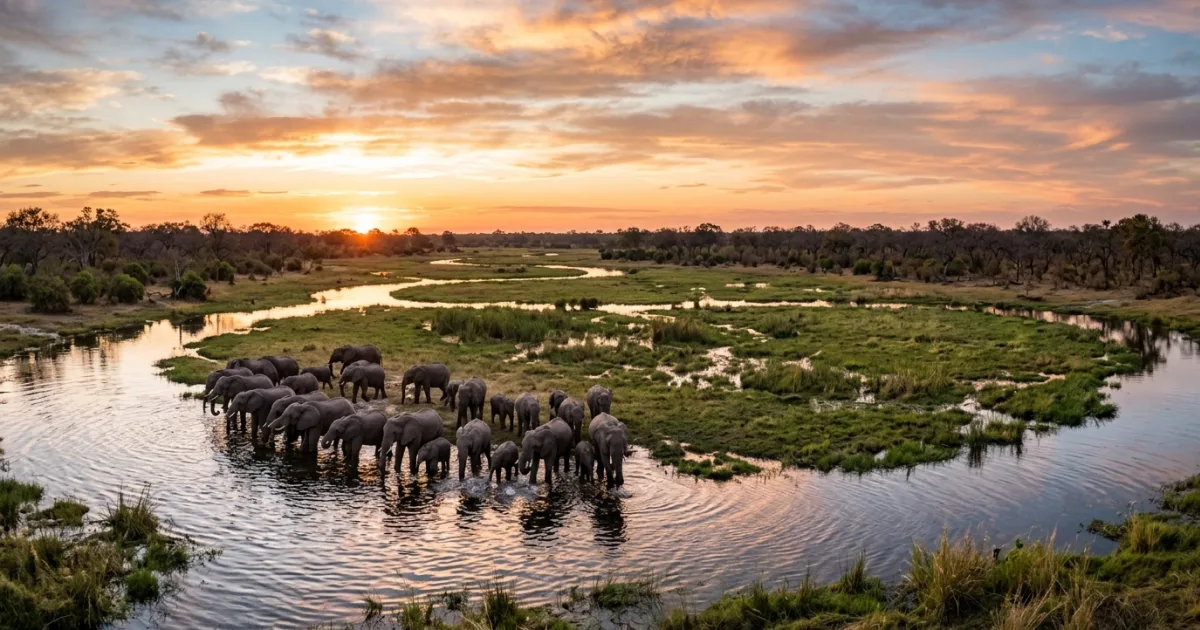
The Khwai Concession represents a triumph of community-led conservation. Formed by the local villagers who transitioned from hunting to eco-tourism, the area is now a beacon for sustainable travel. The landscape is a striking contrast of dry leadwood and mopane forests against the life-giving waters of the Khwai River. This permanent water source acts as a magnet for wildlife, especially during the dry season when animals migrate from the arid interior.
What sets Khwai apart from state-run national parks is the freedom it offers. Guides can take vehicles off-road to track a hunting cheetah or follow a pack of wild dogs. As the sun sets, the adventure continues with spotlights illuminating the glowing eyes of bushbabies, genets, and hunting lions. For those seeking a slower pace, gliding silently in a mokoro (dugout canoe) offers a micro-perspective of the Delta's intricate ecosystem, from tiny painted reed frogs to majestic African fish eagles.
Reasons to Visit
- Exceptional predator sightings, including high densities of leopards, lions, and African wild dogs.
- The ability to participate in night drives and off-road tracking, which are banned in nearby national parks.
- Directly supporting local community conservation efforts through the Khwai Development Trust.
- A diverse landscape offering both land-based game drives and water-based mokoro safaris.
- Incredible birdwatching opportunities with over 400 species recorded in the area.
Things to Avoid
- Avoid walking outside your tent or lodge room at night without a guide; wildlife roams freely through the camps.
- Do not attempt to self-drive the concession without a proper 4x4 vehicle and deep-sand driving experience.
- Avoid wearing bright colors (red, white, neon) on safari, as they can startle animals and attract insects.
- Do not swim in the rivers or lagoons due to the presence of crocodiles and hippos.
Local Transportation Tips
Transportation within the Khwai Concession is almost exclusively by specialized 4x4 open safari vehicles provided by your lodge or tour operator. For those flying in, light aircraft transfers land at the Khwai airstrip, where guides will meet you. Self-drivers must have a fully equipped 4x4 and be prepared for challenging terrain, including deep sand and water crossings.
Travel Etiquette
- Maintain absolute silence when observing wildlife to avoid stressing the animals and ruining the experience for others.
- Never ask your guide to drive too close to an animal or break park rules for a photograph.
- Tip your guide and camp staff generously, as this forms a significant part of their income.
- Respect the local Khwai villagers by asking permission before taking photographs of people or their homes.
Recommended Age Group
Khwai Concession offers a thrilling wilderness experience, but its remote nature and wildlife risks make it better suited for certain age groups.
- Babies (0-2 years): Not Recommended. The area is a malaria zone, and the extreme heat, long drives, and strict silence required around wildlife are unsuitable for infants.
- Kids (3-12 years): Neutral. While older children may enjoy the adventure, many luxury lodges have minimum age requirements (often 6 or 12 years old) for safety reasons.
- Teens (13-19 years): Recommended. Teenagers will find the raw adventure, night drives, and wildlife tracking highly engaging and educational.
- Adults (20-64 years): Recommended. This is the prime demographic for safaris, offering the perfect mix of adventure, photography, and luxury relaxation.
- Seniors (65+ years): Recommended. High-end lodges provide excellent comfort and accessible game viewing from vehicles, though travelers should be prepared for bumpy roads and heat.
Accessibility Level: Medium
- Accessibility in the Khwai Concession is limited due to the rugged, sandy terrain and remote nature of the camps.
- Some high-end luxury lodges offer accessible tents with ramps and roll-in showers, but this must be confirmed directly with the property prior to booking.
- Game drive vehicles are typically high off the ground and require climbing up; travelers with mobility issues should request a lodge that provides boarding steps or assistance.
- Wheelchair users will find navigating the natural, unpaved pathways of most camps challenging without assistance.
Did You Know?
The Khwai Concession was established in 2000 by the Khwai community, who historically relied on hunting. Recognizing the long-term value of their natural heritage, they formed a trust to manage the land for eco-tourism, making it one of Botswana's most successful community-based conservation initiatives.
Cool Statistics
- Size: Approximately 180,000 hectares (1,800 square kilometers) of pristine wilderness.
- Bird Species: Over 400 species of birds can be found in the concession.
- Community: The Khwai village has a population of just around 400 people, who directly benefit from tourism.






Buy a compatible power adapter for your trip