Founded in 1915 as the tribal capital of the Batawana people, Maun has evolved dramatically from a dusty frontier outpost into the bustling tourism capital of Botswana. The town's layout is a fascinating juxtaposition of traditional mud huts, modern shopping centers, and the constant hum of light aircraft ferrying tourists into the wild.
The Thamalakane River forms the lifeblood of the town, providing a scenic backdrop for riverside lodges and local fishermen. While many visitors treat Maun merely as a transit point, spending a day or two here offers valuable insight into modern Botswana culture, local craft markets, and the complex logistics that power the country's renowned eco-tourism industry.
Reasons to Visit
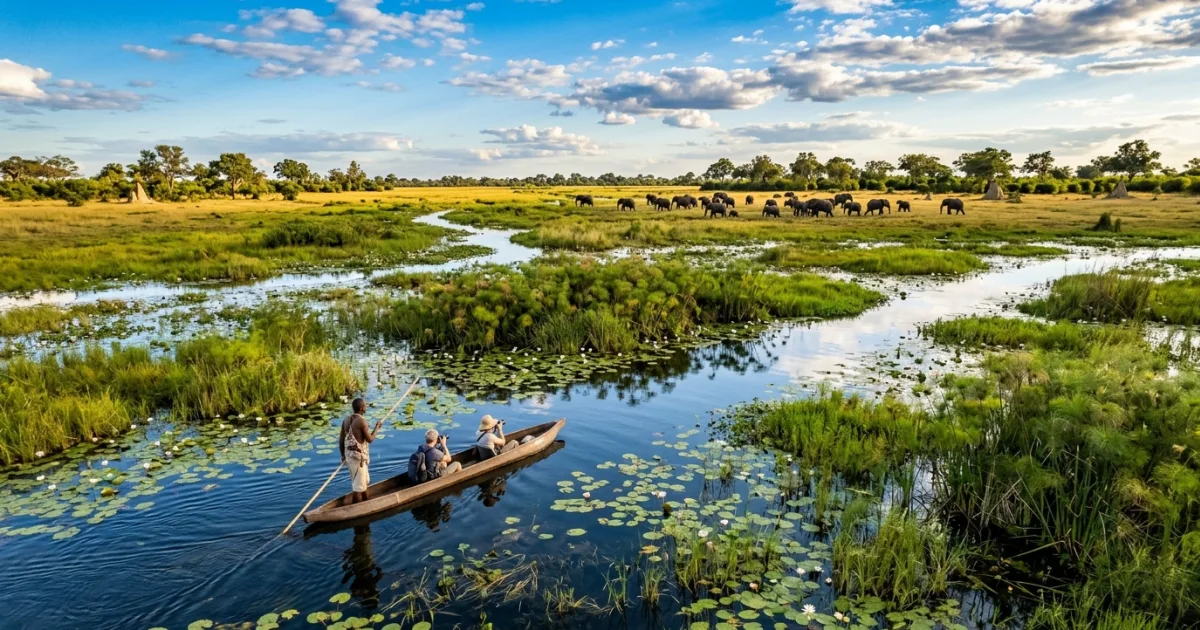
- Unmatched access to the Okavango Delta, a UNESCO World Heritage site.
- Scenic helicopter and fixed-wing flights offering breathtaking aerial views of the delta's waterways and wildlife.
- Authentic cultural interactions and local craft markets.
- Starting point for mobile camping safaris into Moremi Game Reserve and Chobe National Park.
Things to Avoid
- Avoid walking near the riverbanks at night due to the presence of hippos and crocodiles.
- Do not underestimate the African sun; avoid midday exposure without protection.
- Avoid photographing local people, especially in rural areas, without asking for permission first.
Local Transportation Tips
Public transport in Maun consists primarily of shared minibuses (combis) and taxis, which are inexpensive and cover most of the town. However, for tourists looking to explore independently or head into the surrounding reserves, renting a fully equipped 4x4 vehicle is essential. Many lodges also provide shuttle services to and from the airport.
Travel Etiquette
- Always greet people with 'Dumela' (Hello) before asking a question or starting a transaction; skipping the greeting is considered rude.
- Dress modestly when walking around town, saving safari gear and swimwear for the lodges.
- Use your right hand or both hands when giving or receiving items, including money.
Recommended Age Group
Maun and the surrounding delta offer incredible experiences, but the rugged nature of safaris dictates age suitability.
- Babies (0-2 years): Not Recommended. High heat, malaria risk, and strict age restrictions at most safari lodges make it unsuitable.
- Kids (3-12 years): Neutral. While some specialized family lodges accept younger children, long game drives require patience and silence, which can be challenging.
- Teens (13-19 years): Recommended. An excellent educational and adventurous environment for older children who can appreciate the wildlife and handle the travel logistics.
- Adults (20-64 years): Recommended. Perfect for wildlife enthusiasts, photographers, and adventure seekers looking for world-class safaris.
- Seniors (65+ years): Recommended. Luxury lodges offer highly accessible, comfortable, and tailored safari experiences with excellent hospitality.
Accessibility Level: Medium
- Maun International Airport offers basic wheelchair assistance, but advance notice is highly recommended.
- Infrastructure in the town itself is developing; sidewalks are often uneven, sandy, or non-existent, making wheelchair navigation challenging.
- High-end luxury lodges in the delta often provide excellent accessibility features, including ramp access and specialized game drive vehicles, but these must be booked specifically.
Did You Know?
Maun's name derives from the San word 'maung', which translates to 'the place of short reeds', referencing the vegetation along the Thamalakane River.
Cool Statistics
- Maun Airport is one of the busiest airports in Southern Africa in terms of light aircraft traffic.
- The Okavango Delta, accessible from Maun, covers up to 15,000 square kilometers during peak flood season.
- Over 400 species of birds can be found in the region surrounding Maun and the delta.






Buy a compatible power adapter for your trip