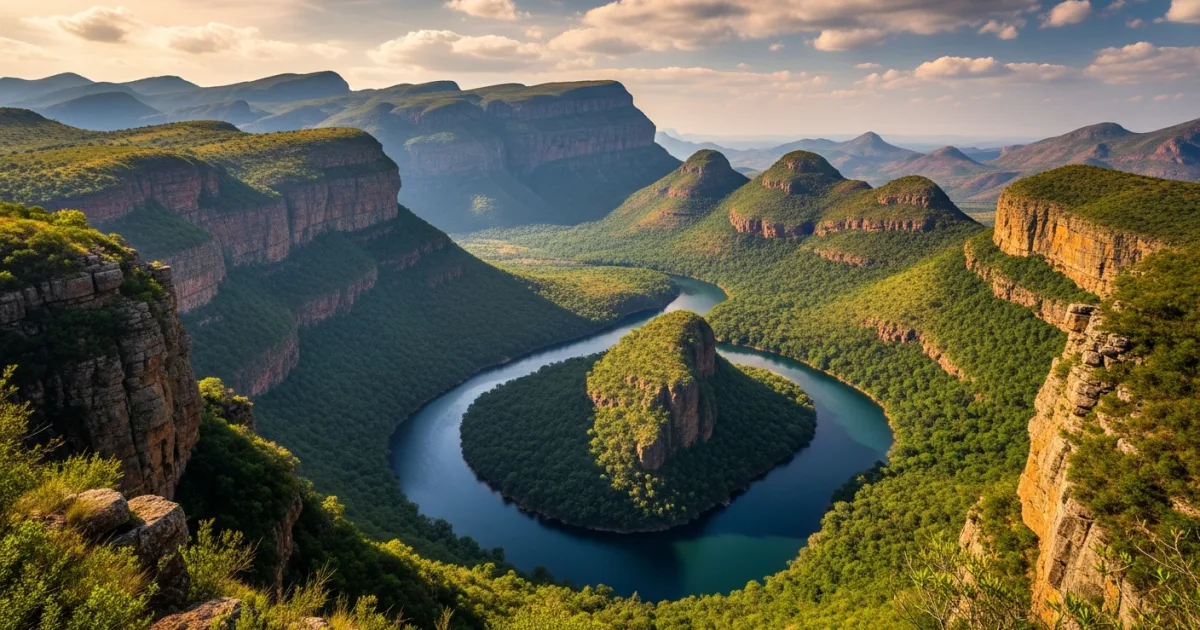
Mpumalanga is geographically divided into two distinct halves: the high-altitude Highveld to the west and the subtropical Lowveld to the east. The dramatic escarpment of the Drakensberg mountains separates the two, creating a landscape of sheer cliffs, deep gorges, and cascading waterfalls. This geological divide is what makes the province so visually stunning and ecologically diverse.
Historically, the region was a focal point during the late 19th-century gold rush, with towns like Pilgrim's Rest and Barberton springing up overnight. Today, these towns offer a fascinating glimpse into the past with their preserved Victorian architecture and historical museums. Beyond its history and scenery, Mpumalanga is the gateway to some of Africa's most prestigious wildlife conservation areas, making it a cornerstone of South African tourism.
Reasons to Visit
- Kruger National Park: Experience world-class Big Five wildlife viewing in one of Africa's largest and oldest game reserves.
- The Panorama Route: Drive along the escarpment to witness breathtaking natural wonders like God's Window and the Three Rondavels.
- Blyde River Canyon: Marvel at the third-largest canyon in the world, uniquely covered in lush subtropical vegetation.
- Exclusive Private Reserves: Enjoy unparalleled luxury and off-road game viewing in renowned reserves like Sabi Sands and Timbavati.
- Adventure Activities: Engage in thrilling experiences such as ziplining, white-water rafting, and exploring the ancient Sudwala Caves.
Things to Avoid
- Avoid driving at night on rural roads due to the high risk of encountering wandering livestock, wildlife, and deep potholes.
- Do not swim in rivers or lakes in the Lowveld, as they are inhabited by crocodiles and hippos, and carry the risk of bilharzia.
- Never exit your vehicle in a national park or game reserve unless at a specifically designated and fenced rest camp or viewpoint.
- Do not ignore malaria precautions; use repellents and take prescribed prophylactics when visiting the Lowveld.
Local Transportation Tips
Public transportation in Mpumalanga is extremely limited and not geared towards tourists. Renting a car is highly recommended and is the most practical way to explore the province. The main highways are generally in good condition, though secondary roads may have potholes. For those not wishing to drive, booking guided tours or utilizing private transfer services between airports (like Kruger Mpumalanga International Airport) and lodges is the best alternative.
Travel Etiquette
- Tipping is customary in South Africa; aim for 10-15% in restaurants and tip petrol station attendants and car guards around 5-10 ZAR.
- When on a game drive, keep your voice down to avoid startling the animals and ruining the experience for others.
- Always ask for permission before taking photographs of local people, particularly in rural villages.
- Respect the environment by never littering and adhering strictly to the 'leave no trace' principles in nature reserves.
Recommended Age Group
Mpumalanga offers diverse experiences that cater to various age groups, though some activities require specific considerations.
- Babies (0-2 years): Not Recommended. The malaria risk in the Lowveld, extreme summer heat, and the requirement for absolute silence on game drives make it challenging for infants.
- Kids (3-12 years): Recommended. Many private lodges offer specialized 'Bumble' drives and kids' clubs. The wildlife experience is highly educational and thrilling for children.
- Teens (13-19 years): Recommended. Teens will love the adventure activities available, such as the Graskop Gorge Lift, ziplining, and the excitement of spotting the Big Five.
- Adults (20-64 years): Recommended. Perfect for self-drive adventures, luxury lodge retreats, hiking trails, and exploring the rich history and culinary offerings of the region.
- Seniors (65+ years): Recommended. The region is excellent for slow travel. Accessible game drives, comfortable luxury lodges, and scenic viewpoints with minimal walking make it highly suitable for mature travelers.
Accessibility Level: Medium
- The Kruger National Park is highly accessible, with most main rest camps offering wheelchair-friendly accommodation and accessible ablution facilities.
- Many of the major viewpoints along the Panorama Route, such as the Three Rondavels and God's Window, have paved pathways suitable for wheelchairs, though some steeper sections may require assistance.
- Private game reserves often accommodate guests with mobility issues, but it is crucial to communicate specific needs in advance to ensure suitable safari vehicles and room access.
- Off-the-beaten-path trails and smaller waterfalls generally lack accessibility infrastructure due to the rugged natural terrain.
Did You Know?
The Blyde River Canyon in Mpumalanga is not only the third-largest canyon in the world, but it is also the largest 'green canyon' on Earth, distinguished by its lush, subtropical foliage that covers the towering cliff faces.
Cool Statistics
- The Kruger National Park covers an area of 19,485 square kilometers, making it roughly the same size as Israel or Wales.
- Mpumalanga is home to the Sudwala Caves, which are considered the oldest known caves in the world, dating back approximately 240 million years.
- The province hosts over 500 bird species, making it one of the premier birdwatching destinations in Africa.
- God's Window, a famous viewpoint on the Panorama Route, sits at an altitude of over 1,700 meters above sea level.






Buy a compatible power adapter for your trip