Disclosure: This site contains affiliate links. We may earn a commission if you make a purchase, at no extra cost to you.

>
>
>
Paro District

Paro District

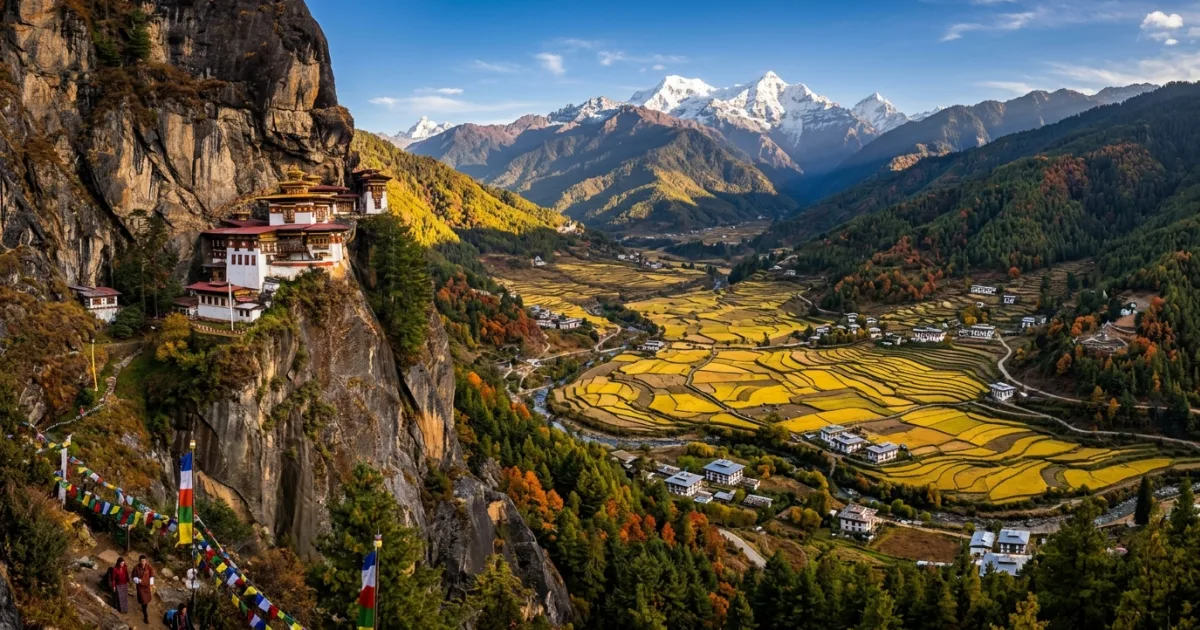
Panoramic view of Paro Valley and the cliffside Tiger's Nest monastery in Bhutan

Paro District Overview & Key Highlights

Paro District encompasses western Bhutan's fertile river valley, flanked by pine-forested Himalayan slopes and centuries-old fortresses. The district hosts Bhutan's sole international airport, making it the primary point of entry for foreign visitors navigating the kingdom's regulated tourism system. Home to Paro Taktsang (Tiger's Nest), Rinpung Dzong, and Kyichu Lhakhang, Paro functions as both an architectural open-air museum and an active spiritual sanctuary where tantric Vajrayana Buddhism permeates daily village life. Visitors typically use Paro as the base for acclimatization before venturing deeper into Thimphu or the central valleys, or as the grand finale of their Bhutanese itinerary. The valley's elevation of 2,200 meters delivers crisp mountain air, distinct four-season weather, and exceptional visibility for Himalayan viewpoints like Chele La Pass. The combination of mandatory certified local guides, sustainable development fees, and low vehicle congestion creates an unhurried, deeply preserved travel experience characterized by pine-scented hikes, authentic farmhouse meals, and sacred monastic encounters.

Paro District Travel Guide: Logistics & In-Depth Tips

Paro District is one of the most culturally vital and scenic districts in western Bhutan. Spanning fertile valleys carved by the Paro Chhu and Wang Chhu rivers, the area is historically celebrated as the first seat of Buddhism brought from Tibet by Guru Padmasambhava in the 8th century. Today, Paro seamlessly balances its status as the nation's primary international entry hub with deep agricultural traditions, where farmers cultivate organic apples, mountain asparagus, and nutrient-dense Bhutanese red rice along terraced slopes.

The built environment of Paro remains tightly regulated by traditional architectural codes, ensuring that all constructions—from village farmhouses to public administrative offices—exhibit intricately hand-painted timber cornices, arched trefoil windows, and sloping slate roofs. Whether ascending pine trails toward cliffside hermitage sites, admiring 15th-century iron-chain suspension bridges, or browsing handcrafted thangkas in Paro Town, travelers experience an intact Himalayan society dedicated to the preservation of Gross National Happiness and spiritual sanctity.

Reasons to Visit

  • Paro Taktsang (Tiger's Nest): Hike to one of the world's most dramatic sacred monuments, perched precariously on a vertical granite cliff 900 meters over the valley.
  • Rinpung Dzong: Explore the Fortress of the Heap of Jewels, a masterful example of 17th-century Drukpa Kagyu architecture featuring massive buttressed walls and sacred courtyards.
  • National Museum of Bhutan (Ta Dzong): Discover an ancient circular watchtower containing rare collections of centuries-old Buddhist thangkas, ceremonial masks, and natural history artifacts.
  • Chele La Pass: Drive to Bhutan's highest motorable pass at 3,988 meters for panoramic views of Mount Jomolhari and vibrant forests of prayer flags fluttering against snowcapped peaks.
  • Kyichu Lhakhang: Step inside one of Bhutan's oldest shrines, constructed in 659 AD by Tibetan Emperor Songtsen Gampo to pin down a mythological Himalayan giantess.

Things to Avoid

  • Never point your fingers or feet directly at sacred Buddha statues, lamas, or altars; use an open, upturned palm to indicate sacred objects respectfully.
  • Avoid taking photographs or video inside temple sanctums and monastic shrine rooms where recording is strictly banned.
  • Do not touch, sit on, or step over prayer flags, mani stone carvings, or sacred chortens (stupas); always circumambulate them in a clockwise direction.
  • Avoid planning the demanding hike to Tiger's Nest on your very first day in Bhutan; allow at least 24 to 48 hours for your body to adjust to the elevation.
  • Never purchase antique religious relics or heritage artifacts, as the export of cultural antiquities is strictly illegal in Bhutan.

Local Transportation Tips

Independent public transit is minimal in Paro District. Nearly all international travelers navigate the district via pre-arranged private SUVs, minivans, or coasters operated by professional licensed drivers as part of their accredited tour package. Shared local taxis operate within Paro Town and between Paro and the capital city of Thimphu (approximately 1.5 hours away via a smooth, paved highway). Within Paro Town, navigating the two main commercial streets and riverside promenade is best done comfortably on foot.

Travel Etiquette

  • Dress respectfully in full sleeves and full-length pants or skirts when entering administrative dzongs, monasteries, and village temples.
  • Always remove your shoes, sunglasses, and hats before stepping onto temple carpets or wooden sanctuary floors.
  • Walk clockwise (sunwise) around all Buddhist stupas, mani walls, chortens, and temple shrines.
  • Make a small, discreet cash offering (5 to 50 Ngultrum) at temple altars if you wish to receive a traditional water blessing from the resident monks.
  • Always ask permission before photographing local residents, particularly elderly villagers, monks, or children in traditional gho and kira dress.

Recommended Age Group

Paro District offers cultural treasures and mountain beauty, though its rugged trails, elevation, and monastic itinerary cater best to specific demographics.

  • Babies (0-2 years): Not Recommended. Steep terrain, high altitude, unpaved trail surfaces, and strict quiet rules in temple halls make logistics demanding with infants.
  • Kids (3-12 years): Neutral. Children with outdoor endurance enjoy the archery ranges, horse rides at Tiger's Nest base, and vibrant festivals, but long temple walks may test shorter attention spans.
  • Teens (13-19 years): Recommended. Teenagers appreciate the rewarding physical challenge of the Taktsang hike, archery lessons, mountain biking, and living Himalayan culture.
  • Adults (20-64 years): Recommended. Excellent fit for active adults who enjoy cultural depth, mountain trekking, architectural heritage, and serene wellness retreats.
  • Seniors (65+ years): Recommended. Highly rewarding for mature travelers seeking cultural immersion; horseback support is available for steep trail sections, and valley-floor sites feature gentle walking paths.

Accessibility Level: Medium

  • Historic dzongs and cliffside monasteries involve extensive flights of steep, uneven stone steps without handrails or elevator access.
  • Tiger's Nest trail consists of rocky mountain paths and hundreds of stone stairs down and up a gorge, making it inaccessible for wheelchair users.
  • Paro Town's central avenue features level sidewalks with low curbs, allowing relatively smooth mobility for slow walkers.
  • Modern luxury hotels and airport facilities offer ground-floor rooms and ramped access, though standard boutique lodges may lack specialized accessible bathrooms.

Did You Know?

Paro International Airport is widely regarded as one of the most challenging commercial flight landings in the world. Tucked between steep 5,500-meter Himalayan peaks, the runway is only 2,265 meters long, and flights are permitted to take off and land solely during daylight hours under strict visual flight rules (VFR). Fewer than 50 commercial pilots globally hold the specialized certification required to land jet airliners in this narrow mountain corridor.

Cool Statistics

  • Elevation: 2,200 meters (7,218 feet) at the valley floor, rising to over 3,980 meters at mountain passes
  • Iconic Altitude: Tiger's Nest sits at 3,120 meters (10,240 feet) above sea level
  • Historical Age: Kyichu Lhakhang dates back over 1,360 years to 659 AD
  • Forest Cover: Over 70% of Paro District remains under protected virgin pine, fir, and broadleaf Himalayan forest


Address:

Paro District, Bhutan

Find Nearby Accommodations

Basic Info

address icon

COUNTRY & Region

Bhutan,
Asia

ACCESSIBILITY LEVEL​

Medium
Currency icon

LOCAL CURRENCY​

Bhutanese Ngultrum (BTN)
Price level icon
High
Safety Level icon

SAFETY LEVEL

Duration icon

Recommended Duration

• 1-7 days

Electricity

electricity icon

Electricity

220-240V, 
50Hz
Plug Socket icon

Plug Type

• Type C (Round pin)
• Type D (Three round pins in a triangular pattern)
• Type G (Three rectangular pins in a triangular pattern)
Plug types
Click To View Plug Types
Paro District is part of our
Coolcation collection

Activities To Do In Paro District

Best Time To Visit Paro District

Paro District is best experienced during the clear autumn months (September to November) and vibrant spring bloom (March to May), when atmospheric visibility is peak and outdoor trekking conditions are optimal.

  • Spring (March to May): Rhododendrons and wild magnolias blossom across the valley; temperatures range from 10°C to 20°C (50°F to 68°F); ideal for witnessing the famous Paro Tshechu festival.
  • Autumn (September to November): Golden rice paddies ready for harvest, crystalline cloudless skies offering sharp views of Mount Jomolhari; daily temperatures average 12°C to 18°C (54°F to 64°F).
  • Winter (December to February): Cold, dry, and crisp days with freezing nights (-2°C to 10°C); fewer tourists, though high mountain passes may experience occasional snowfall.
  • Summer/Monsoon (June to August): Humid, lush, and rain-heavy conditions; low-hanging cloud cover frequently obscures Himalayan peaks and causes road delays.

Average Temperatures Per Month

Remember to check the weather forecast a few days before the trip and before heading to the airport.

Safety Level icon

Safety Level

Paro is exceptionally safe with negligible violent crime rates and a welcoming, protective local culture. The principal safety considerations involve natural factors: altitude sickness when trekking rapidly toward Tiger's Nest (3,120m) or Chele La Pass (3,988m), staying hydrated, and watching footing on loose gravel paths. Be mindful of street dogs at night in Paro Town; while rarely aggressive, they can bark loudly and carry rabies risks if touched. Respect mountain driving regulations by ensuring your licensed driver maneuvers winding valley roads during daylight hours.

The rating is based on multi-year peace, crime, and security indices. Before you go, always verify current conditions through official government travel advisories.

Emergency Numbers

Police: 113
Ambulance: 112

No internet needed • Includes local translations • Free for TravelingWiz readers

Spoken Languages

Dzongkha (official), English (widely spoken in hospitality, administration, and guided tourism), Sharchop, Nepali

Learn The Language

  • Kuzu zangpo la: Hello / Greetings (respectful form)
  • Kadrin chhe la: Thank you very much
  • Gaday bay zhui?: How are you?
  • Legzhum: Good / Fine
  • Nga gi ming… yin la: My name is…
  • Chhuzum: River confluence / junction
  • Ani ga dem chi mo?: How much does this cost?
  • Log jay gay: Goodbye / See you again
Travel Booking Partner - TravelingWiz

Trip Cost & Budgeting for Paro District, 2026

Everything you need to know about money while traveling
Is Paro District expensive for tourists in 2026? While Bhutan requires mandatory daily tourism fees, local daily costs remain relatively moderate. You can expect to pay around 125 BTN for a standard cappuccino, 220 BTN for a local domestic beer, and 650 BTN for a main restaurant meal. Based on Human Verified prices, overall trip expenses stay manageable once initial permits are paid. Use the data table below to calculate your specific daily budget based on your travel style.
Currency icon

LOCAL CURRENCY​:

Bhutanese Ngultrum (BTN)
Price level icon
High
Credit cards are accepted at major Paro hotels and upscale shops, but cash is needed for smaller purchases.

Per person, per day – pocket cash for small purchases.

Local: 920
Bhutanese Ngultrum (BTN)
≈ 10 USD

Full daily spend estimation (accommodation, food, transportation, attractions).

Travel Style
Bhutanese Ngultrum (BTN)
≈ USD ($)
Budget
5050
53
Mid-range
9200
96
Comfort
20250
211

The Prices, Daily costs, and calculator results are estimates for planning purposes only. Actual costs may vary based on season, booking timing, personal spending habits, and currency fluctuations. TravelingWiz cannot be held responsible for discrepancies between these estimates and your final trip expenses.

  • • Indian Rupees (INR) are widely accepted at 1:1 parity with Ngultrum, though high-denomination notes may face scrutiny.
  • • Opt for set lunch menus at local traditional eateries along Paro Main Street rather than hotel dining rooms to reduce meal costs.
  • • Hire local licensed guides and vehicles in shared small groups to split daily transport and guide fees across travelers.
  • • Withdraw cash from Bank of Bhutan ATMs in central Paro before heading out on day hikes like Tiger's Nest or Chele La Pass.

Pre-Order Tickets

Avoid disappointment when tickets sell out — and skip the long lines by booking online in advance. You’ll often save up to 20% too.
Save up to 20%

Travel Discounts & Coupons

Save on hotels, attractions, transport, and gear — find verified discounts for smarter travel spending.
Verified Coupons

What To Pack

  • Sturdy hiking boots with deep ankle support and broken-in soles for the steep, uneven trail to Tiger's Nest
  • Modest temple attire covering shoulders, collarbones, and ankles, including long trousers, long skirts, and collared shirts
  • Slip-off footwear and thick wool socks to walk comfortably across cold stone and polished timber monastery floors
  • Layered clothing including thermal base layers, a fleece jacket, and a windproof/waterproof outer shell for fluctuating mountain weather
  • Broad-spectrum sunscreen, polarized UV sunglasses, and a wide-brim hat for intense high-altitude solar exposure
  • Trekking poles to mitigate joint strain during steep Himalayan ascents and descents
  • Refillable insulated water bottle and hydration packs to stay hydrated in dry alpine air
We couldn't find tips for Paro District.
If you got any, please share

Recommended Itineraries for Traveling to Paro District

We couldn't find itineraries for Paro District.
you can contact us for custom trip plan

Food & Drink Highlights

Local Food Overview

Bhutanese cuisine in Paro is defined by fiery chilis, pungent local cheeses, indigenous red rice, and hearty alpine vegetables. Rather than treating chili peppers as an incidental seasoning, locals treat them as a staple vegetable. The mountain climate also nurtures wild mushrooms, fiddlehead ferns (nakey), dried yak meat, and rich dairy products from local high-pasture herds. Meals are traditionally served communal-style on wooden tables, accompanied by warm salted butter tea (suja) or home-brewed grain spirits known as ara.
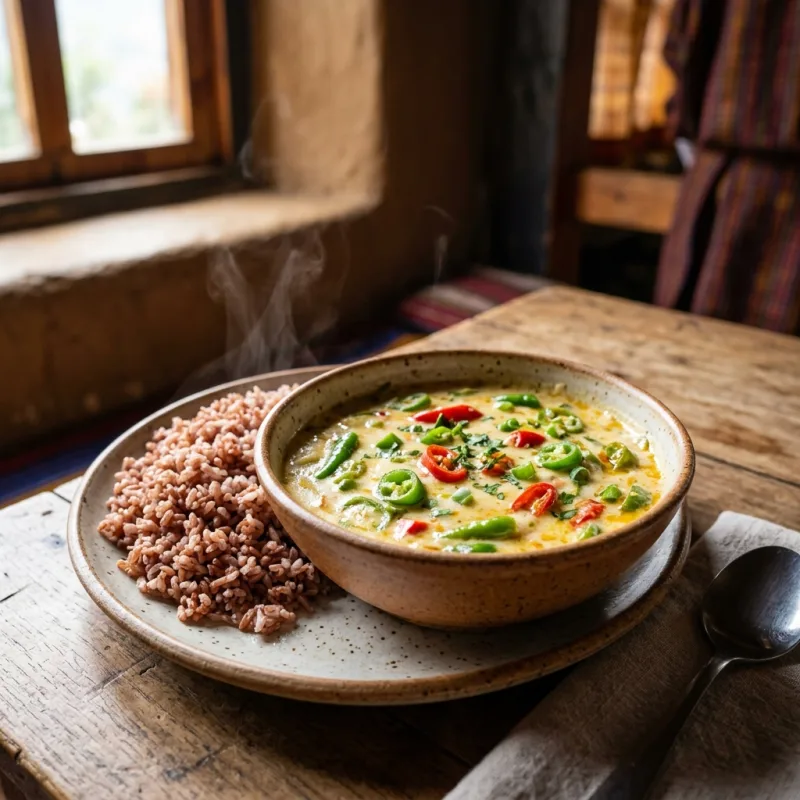
Authentic Bhutanese Ema Datshi with green chilis and cheese sauce served with red rice

Must Try Dish

Ema Datshi - Bhutan's national dish consisting of tender green and red chili peppers simmered gently in a rich, savory sauce of local cow or yak milk cheese. It is served steaming hot over fragrant, nutty Bhutanese red rice to balance its robust, warming spice.
Food Experiences Title Icon

Food
Experiences

Discover cooking classes, tastings and local food tours

No food experience found
Maya, the human travel expert at TravelingWiz, offering curated, non-AI expertise

Maya’s Final Checklist for Paro District

Logistics shouldn’t be the focus of your trip—the experience should. I’ve hand-vetted these essential partners to ensure your arrival, stay, and exploration are as smooth as an Athenian breeze.

Where to Stay

From boutique hotels to local apartments—compare thousands of options and find the perfect stay in the best neighborhood.

Air Travel

Getting there should be seamless. Compare the best routes and prices across top airlines to start your journey on the right note.

Local Guides

Connect with experts who know the destination best. Get personalized advice and insider tips to help you plan your perfect trip.

Travel Protection

The “Engineer’s” rule: always have a backup. Secure your trip with a plan that covers every “what if” and unexpected change.

Car Rentals

Explore at your own pace with total freedom. Compare reliable rental options and find the right vehicle for your adventure.

Visa Services

Don’t let paperwork slow you down. Get expert assistance with your application to ensure all your entry documents are in order.

FAQs

The Tiger’s Nest hike is a moderate to strenuous trek covering approximately 6.4 kilometers (4 miles) round-trip with an elevation gain of 500 meters (reaching 3,120 meters above sea level). Most hikers require 4 to 6 hours for the full round trip, including temple visits. The trail is well-maintained but steep and dusty; hiring trekking poles or taking a horse up to the midpoint cafeteria is common for those with lower fitness levels.
Yes. All international travelers (except citizens of India, Bangladesh, and Maldives under specific regional agreements) require a pre-arranged Bhutanese visa approved by the Department of Immigration. In addition, visitors must pay the daily Sustainable Development Fee (SDF) and travel accompanied by a certified Bhutanese tour guide and driver.
Yes. Paro International Airport (PBH) is Bhutan’s sole international airport, serviced exclusively by national carriers Drukair and Bhutan Airlines. Flights connect Paro with regional hubs including Bangkok, Delhi, Kathmandu, Singapore, and Dhaka. Landing in Paro is renowned worldwide for its scenic, pilot-navigated descent through steep mountain ridges.
Visitors must wear conservative clothing that completely covers the shoulders, chest, and knees. T-shirts, shorts, hats, and short skirts are strictly forbidden inside dzongs and lhakhangs. Shoes must be removed before stepping onto sacred temple floors, and photography is prohibited inside inner shrine rooms.
Paro valley floor sits at roughly 2,200 meters (7,218 feet), where serious altitude sickness (AMS) is rare. However, excursions to Tiger’s Nest (3,120 meters) or Chele La Pass (3,988 meters) can trigger mild shortness of breath or light headaches. Travelers should stay well-hydrated, avoid overexertion on their first 24 hours, and allow time to acclimatize.

Your Insights Matter

TravelingWiz grows through the stories of our community. If you’ve recently explored ,Paro District share your tips and stories to help us perfect our guides for the next traveler.

Related Articles

Check out our related articles and blog posts to learn even more about the destination.

No related articles found

Don’t Travel Alone

Share with your friends and family

Where should we send your offline card?

We hate spam just as much as you do

newsletter_consent *