Disclosure: This site contains affiliate links. We may earn a commission if you make a purchase, at no extra cost to you.

>
>
>
Phnom Penh Region

Phnom Penh Region

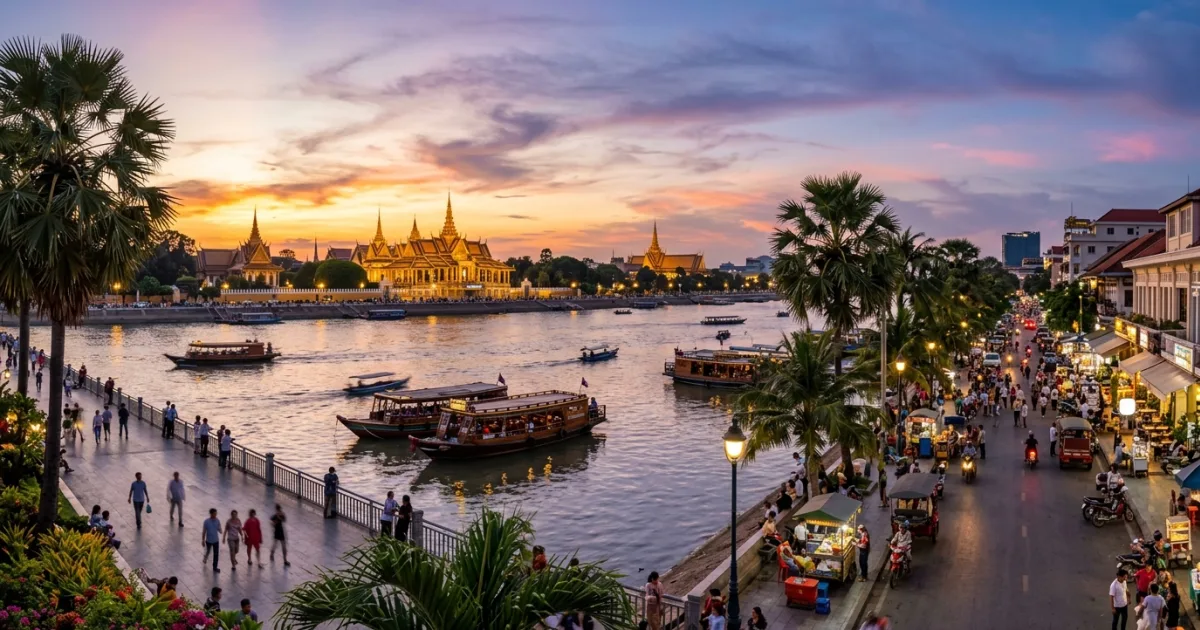
Phnom Penh riverside waterfront and Royal Palace at sunset

Phnom Penh Region Overview & Key Highlights

The Phnom Penh Region encompasses Cambodia's energetic capital and its adjacent riverine provinces situated at the confluence of the Mekong, Tonle Sap, and Bassac rivers. As the political, economic, and cultural heart of the kingdom, the region bridges classical Khmer heritage with rapid 21st-century modernization. Travelers encounter ornate golden spires at the Royal Palace, somber modern history at Tuol Sleng, and tree-lined boulevards displaying French colonial architecture alongside contemporary sky bars overlooking the bustling riverfront. Beyond urban Phnom Penh, the broader region offers immersive pastoral escapes, including the silk weaving communities of Koh Dach (Silk Island) and ancient historical capitals like Oudong. The culinary scene reflects deep Khmer traditions, offering fragrant curries, street food stalls brimming with freshwater fish, and a booming specialty coffee culture. Navigating the region requires adapting to intense tropical heat and lively vehicular traffic, yet it rewards curious explorers with deeply resilient local stories, exceptional value, and genuine Cambodian hospitality.

Phnom Penh Region Travel Guide: Logistics & In-Depth Tips

The Phnom Penh Region serves as Cambodia's vibrant hub where deep history and modern aspirations collide. Anchored along the banks of the Tonle Sap and Mekong rivers, the area displays a dramatic architectural tapestry ranging from the traditional Khmer spires of the Royal Palace and the National Museum to preserved French colonial mansions and modern glass towers. The region carries profound historical significance, bearing witness to both the height of classic artistic accomplishments and the devastating legacy of the Khmer Rouge regime. Today, Phnom Penh pulses with entrepreneurial energy, home to hip artisan boutiques, thriving craft cocktail lounges, and bustling night markets.

Venture beyond the inner core to uncover a slower, agricultural rhythm along the river plains. Rural settlements in Kandal province surround the capital with traditional stilt houses, emerald rice paddies, and island craft enclaves. This regional juxtaposition allows visitors to immerse themselves in complex 20th-century history during the morning, cruise along the four-faced Chaktomuk river convergence by sunset, and savor world-class street food under the glow of neon market stalls at night.

Reasons to Visit

  • Royal Splendor: The Royal Palace and Silver Pagoda display exquisite Khmer craftsmanship and sacred golden Buddha statues.
  • Critical Historical Education: The Tuol Sleng Genocide Museum (S-21) and the Choeung Ek Genocidal Center offer essential perspectives on Cambodia's modern resilience.
  • Dynamic River Life: Evening boat cruises along the junction of the Mekong and Tonle Sap rivers provide refreshing breezes and golden sunset views.
  • Artisanal Traditions: A short ferry ride leads to Koh Dach (Silk Island), where master weavers produce intricate handwoven silk textiles.
  • Exceptional Street Gastronomy: Dynamic night markets and riverfront vendors present diverse flavors from steamed amok to Kampot pepper crab.

Things to Avoid

  • Avoid walking distractedly near curbs while holding a smartphone or camera, as motorbikes can quickly snatch loose belongings.
  • Do not accept open torn, stamped, or heavily folded US dollar bills, as money changers and merchants will decline them.
  • Avoid hiring unmetered street tuk-tuks without firmly agreeing on a price before getting in; use digital apps instead.
  • Do not point your feet toward Buddha images or touch anyone on the head, as both actions are culturally offensive.
  • Avoid visiting the Killing Fields without modest clothing and a quiet, respectful demeanor.

Local Transportation Tips

Getting around Phnom Penh is cheap and accessible thanks to widespread ride-hailing applications like Grab and PassApp, which connect travelers to modern auto-rickshaws and air-conditioned cars with fixed, transparent pricing. Traditional cyclos (three-wheeled bicycle taxis) provide a leisurely, atmospheric journey through historic quarters, while metered city buses operate along limited primary arteries. For rural day trips to Oudong or Tonle Bati, hiring a private car or licensed driver for the day is the safest and most convenient option.

Travel Etiquette

  • Greet locals using the traditional 'Sampeah' gesture (placing palms together before the chest and bowing slightly).
  • Always remove your shoes and hats before entering a Buddhist pagoda or a Cambodian private home.
  • Use both hands or your right hand when handing money, items, or business cards to another person.
  • Dress modestly with covered shoulders and knees when visiting pagodas, government buildings, and historical monuments.
  • Ask for permission before taking close-up portraits of monks or local market vendors.

Recommended Age Group

Phnom Penh offers profound cultural immersion, although its intense traffic, warm climate, and somber historical venues require thoughtful planning across demographic groups.

  • Babies (0-2 years): Not Recommended. Cracked sidewalks, chaotic motorcycle traffic, and high heat make stroller navigation impractical.
  • Kids (3-12 years): Neutral. Children will enjoy riverboat trips and vibrant markets, though the intense heat and historical sites require careful pacing.
  • Teens (13-19 years): Recommended. High educational value from modern history museums, lively street markets, and exciting food scenes.
  • Adults (20-64 years): Recommended. Perfect balance of rich cultural monuments, dynamic culinary discovery, nightlife, and accessible transit.
  • Seniors (65+ years): Recommended. Affordable private transport, luxury heritage hotels, and flat temple compounds make slow-paced sightseeing very comfortable.

Accessibility Level: Medium

  • Urban sidewalks are often uneven, broken, or blocked by parked motorbikes, creating challenges for manual wheelchair users.
  • Major attractions like the Royal Palace and National Museum feature ground-level courtyards, though ramps are limited at interior thresholds.
  • Tuol Sleng Genocide Museum contains several multi-story buildings that lack elevators, restricting access to upper levels.
  • Air-conditioned private cars arranged through reputable tour agencies offer the most reliable barrier-free regional transportation.

Did You Know?

Phnom Penh was founded around a legend involving a wealthy widow named Lady Penh (Daun Penh), who discovered four bronze Buddha statues floating inside a hollow Koki tree along the riverbank in 1372. She subsequently erected a shrine on a small hill (phnom) to house the sacred relics, establishing the site that is known today as Wat Phnom.

Cool Statistics

  • Home to over 2.2 million residents, accounting for nearly 15% of Cambodia's total population.
  • Features the Chaktomuk junction, a rare river confluence where four river channels meet: Upper Mekong, Lower Mekong, Tonle Sap, and Bassac.
  • The floor of the famous Silver Pagoda inside the Royal Palace is paved with over 5,000 pure silver tiles weighing more than a kilogram each.


Address:

Phnom Penh Region, Cambodia

Find Nearby Accommodations

Basic Info

address icon

COUNTRY & Region

Cambodia,
Asia

ACCESSIBILITY LEVEL​

Medium
Currency icon

LOCAL CURRENCY​

Cambodian Riel (KHR)
Price level icon
Low
Safety Level icon

SAFETY LEVEL

Duration icon

Recommended Duration

• 1-7 days
• 3-5 hours (Half a day)
• Full day

Electricity

electricity icon

Electricity

220-240V, 
50Hz
Plug Socket icon

Plug Type

• Type A (Flat blade)
• Type C (Round pin)
• Type G (Three rectangular pins in a triangular pattern)
Plug types
Click To View Plug Types
Phnom Penh Region is part of our
Micro Adventures collection

Things To Do In Phnom Penh Region

Total: 1

Activities To Do In Phnom Penh Region

Best Time To Visit Phnom Penh Region

Phnom Penh features a tropical monsoon climate with distinct dry and wet cycles.

  • November to February (Dry & Cool Season): Peak travel period offering the most pleasant temperatures (22°C–30°C) and minimal rain.
  • March to May (Hot Season): Hottest period of the year, with temperatures regularly surpassing 38°C; midday exploration can be exhausting.
  • June to October (Monsoon Season): Characterized by high humidity and heavy late-afternoon downpours, but featuring lush rural surroundings and fewer tourists.

Average Temperatures Per Month

Remember to check the weather forecast a few days before the trip and before heading to the airport.

Safety Level icon

Safety Level

Phnom Penh is generally welcoming, but opportunistic drive-by bag and phone snatching by motorcycle riders is a known issue. Keep smartphones securely stored when walking near roadways, and position shoulder bags across your chest away from traffic. Avoid isolated alleys after midnight, and use reputable ride-hailing apps for late-night journeys instead of walking.

The rating is based on multi-year peace, crime, and security indices. Before you go, always verify current conditions through official government travel advisories.

Emergency Numbers

Police: 117
Ambulance: 119

No internet needed • Includes local translations • Free for TravelingWiz readers

Spoken Languages

Khmer (official), English (widely spoken in tourist and business hubs), French (understood by older generations and diplomatic sectors)

Learn The Language

  • Suas-dei – Hello
  • Ar-kun – Thank you
  • Som toh – Excuse me / Sorry
  • Baht (men) / Chah (women) – Yes
  • Dteh – No
  • Thlai ponman? – How much does it cost?
  • Bon-dtub dtek nov e-na? – Where is the restroom?
  • Chhnang – Delicious
Travel Booking Partner - TravelingWiz

Trip Cost & Budgeting for Phnom Penh Region, 2026

Everything you need to know about money while traveling
Is Phnom Penh Region expensive for tourists in 2026? No, Phnom Penh Region is very affordable for international travelers. With Human Verified prices, expect to pay around 11,000 KHR for a cappuccino, 4,500 KHR for a draft domestic beer, and 25,000 KHR for a standard main meal. Accommodation and local transport are equally budget-friendly. Use the data table below to calculate your specific daily budget based on your travel style.
Currency icon

LOCAL CURRENCY​:

Cambodian Riel (KHR)
Price level icon
Low
Cash is essential for tuk-tuks, markets, and small vendors, though major hotels and upscale restaurants accept credit cards.

Per person, per day – pocket cash for small purchases.

Local: 21000
Cambodian Riel (KHR)
≈ 5 USD

Full daily spend estimation (accommodation, food, transportation, attractions).

Travel Style
Cambodian Riel (KHR)
≈ USD ($)
Budget
115500
28
Mid-range
210000
52
Comfort
462000
114

The Prices, Daily costs, and calculator results are estimates for planning purposes only. Actual costs may vary based on season, booking timing, personal spending habits, and currency fluctuations. TravelingWiz cannot be held responsible for discrepancies between these estimates and your final trip expenses.

  • • Use Grab or PassApp for fixed-rate tuk-tuk rides across the city.
  • • Dine at local markets and street stalls for filling meals under 10,000 KHR.
  • • Pay with clean, undamaged banknotes and use riel for daily small purchases.
  • • Explore free public attractions and riverside walks to save on sightseeing.

Pre-Order Tickets

Avoid disappointment when tickets sell out — and skip the long lines by booking online in advance. You’ll often save up to 20% too.
Save up to 20%

Travel Discounts & Coupons

Save on hotels, attractions, transport, and gear — find verified discounts for smarter travel spending.
Verified Coupons

What To Pack

  • Lightweight, breathable linen and cotton clothing suited for humid tropical heat
  • Modest garments covering shoulders and knees for temple and palace visits
  • Slip-on walking shoes that are easy to remove at sacred sites
  • High-SPF sunscreen, broad-brimmed sun hat, and UV-blocking sunglasses
  • DEET insect repellent for evening riverside walks
  • Universal travel adapter compatible with Type A, C, and G sockets
  • Compact umbrella for unexpected tropical downpours and sun protection
  • Small shoulder bag with secure zip compartments against bag snatching
We couldn't find tips for Phnom Penh Region.
If you got any, please share

Recommended Itineraries for Traveling to Phnom Penh Region

We couldn't find itineraries for Phnom Penh Region.
you can contact us for custom trip plan

Food & Drink Highlights

Local Food Overview

Khmer cuisine in the Phnom Penh Region relies on fresh herbs, freshwater fish from the Tonle Sap, fermented fish paste (prahok), and nuanced aromatics such as kroeung (lemongrass, galangal, kaffir lime, and turmeric paste). Street carts and casual eateries serve vibrant bowls of Kuy Teav (pork and seafood noodle soup) in the morning, while riverfront restaurants grill marinated meats and freshwater prawns seasoned with Kampot black pepper and lime dip.
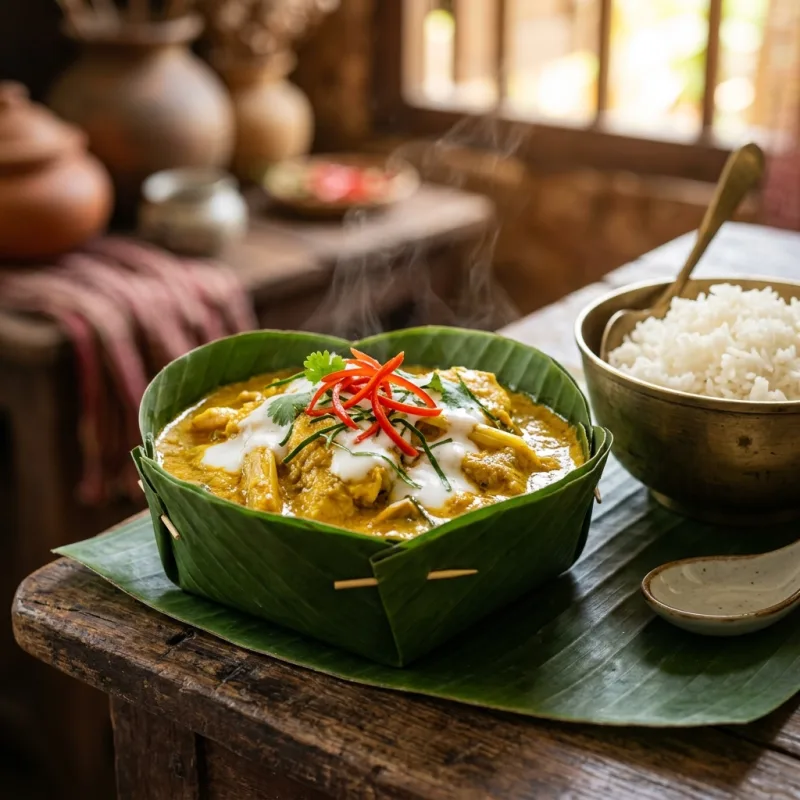
Cambodian Fish Amok served in a banana leaf bowl with jasmine rice

Must Try Dish

Fish Amok - A signature Cambodian steamed curry composed of fresh river fish coated in rich coconut cream, eggs, kroeung spice paste, and wild noni leaves. Cooked inside a banana leaf cup, the dish boasts a silky, souffle-like texture that balances sweet, savory, and aromatic notes.
Food Experiences Title Icon

Food
Experiences

Discover cooking classes, tastings and local food tours

No food experience found
Maya, the human travel expert at TravelingWiz, offering curated, non-AI expertise

Maya’s Final Checklist for Phnom Penh Region

Logistics shouldn’t be the focus of your trip—the experience should. I’ve hand-vetted these essential partners to ensure your arrival, stay, and exploration are as smooth as an Athenian breeze.

Where to Stay

From boutique hotels to local apartments—compare thousands of options and find the perfect stay in the best neighborhood.

Air Travel

Getting there should be seamless. Compare the best routes and prices across top airlines to start your journey on the right note.

Local Guides

Connect with experts who know the destination best. Get personalized advice and insider tips to help you plan your perfect trip.

Travel Protection

The “Engineer’s” rule: always have a backup. Secure your trip with a plan that covers every “what if” and unexpected change.

Car Rentals

Explore at your own pace with total freedom. Compare reliable rental options and find the right vehicle for your adventure.

Visa Services

Don’t let paperwork slow you down. Get expert assistance with your application to ensure all your entry documents are in order.

FAQs

A stay of two to three days is ideal to experience the primary landmarks, including the Royal Palace, Tuol Sleng Genocide Museum, the Killing Fields of Choeung Ek, and the bustling Sisowath Quay riverfront.
While the central municipal water treatment in Phnom Penh has modernized, tourists are advised to drink bottled, boiled, or purified water to prevent gastrointestinal upset.
Visitors must cover their shoulders and knees. Sleeveless shirts, short shorts, and sheer fabrics are strictly prohibited at religious sites and the Royal Palace grounds.

Your Insights Matter

TravelingWiz grows through the stories of our community. If you’ve recently explored ,Phnom Penh Region share your tips and stories to help us perfect our guides for the next traveler.

Related Articles

Check out our related articles and blog posts to learn even more about the destination.

No related articles found

Don’t Travel Alone

Share with your friends and family

Where should we send your offline card?

We hate spam just as much as you do

newsletter_consent *