Disclosure: This site contains affiliate links. We may earn a commission if you make a purchase, at no extra cost to you.

>
>
>
Siem Reap and Angkor Region

Siem Reap and Angkor Region

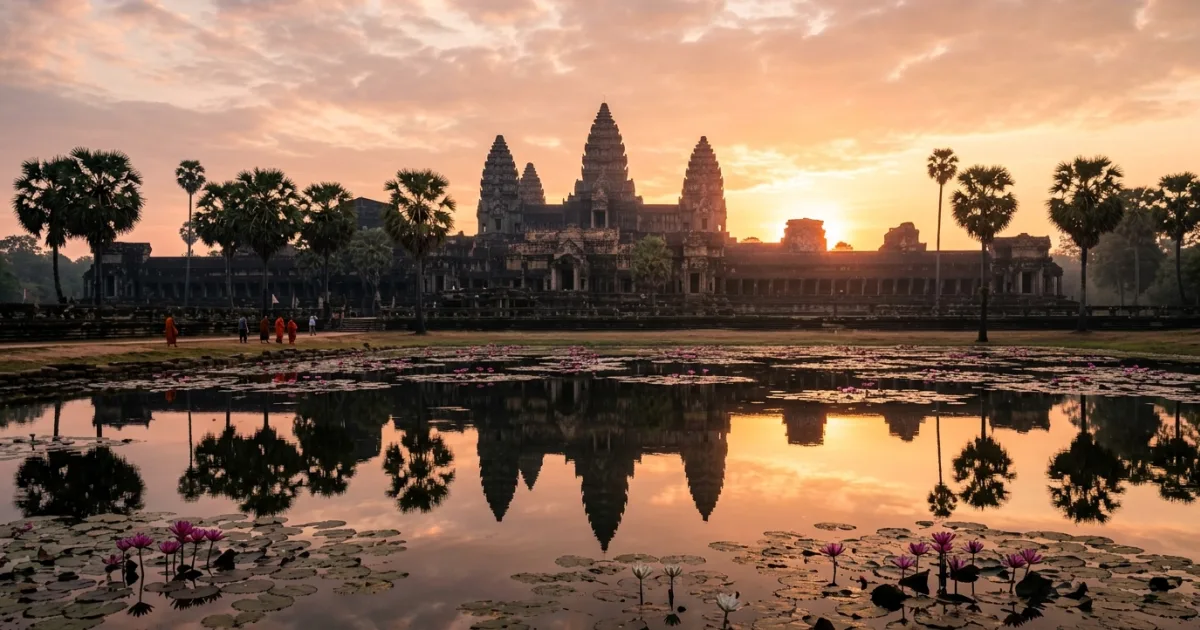
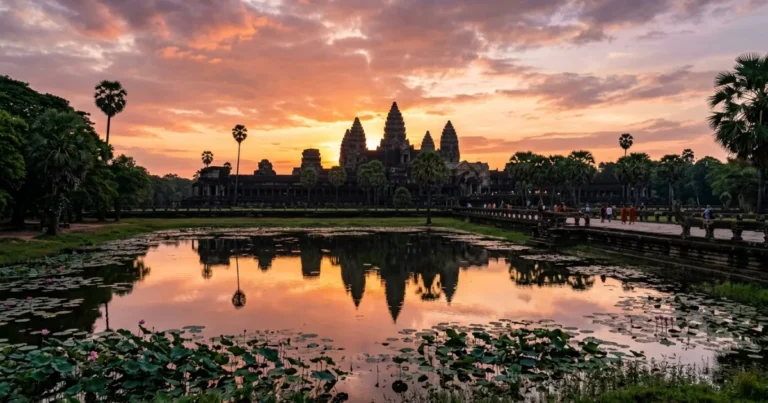
Sunrise reflection of Angkor Wat temple towers in a lily pond in Siem Reap, Cambodia

Siem Reap and Angkor Region Overview & Key Highlights

Siem Reap serves as the gateway to the UNESCO-listed Angkor Archaeological Park, home to the architectural remains of the Khmer Empire dating from the 9th to the 15th centuries. Spanning over 400 square kilometers, the complex features monumental religious structures including Angkor Wat, the colossal stone faces of the Bayon, and the jungle-strangled corridors of Ta Prohm. The surrounding region blends expansive temple complexes with pastoral rice paddies, floating villages on the Tonle Sap Lake, and sacred forested hills. Beyond its monumental antiquities, Siem Reap is a vibrant cultural enclave renowned for its refined Khmer culinary heritage, thriving artisan craft guilds, and restorative boutique retreats. Tree-lined riverfront boulevards feature open-air night markets, contemporary art galleries, and acclaimed dining spots serving elevated traditional fare. Visitors typically explore the vast complex by bicycle or motorized tuk-tuk, pairing pre-dawn temple excursions with relaxed afternoon cafe culture and traditional spa therapies.

Siem Reap and Angkor Region Travel Guide: Logistics & In-Depth Tips

Siem Reap has transformed from a sleepy provincial trading post into a sophisticated cultural hub while preserving its authentic heritage. The surrounding Angkor Archaeological Park contains the majestic remnants of hydraulic cities, temples, and reservoirs built by Khmer god-kings over six centuries. Each temple complex exhibits distinctive artistic phases, from the pink sandstone filigree of 10th-century Banteay Srei to the sprawling 12th-century city of Angkor Thom, bounded by defensive walls and monumental gates guarded by stone gods and demons.

Beyond ancient masonry, the region offers deep insights into everyday Cambodian life. Traditional stilted fishing villages such as Kampong Phluk and Mechrey demonstrate ingenious seasonal adaptations along the banks of the Tonle Sap Biosphere Reserve. In the heart of Siem Reap town, restored colonial shophouses host fair-trade silk weaving workshops, sustainable ceramics ateliers, and lively riverside night bazaars, creating a rewarding balance between profound archaeological study and modern comfort.

Reasons to Visit

  • Angkor Wat: Marvel at the largest religious monument in the world, renowned for its architectural harmony and expansive bas-relief stone carvings.
  • Ta Prohm: Experience the evocative interplay between nature and history where giant silk-cotton and strangler fig roots envelop ancient stone galleries.
  • The Bayon Temple: Walk among 216 enigmatic smiling stone faces that gaze outwards from 54 Gothic-style towers in the center of Angkor Thom.
  • Refined Khmer Gastronomy: Sample historic Royal Khmer recipes, lively street food stalls, and innovative farm-to-table restaurants.
  • Tonle Sap Lake Biosphere: Take a scenic boat excursion through freshwater mangrove forests and elevated stilted villages to observe unique lacustrine ecosystems.
  • Traditional Khmer Arts: Witness classical Apsara dance dramas and attend energetic contemporary circus performances by Phare, The Cambodian Circus.

Things to Avoid

  • Avoid touching, climbing on, or sitting upon delicate stone carvings, statues, or crumbling temple balustrades.
  • Do not buy trinkets, souvenirs, or flutes from young children at temple entrances, as this practice reinforces school absenteeism; donate to accredited child-protection charities instead.
  • Avoid wearing clothing that exposes shoulders, cleavage, or knees within sacred archeological sites; temple guards will strictly deny entrance.
  • Do not accept torn, soiled, or heavily creased US dollar banknotes from vendors, as local merchants and banks will refuse to accept them from you later.
  • Avoid riding captive elephants at temple sites; support certified ethical wildlife sanctuaries nearby instead.

Local Transportation Tips

The traditional motorized remorque (tuk-tuk) is the quintessential mode of transit in Siem Reap. Drivers can be hired for roughly $18 to $25 USD per day for the standard Small Circuit of temples, and slightly more for remote sites like Banteay Srei or Beng Mealea. For town transit, localized ride-hailing applications such as Grab and PassApp provide seamless, metered three-wheeler rides. Well-maintained paved roads also make standard bicycles ($2 to $5 USD per day) and electric bicycles an enjoyable choice for exploring shaded temple paths at an unhurried pace.

Travel Etiquette

  • Always greet locals with a 'Sampeah' (placing both palms together at chest level with a slight bow) when meeting elders or monks.
  • Never touch anyone on the head, including children, as the head is culturally considered the most sacred part of the body.
  • Point your feet away from Buddha statues, monks, and fellow diners when seated on temple floors; tuck your legs behind or beside you.
  • Ask for explicit verbal permission before photographing Buddhist monks, novice students, or local village artisans.
  • Remove hats and footwear before stepping inside active Buddhist pagodas or private residences.

Recommended Age Group

Siem Reap and the Angkor region cater well to dynamic travelers, though the physical demands of temple exploration require careful itinerary pacing depending on age.

  • Babies (0-2 years): Not Recommended. The extreme tropical heat, lack of paved paths, steep temple stairs, and inability to use strollers make touring strenuous with infants.
  • Kids (3-12 years): Neutral. Older children often delight in the adventurous jungle ruins of Ta Prohm and circus performances, but midday temple touring can quickly cause heat exhaustion without scheduled pool breaks.
  • Teens (13-19 years): Recommended. Excellent destination for adventurous teenagers who appreciate history, cycling trails, photography, and zip-lining inside the national park canopy.
  • Adults (20-64 years): Recommended. Perfect balance of historical exploration, exceptional boutique hotels, world-class culinary routes, and wellness spas.
  • Seniors (65+ years): Recommended. Highly rewarding when utilizing private air-conditioned vehicles and leisurely guided itineraries that avoid arduous vertical temple ascents.

Accessibility Level: Medium

  • The ancient archeological complexes feature high stone thresholds, uneven dirt pathways, and steep, narrow staircases that present significant physical barriers for wheelchair users.
  • Angkor Wat has installed timber ramps leading through select ground-level outer corridors, providing partial access to the primary bas-relief galleries.
  • The modern Angkor National Museum in downtown Siem Reap is fully wheelchair accessible with elevators, smooth ramps, and accessible restroom facilities.
  • Modern upscale hotels and fine-dining establishments in Siem Reap town regularly feature step-free entrances and ground-floor accessible suites.

Did You Know?

The stone blocks used to construct Angkor Wat weighed up to 1.5 tons each and were transported from the sacred quarries of Mount Kulen over 40 kilometers away via an ingenious network of purpose-built canals and bamboo rafts.

Cool Statistics

  • Over 1,000 distinct temple structures and archeological sites are mapped across the 400-square-kilometer Angkor Archaeological Park.
  • Angkor Wat alone required an estimated 5 to 10 million sandstone blocks to construct in the early 12th century.
  • The Tonle Sap Lake undergoes a unique hydrological phenomenon each year, reversing its river flow during the peak monsoon season.


Address:

Siem Reap and Angkor Region, Cambodia

Find Nearby Accommodations

Basic Info

address icon

COUNTRY & Region

Cambodia,
Asia

ACCESSIBILITY LEVEL​

Medium
Currency icon

LOCAL CURRENCY​

Cambodian Riel (KHR)
Price level icon
Low
Safety Level icon

SAFETY LEVEL

Duration icon

Recommended Duration

• 1-7 days
• Full day

Electricity

electricity icon

Electricity

220-240V, 
50Hz
Plug Socket icon

Plug Type

• Type A (Flat blade)
• Type C (Round pin)
• Type G (Three rectangular pins in a triangular pattern)
Plug types
Click To View Plug Types
Siem Reap and Angkor Region is part of our
Set-Jetting collection

Things To Do In Siem Reap and Angkor Region

Total: 1

Activities To Do In Siem Reap and Angkor Region

Best Time To Visit Siem Reap and Angkor Region

Siem Reap experiences a tropical monsoon climate defined by distinct dry and wet cycles.

  • November to February (Cool & Dry Season): The most popular period to visit, offering clear blue skies, lower humidity, and daytime temperatures averaging 26°C to 30°C.
  • March to May (Hot Season): Temperatures consistently exceed 35°C with intense solar radiation, making early morning and late afternoon touring essential.
  • June to October (Green/Wet Season): Frequent, dramatic afternoon downpours rejuvenate the surrounding countryside, filling the moats of Angkor and creating lush emerald backdrops with substantially smaller crowd sizes.

Average Temperatures Per Month

Remember to check the weather forecast a few days before the trip and before heading to the airport.

Safety Level icon

Safety Level

Siem Reap is exceptionally peaceful and welcoming toward international travelers, though basic vigilance is advised. Keep smartphones and shoulder bags secured away from passing traffic when riding in open-air tuk-tuks to prevent opportunist snatch thefts. Avoid unlit, unpaved back alleys late at night. When hiking near remote ruins or outer archeological zones, always stay on marked, well-trodden paths due to historical unexploded ordnance (UXO), though all main tourist sites are thoroughly cleared and safe.

The rating is based on multi-year peace, crime, and security indices. Before you go, always verify current conditions through official government travel advisories.

Emergency Numbers

Police: 117
Ambulance: 119

No internet needed • Includes local translations • Free for TravelingWiz readers

Spoken Languages

Khmer is the national language; English is widely understood in hotels, restaurants, and tour hubs, alongside conversational French.

Learn The Language

  • Hello: Chom reap sour (Formal) / Sous-dey (Casual)
  • Thank you: Orkun
  • Yes: Baat (male) / Chaah (female)
  • No: Ot teh
  • How much does this cost?: T’lay ponmaan?
  • Delicious: Chhnang
  • Please / Excuse me: Som toh
  • Goodbye: Chom reap lear
Travel Booking Partner - TravelingWiz

Trip Cost & Budgeting for Siem Reap and Angkor Region, 2026

Everything you need to know about money while traveling
Is Siem Reap and Angkor Region expensive for tourists in 2026? No, it remains an extremely budget-friendly destination for international travelers. Based on Human Verified prices, you can expect to pay around 6,700 KHR for a cappuccino, 4,000 KHR for a pint of domestic beer, and 48,700 KHR for a mid-range restaurant meal. Daily accommodation and transport costs are also low. Use the data table below to calculate your specific daily budget based on your travel style.
Currency icon

LOCAL CURRENCY​:

Cambodian Riel (KHR)
Price level icon
Low
US dollars and local cash are vital for daily spending, though hotels and larger venues accept credit cards.

Per person, per day – pocket cash for small purchases.

Local: 37700
Cambodian Riel (KHR)
≈ 9 USD

Full daily spend estimation (accommodation, food, transportation, attractions).

Travel Style
Cambodian Riel (KHR)
≈ USD ($)
Budget
207400
51
Mid-range
377100
93
Comfort
829600
205

The Prices, Daily costs, and calculator results are estimates for planning purposes only. Actual costs may vary based on season, booking timing, personal spending habits, and currency fluctuations. TravelingWiz cannot be held responsible for discrepancies between these estimates and your final trip expenses.

  • • Use ride-hailing apps like Grab or PassApp to book tuk-tuks at fair, transparent rates instead of negotiating on the street.
  • • Buy multi-day Angkor Passes (3-day or 7-day) to lower your daily temple admission cost compared to purchasing single-day tickets.
  • • Eat at local family-run eateries outside the immediate Pub Street area for authentic Cambodian dishes at half the price.
  • • Carry crisp, undamaged USD bills or use local ATMs dispensing KHR to avoid steep currency exchange margins and damaged bill rejections.

Pre-Order Tickets

Avoid disappointment when tickets sell out — and skip the long lines by booking online in advance. You’ll often save up to 20% too.
Save up to 20%

Travel Discounts & Coupons

Save on hotels, attractions, transport, and gear — find verified discounts for smarter travel spending.
Verified Coupons

What To Pack

  • Breathable, lightweight linen or cotton clothing that covers shoulders and knees to comply with temple dress codes.
  • Sturdy walking shoes or trail runners with rugged grip for navigating steep, uneven sandstone steps.
  • Wide-brim sun hat, UV-protective sunglasses, and eco-friendly coral/reef-safe sunscreen.
  • High-strength insect repellent containing DEET or Picaridin for temple forest areas.
  • Compact LED flashlight or headlamp for navigating pitch-black temple entry paths during sunrise visits.
  • Universal plug adapter compatible with Types A, C, and G sockets.
  • Handheld rechargeable misting fan or cooling towel to combat equatorial afternoon heat.
  • Waterproof dry bag or rain poncho, particularly during the humid monsoon season.
We couldn't find tips for Siem Reap and Angkor Region.
If you got any, please share

Recommended Itineraries for Traveling to Siem Reap and Angkor Region

We couldn't find itineraries for Siem Reap and Angkor Region.
you can contact us for custom trip plan

Food & Drink Highlights

Local Food Overview

Khmer cuisine is characterized by its delicate balance of fragrant herbs, fermented accents, fresh river fish, and subtle citrus notes. Unlike the fiery heat of neighboring Thai food, Cambodian culinary traditions highlight complexity through kroeung—a foundational herb paste ground from lemongrass, galangal, kaffir lime zest, turmeric, garlic, and shallots. River fish sourced from the Tonle Sap Lake forms the cornerstone of daily meals, paired with fragrant jasmine rice, crisp seasonal vegetables, and wild herbs.
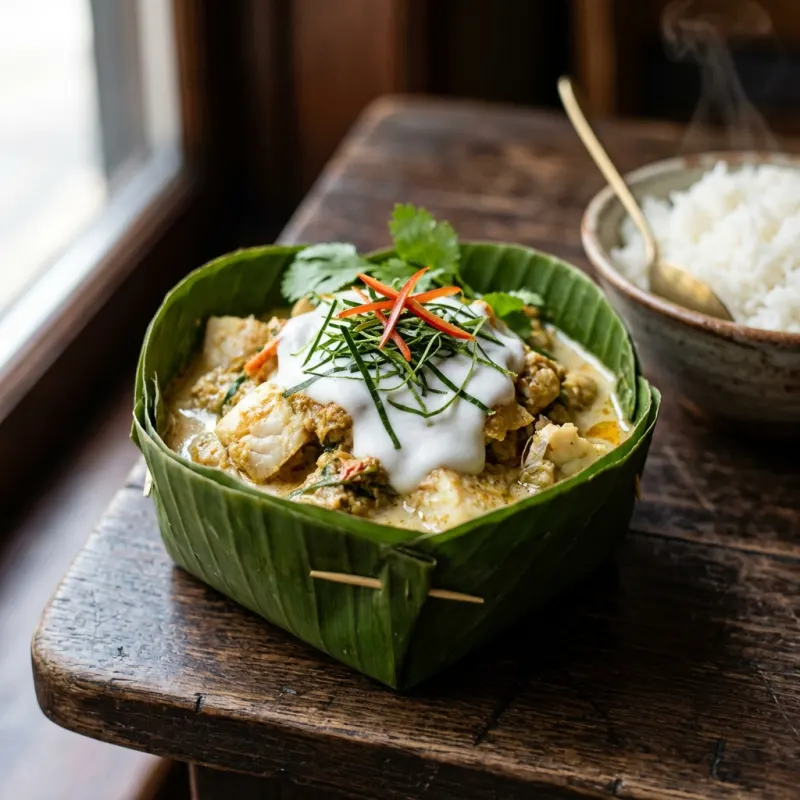
Authentic Cambodian Fish Amok steamed in a banana leaf basket with coconut cream

Must Try Dish

Fish Amok (Amok Trey) - Fresh snakehead fish fillets gently coated in a velvety kroeung spice paste, kaffir lime leaf, and rich coconut cream, then steamed inside a folded banana leaf cup. The resulting dish yields a delicate, savory custard that embodies the aromatic core of traditional Khmer gastronomy.
Food Experiences Title Icon

Food
Experiences

Discover cooking classes, tastings and local food tours

No food experience found
Maya, the human travel expert at TravelingWiz, offering curated, non-AI expertise

Maya’s Final Checklist for Siem Reap and Angkor Region

Logistics shouldn’t be the focus of your trip—the experience should. I’ve hand-vetted these essential partners to ensure your arrival, stay, and exploration are as smooth as an Athenian breeze.

Where to Stay

From boutique hotels to local apartments—compare thousands of options and find the perfect stay in the best neighborhood.

Air Travel

Getting there should be seamless. Compare the best routes and prices across top airlines to start your journey on the right note.

Local Guides

Connect with experts who know the destination best. Get personalized advice and insider tips to help you plan your perfect trip.

Travel Protection

The “Engineer’s” rule: always have a backup. Secure your trip with a plan that covers every “what if” and unexpected change.

Car Rentals

Explore at your own pace with total freedom. Compare reliable rental options and find the right vehicle for your adventure.

Visa Services

Don’t let paperwork slow you down. Get expert assistance with your application to ensure all your entry documents are in order.

FAQs

A minimum of three full days is recommended to explore the major circuits of Angkor Archaeological Park without fatigue, allowing time for Angkor Wat, Angkor Thom, Ta Prohm, Banteay Srei, and the town’s vibrant markets and cultural centers.
Visitors must follow the Angkor Code of Conduct. Both men and women must cover their shoulders and knees. Shawls draped over bare shoulders or sheer garments are frequently rejected at ticket checkpoints, so short-sleeved shirts and lightweight trousers or long skirts are required.
You can purchase your official Angkor Pass online via the Angkor Enterprise portal prior to arrival or at the official ticket center outside town. Passes are issued with a digital photo and checked at temple entrances.
Yes, renting a pedal bicycle or e-bike is a popular and scenic way to explore the Small Circuit. Roads are mostly flat and tree-shaded, though riders should prepare for tropical heat and bring plenty of water.

Your Insights Matter

TravelingWiz grows through the stories of our community. If you’ve recently explored ,Siem Reap and Angkor Region share your tips and stories to help us perfect our guides for the next traveler.

Related Articles

Check out our related articles and blog posts to learn even more about the destination.

No related articles found

Don’t Travel Alone

Share with your friends and family

Where should we send your offline card?

We hate spam just as much as you do

newsletter_consent *