Disclosure: This site contains affiliate links. We may earn a commission if you make a purchase, at no extra cost to you.

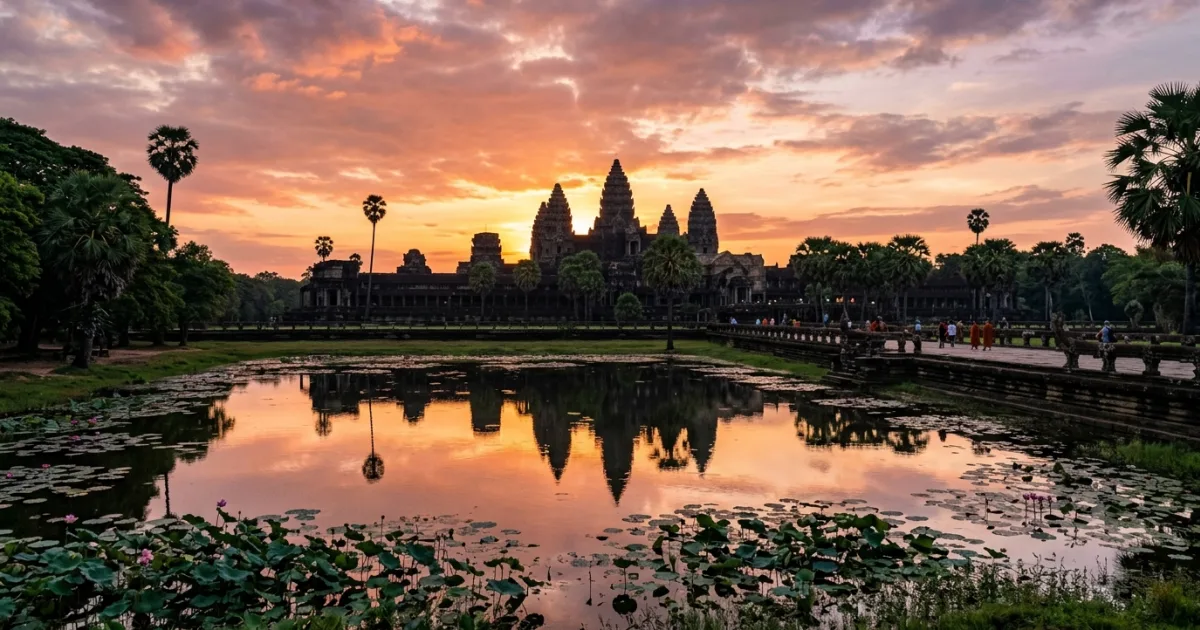
Panoramic sunrise view over the iconic towers of Angkor Wat reflecting in a lotus pond in Siem Reap

Siem Reap Overview & Key Highlights

Siem Reap serves as the gateway to the magnificent temples of Angkor, drawing travelers from across the globe into northwest Cambodia. Beyond the monumental stone towers of Angkor Wat and root-strangled ruins of Ta Prohm, the city showcases an alluring blend of colonial architecture, bustling night markets, and contemporary creative spaces. Traditional apsara dance performances and artisanal silk workshops thrive alongside quiet riverside promenades shaded by ancient dipterocarp trees. The town center maintains an accessible, vibrant rhythm defined by tuk-tuks, tranquil Buddhist pagodas, and a burgeoning culinary scene that revives ancient Khmer recipes. A modern international airport and well-developed hospitality sector cater comfortably to every travel style, from backpackers exploring Pub Street to luxury seekers unwinding in boutique heritage villas. Whether gliding past floating villages on Tonle Sap Lake or cycling through rural rice paddies, visitors find Siem Reap deeply rewarding both culturally and historically.

Siem Reap Travel Guide: Logistics & In-Depth Tips

Siem Reap has transformed from a sleepy riverside settlement into a world-renowned destination while maintaining an authentic provincial charm. Located in northwestern Cambodia, the city is globally celebrated as the staging ground for the UNESCO World Heritage-listed Angkor Archaeological Park, spanning over 400 square kilometers of magnificent temple architecture built during the height of the Khmer Empire between the 9th and 15th centuries. The city itself is split gently by the Siem Reap River, bordered by French colonial facades, manicured public gardens, and traditional Buddhist wats.

Beyond the architectural majesty of the temples, Siem Reap thrives as an artistic sanctuary. Contemporary art galleries, silk-weaving social enterprises, and vibrant night markets fill the urban core with creative vitality. The culinary landscape is undergoing a notable renaissance, celebrating heritage Khmer recipes through refined tasting menus and lively street-food stalls along the riverbanks. Siem Reap is also the staging ground for ecotourism journeys across the Tonle Sap biosphere reserve, providing visitors an evocative window into traditional waterborne communities and riverine ecology.

Reasons to Visit

  • Witness unforgettable sunrises reflecting across the central lotus ponds of Angkor Wat.
  • Explore the moss-draped, root-strangled stone sanctuaries of Ta Prohm, celebrated for its raw jungle ambiance.
  • Marvel at the 216 serene, gigantic stone faces carved into the towers of the Bayon temple at Angkor Thom.
  • Sample innovative Khmer gastronomy and aromatic street food ranging from fish amok to nom banh chok.
  • Cruise the floating villages and flooded mangrove forests of Tonle Sap, Southeast Asia's largest freshwater lake.
  • Support social initiatives like the Phare Circus, showcasing high-energy Cambodian performance art and folklore.

Things to Avoid

  • Do not wear revealing clothing when visiting temples; shoulders and knees must be fully covered or security will deny entry.
  • Avoid giving money or candy directly to children at temples or markets, as this discourages school attendance and perpetuates begging cycles.
  • Do not accept damaged, torn, or heavily marked US Dollar bills as change, because local businesses will not accept them for payment.
  • Avoid riding unvetted wild elephants at heritage sites, opting instead for ethical wildlife sanctuaries in nearby reserves.
  • Do not touch sacred Buddha statues on the head or point the soles of your feet toward monks or sacred altars.

Local Transportation Tips

Getting around Siem Reap is straightforward and scenic. The open-air remork (Cambodian tuk-tuk) is the primary mode of travel for both inner-city commutes and temple touring; drivers can be booked for full-day archaeological circuits ($18 to $25 USD per day) or summoned on demand via ride-hailing apps like PassApp and Grab. Traditional metered taxis and private air-conditioned minivans are readily available for outlying temples such as Banteay Srei or Beng Mealea. Bicycles and e-bikes offer an enjoyable, eco-friendly way to explore the flat city streets and the shaded parkways leading into the temple complex.

Travel Etiquette

  • Greet locals with the traditional 'Sampeah'—pressing your palms together at chest level with a slight bow—to show polite respect.
  • Always remove your shoes and hats before entering the main prayer hall of any active Buddhist pagoda.
  • Dress modestly in all sacred spaces; lightweight scarves thrown over tank tops are often rejected by temple guards, so wear actual sleeves.
  • Never touch a Buddhist monk, especially if you are a woman; offer items by placing them onto a cloth or table instead.
  • Ask for permission with a warm smile before photographing vendors, monks, or community members in residential areas.

Recommended Age Group

Siem Reap offers enriching experiences across all generations, though the physical demands of temple exploration require thoughtful planning.

  • Babies (0-2 years): Not Recommended. Intense tropical heat, uneven stone terrain, and steep stairs make navigating temples with strollers virtually impossible.
  • Kids (3-12 years): Neutral. Children fascinated by archaeology and jungle ruins will enjoy exploring, but midday heat, long walks, and steep steps can cause quick fatigue.
  • Teens (13-19 years): Recommended. Thrilling jungle ruins, mountain biking circuits, vibrant night markets, and circus performances keep teenagers actively engaged.
  • Adults (20-64 years): Recommended. Perfect balance of historical immersion, culinary adventures, boutique relaxation, and vibrant evening culture.
  • Seniors (65+ years): Neutral. While luxury accommodations, tuk-tuks, and gentle cultural tours are comfortable, steep temple staircases and persistent heat demand caution and physical mobility.

Accessibility Level: Medium

  • Ancient temple complexes feature uneven stone pathways, loose sand, high thresholds, and steep historic staircases without handrails, presenting substantial barriers for manual and motorized wheelchairs.
  • Angkor Wat and Bayon provide limited designated flat viewing ramps near primary outer courtyards, though deep sanctuaries remain inaccessible.
  • Modern 4- and 5-star hotels in the city center offer level step-free entries, accessible elevators, and zero-entry swimming pools.
  • Urban sidewalks in central Siem Reap frequently lack dropped curbs or are obstructed by parked motorbikes and vendor stalls, requiring transit via private adapted van or tuk-tuk.

Did You Know?

Angkor Wat is the largest religious structure in the entire world by land area, originally constructed in the early 12th century as a Hindu temple dedicated to Vishnu before gradually transforming into a Buddhist sanctuary.

Cool Statistics

  • Over 1,000 recorded ancient temples and archaeological structures are scattered across the Angkor region.
  • Angkor Wat's central tower ascends 65 meters (213 feet) above the jungle floor, mimicking Mount Meru.
  • The Tonle Sap Lake expands dramatically from 2,700 sq km in the dry season to over 16,000 sq km during peak monsoon.
  • Siem Reap welcomes over 2 million international visitors annually to explore its ancient heritage.


Address:

Siem Reap, Cambodia

Find Nearby Accommodations

Basic Info

address icon

COUNTRY & Region

Cambodia,
Asia

ACCESSIBILITY LEVEL​

Medium
Currency icon

LOCAL CURRENCY​

Cambodian Riel (KHR)
Price level icon
Low
Safety Level icon

SAFETY LEVEL

Duration icon

Recommended Duration

• 1-7 days

Electricity

electricity icon

Electricity

220-240V, 
50Hz
Plug Socket icon

Plug Type

• Type A (Flat blade)
• Type C (Round pin)
• Type G (Three rectangular pins in a triangular pattern)
Plug types
Click To View Plug Types
Siem Reap is part of our
Set-Jetting collection

Activities To Do In Siem Reap

Best Time To Visit Siem Reap

Siem Reap experiences a tropical monsoon climate with distinct wet and dry seasons. Temperatures remain warm to hot year-round, making timing essential for temple touring comfort.

  • November to February (Dry & Cool Season): Peak travel window featuring minimal rain, lower humidity, and daytime temperatures around 28°C to 31°C; ideal for sunrise exploration at Angkor Wat.
  • March to May (Hot Season): Hottest period of the year with temperatures frequently exceeding 36°C; travel during early morning and late afternoon to avoid peak midday heat.
  • June to October (Green/Wet Season): Frequent afternoon showers revive the lush landscape, filling temple moats and countryside rice paddies with fewer crowds and lower hotel rates.

Average Temperatures Per Month

Remember to check the weather forecast a few days before the trip and before heading to the airport.

Safety Level icon

Safety Level

Siem Reap is exceptionally safe and welcoming for international travelers, supported by a visible and helpful Tourist Police presence. Take standard precautions against petty opportunistic pickpocketing or bag-snatching from passing motorbikes while riding in open tuk-tuks by holding personal items close to your body. Inspect all US Dollar currency received as change to ensure notes are free of tears or markings, as torn bills will not be accepted locally. Drink only bottled or purified water, avoid untreated tap water, and stay cautious on uneven stone temple steps that turn slick after brief rain showers.

The rating is based on multi-year peace, crime, and security indices. Before you go, always verify current conditions through official government travel advisories.

Emergency Numbers

Police: 117
Ambulance: 119

No internet needed • Includes local translations • Free for TravelingWiz readers

Spoken Languages

Khmer (Official), English (Widely spoken in hospitality and tourism), French (Spoken by older generations and in boutique heritage hotels)

Learn The Language

  • Hello: Suas-dey (សួស្តី)
  • Thank you: Aw-koon (អរគុណ)
  • Please: Som (សូម)
  • Yes: Baat (Men) / Chaa (Women) (បាទ / ចាស)
  • No: Dteh (ទេ)
  • How much is this?: Tlay pon-maan? (ថ្លៃប៉ុន្មាន?)
  • Where is…?: …nouv ae-na? (…នៅឯណា?)
  • Goodbye: Le-hai (លាហើយ)
Travel Booking Partner - TravelingWiz

Trip Cost & Budgeting for Siem Reap, 2026

Everything you need to know about money while traveling

Is Siem Reap expensive for tourists in 2026? No, Siem Reap remains an extremely affordable destination for international travelers. Based on Human Verified prices, you can expect to pay around 6,800 KHR for a cappuccino, 4,100 KHR for a pint of domestic beer, and 33,000 KHR for a mid-range meal. Accommodation and transportation costs are also very reasonable across the city. Use the data table below to calculate your specific daily budget based on your travel style.

Currency icon

LOCAL CURRENCY​:

Cambodian Riel (KHR)
Price level icon
Low
Cards are accepted at major hotels and restaurants, but cash is essential for street food, markets, and tuk-tuks.

Per person, per day – pocket cash for small purchases.

Local: 28700
Cambodian Riel (KHR)
≈ 30 USD

Full daily spend estimation (accommodation, food, transportation, attractions).

Travel Style
Cambodian Riel (KHR)
≈ USD ($)
Budget
157850
27
Mid-range
287000
65
Comfort
631400
160

The Prices, Daily costs, and calculator results are estimates for planning purposes only. Actual costs may vary based on season, booking timing, personal spending habits, and currency fluctuations. TravelingWiz cannot be held responsible for discrepancies between these estimates and your final trip expenses.

  • Hire tuk-tuks via ride-hailing apps like PassApp or Grab to avoid overpaying on negotiated street fares.
  • Buy a 3-day Angkor Pass instead of single-day passes to save money if exploring temples over multiple days.
  • Dine at local Khmer eateries or night market stalls slightly away from Pub Street for lower prices.
  • Pay small vendors in crisp, undamaged cash bills, as worn or torn banknotes are frequently rejected.

Pre-Order Tickets

Avoid disappointment when tickets sell out — and skip the long lines by booking online in advance. You’ll often save up to 20% too.
Save up to 20%

Travel Discounts & Coupons

Save on hotels, attractions, transport, and gear — find verified discounts for smarter travel spending.
Verified Coupons

What To Pack

  • Modest clothing covering shoulders and knees required for temple entry (lightweight linen pants and breathable cotton shirts)
  • Sturdy, closed-toe walking shoes or trail runners with excellent grip for climbing steep temple staircases
  • High-SPF reef-safe sunscreen, wide-brim sun hat, and UV-blocking sunglasses
  • Strong insect repellent with DEET for jungle canopy areas and dusk visits
  • Compact handheld fan or cooling towel to manage high tropical humidity
  • Reusable filtered water bottle to stay hydrated while reducing single-use plastic waste
  • Small cross-body daypack with anti-theft zippers for markets and tuk-tuk rides
We couldn't find tips for Siem Reap.
If you got any, please share

Recommended Itineraries for Traveling to Siem Reap

We couldn't find itineraries for Siem Reap.
you can contact us for custom trip plan

Food & Drink Highlights

Local Food Overview

Khmer cuisine balances aromatic complexity, subtle sour notes, and earthy freshwater herbs without the overwhelming fiery heat found in neighboring culinary cultures. Kroeung, an aromatic paste pounded from lemongrass, galangal, kaffir lime zest, shallots, garlic, and fresh turmeric, forms the fundamental flavor base for local curries and soups. Freshwater fish harvested directly from the Tonle Sap lake features prominently alongside fermented fish paste (prahok), jasmine rice, crispy spring rolls, and fragrant coconut broths served with green papaya pickles.
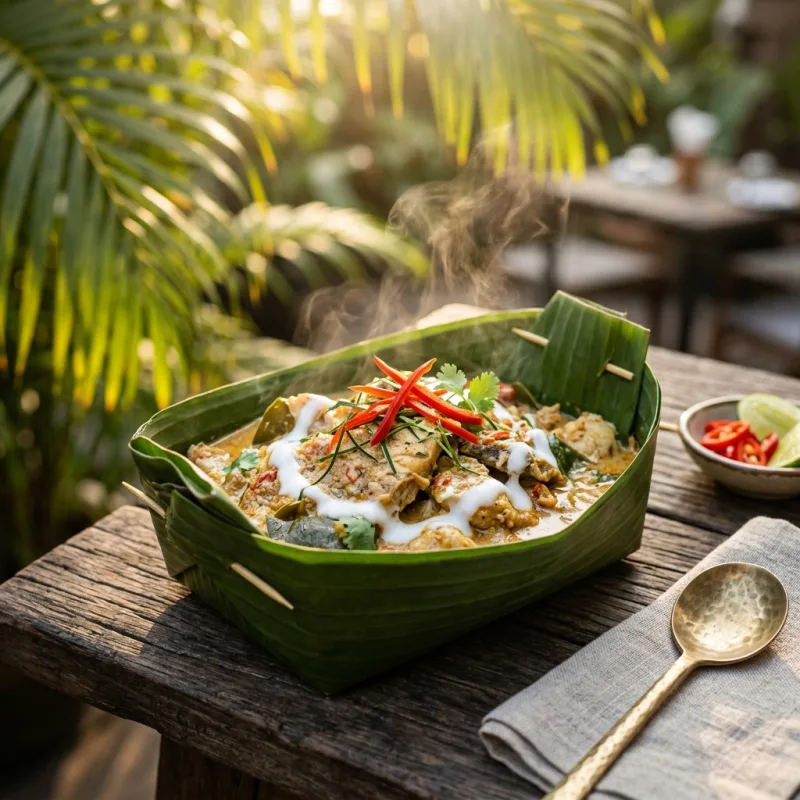
Fish Amok from Siem Reap

Must Try Dish

Fish Amok - Steamed freshwater snakehead fish fillet bathed in rich coconut cream, eggs, kroeung spice paste, and local noni leaves, presented inside an artisanal folded banana leaf bowl.
Food Experiences Title Icon

Food
Experiences

Discover cooking classes, tastings and local food tours

No food experience found
Maya, the human travel expert at TravelingWiz, offering curated, non-AI expertise

Maya’s Final Checklist for Siem Reap

Logistics shouldn’t be the focus of your trip—the experience should. I’ve hand-vetted these essential partners to ensure your arrival, stay, and exploration are as smooth as an Athenian breeze.

Where to Stay

From boutique hotels to local apartments—compare thousands of options and find the perfect stay in the best neighborhood.

Air Travel

Getting there should be seamless. Compare the best routes and prices across top airlines to start your journey on the right note.

Local Guides

Connect with experts who know the destination best. Get personalized advice and insider tips to help you plan your perfect trip.

Travel Protection

The “Engineer’s” rule: always have a backup. Secure your trip with a plan that covers every “what if” and unexpected change.

Car Rentals

Explore at your own pace with total freedom. Compare reliable rental options and find the right vehicle for your adventure.

Visa Services

Don’t let paperwork slow you down. Get expert assistance with your application to ensure all your entry documents are in order.

FAQs

Yes. Visitors must purchase an official Angkor Pass issued by the Angkor Enterprise, available as a 1-day ($37 USD), 3-day ($62 USD), or 7-day ($72 USD) ticket. Passes can be purchased online or at the official ticket center.
Visitors must follow a respectful dress code covering shoulders down to knees. Tank tops, sleeveless shirts, short shorts, and sheer fabrics are strictly prohibited at all active archaeological and sacred temple sites.
Yes, US Dollars are widely accepted across Siem Reap alongside the Cambodian Riel. Ensure USD banknotes are crisp, pristine, and without rips or stamps, as vendors and banks routinely reject imperfect foreign bills.
Remork-moto (tuk-tuks) are the quintessential and most convenient mode of transportation. You can hire drivers for full-day temple excursions or book short city rides using apps like Grab or PassApp.
A stay of 3 to 4 full days allows ample time to tour Angkor Wat, Angkor Thom, and outlying temples like Banteay Srei, while also taking in Tonle Sap Lake and the vibrant town center.

Your Insights Matter

TravelingWiz grows through the stories of our community. If you’ve recently explored ,Siem Reap share your tips and stories to help us perfect our guides for the next traveler.

Related Articles

Check out our related articles and blog posts to learn even more about the destination.

No related articles found

Don’t Travel Alone

Share with your friends and family

Where should we send your offline card?

We hate spam just as much as you do

newsletter_consent *