Anhui Province represents one of China's most profound intersections of natural splendor and intellectual heritage. Bisected by the great Yangtze River, the province historically divided into distinct cultural spheres: the fertile northern plains along the Huai River and the mountainous, introspective southern realm historically known as Huizhou. Southern Anhui nurtured the legendary Huizhou merchants during the Ming and Qing dynasties, who amassed immense fortunes in salt, tea, and timber, channeling their wealth back into elaborate clan ancestral halls, decorative memorial archways, and family compound mansions that still stand today.
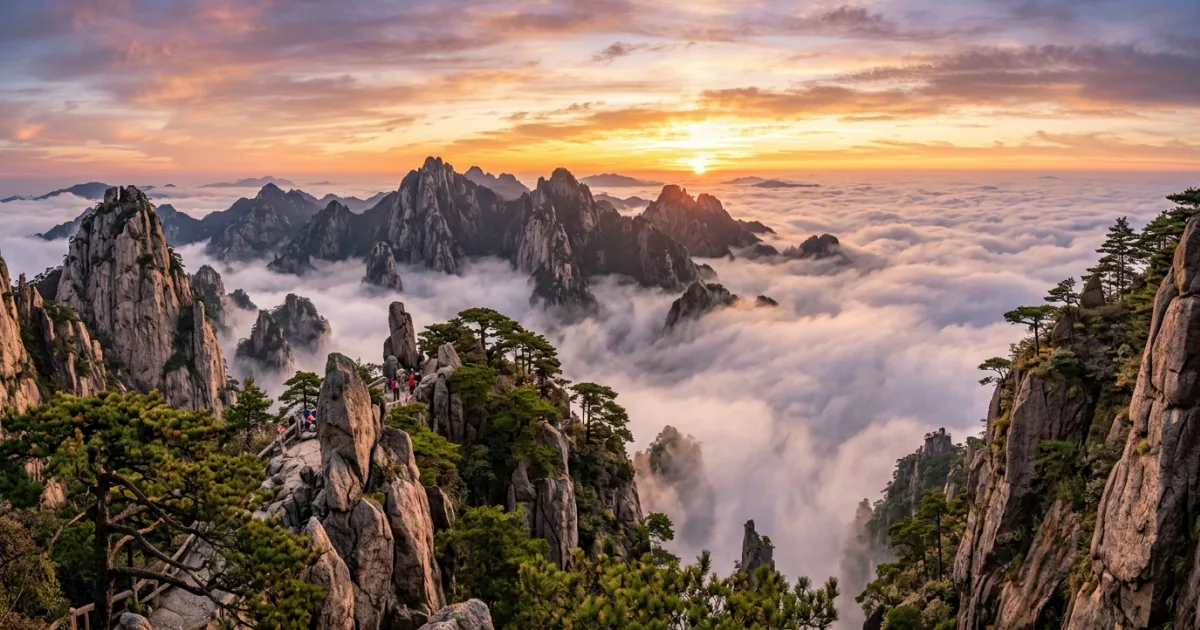
For the traveler, modern Anhui is exceptionally connected via a dense web of high-speed rail lines originating from Shanghai, Hangzhou, and Beijing. The crown jewel remains Mount Huangshan, celebrated for its 'Four Wonders': peculiar pine trees, grotesque rock formations, sea of clouds, and restorative hot springs. Cultural immersion deepens in the ancient villages of Hongcun and Xidi, both designated UNESCO World Heritage sites, where intricate feng shui water systems, moon ponds, and timber lattice windows present a living museum of imperial Chinese civil architecture and village life.
Reasons to Visit
- Mount Huangshan: Marvel at China's most celebrated granite peaks, iconic stone vistas, and rolling sea-of-clouds formations.
- UNESCO Huizhou Villages: Walk the moon-shaped canals and ancestral halls of Hongcun, Xidi, and Chengkan.
- Intangible Cultural Crafts: Witness traditional artisans making Hui inksticks, Shexian inkstones, and handmade Xuan calligraphy paper in historic workshops.
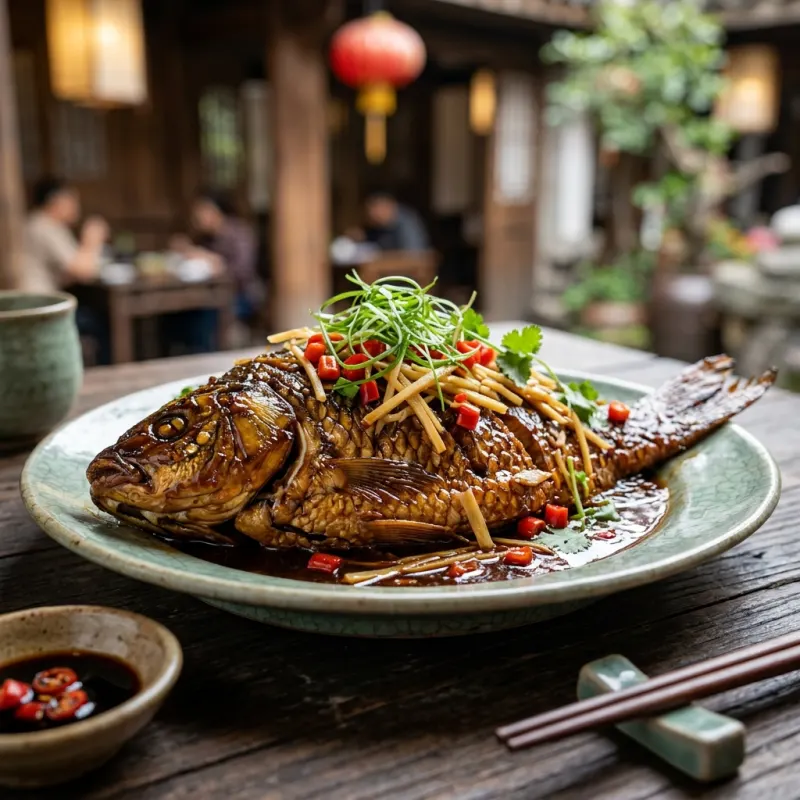
- Culinary Exploration: Savor the distinct, earthy depths of Huizhou cuisine, including stinky mandarin fish, Mao tofu, and braised bamboo shoots.
- Scenic River Journeys: Cruise or cycle along the Xin'an River Landscape Gallery, bordered by rolling tea plantations and whitewashed hamlets.
Things to Avoid
- Avoid ascending Mount Huangshan during major Chinese national holidays (Golden Week in early October and Spring Festival) when mountain stairways experience severe foot-traffic congestion.
- Do not hire unlicensed rogue taxis or unmarked tour minivans outside Huangshan North Railway Station; stick to official metered taxis or Didi rideshares.
- Avoid carrying open food containers or feeding wild Tibetan macaques near mountain rest stops, as aggressive encounters can occur.
- Do not buy high-priced calligraphy inkstones or antique porcelain from aggressive street hawkers without professional verification.
- Avoid wearing flat, smooth-soled fashion sneakers on mountain stone trails; granite surfaces become treacherous in misty conditions.
Local Transportation Tips
Anhui possesses an exceptional transport network centered on high-speed rail (CRH). Huangshan North Railway Station and Hefei South Station operate as primary hubs connecting to major Chinese metropolises within hours. Regional transit between railway stations and scenic enclaves is facilitated by tourist shuttle buses (such as direct shuttles from Huangshan North to Tangkou mountain base or Hongcun). Inside cities, modern subway systems run in Hefei and Wuhu, while metered taxis and rideshare applications (Didi) offer convenient point-to-point urban transit. On Mount Huangshan, modern aerial cableways transport hikers between base stations and summit ridges in under 15 minutes.
Travel Etiquette
- Remove shoes or step quietly when entering active ancestral shrines and private courtyards in heritage villages.
- Never cross ancestral threshold boards (the raised wooden beam at traditional doorway bottoms); always step cleanly over them.
- Offer and receive business cards, tea cups, or money using both hands as an expression of courtesy.
- Refrain from loud shouting or playing amplified music along mountain hiking paths to respect fellow hikers and monastic grounds.
Recommended Age Group
Anhui offers a rich combination of alpine adventures and cultural living history, best matched for visitors capable of significant physical movement.
- Babies (0-2 years): Not Recommended. Mountain trails, steep granite steps, and ancient uneven stone lanes make stroller navigation impossible and babywearing physically taxing over long elevations.
- Kids (3-12 years): Neutral. Children with strong stamina will enjoy cable car rides and picturesque village moats, though the thousands of mountain stone steps can lead to early fatigue.
- Teens (13-19 years): Recommended. High engagement through mountain hiking challenges, photography spots, outdoor suspension bridges, and cinematic village scenery.
- Adults (20-64 years): Recommended. The prime demographic to fully appreciate the rigorous high-altitude trekking, Huizhou historical architecture, tea culture, and intricate regional gastronomy.
- Seniors (65+ years): Neutral. Well-suited for leisurely cultural exploration in flat Huizhou village centers; however, summit trekking on Huangshan demands caution and good knee health despite cable car access.
Accessibility Level: Medium
- Mount Huangshan summit trails consist almost entirely of steep vertical stone stairs with no ramp or elevator access, making wheelchair navigation infeasible beyond base cable car stations.
- Ancient villages like Hongcun and Xidi feature historic flagstone streets that are largely level, though narrow alleys, stone threshold barriers, and bridge steps require minor assistance for wheelchair users.
- Modern high-speed railway stations (Hefei South, Huangshan North) provide full step-free accessibility, tactile paving, accessible restrooms, and dedicated elevator assistance.
Did You Know?
The traditional water network of Hongcun was constructed during the Ming Dynasty in the shape of an ox: Mount Leigang forms the head, two massive trees form the horns, the residential canal channels form the intestines, and the Moon Pond (Yuezhao) serves as the stomach.
Cool Statistics
- Mount Huangshan encompasses 72 distinct peaks exceeding 1,000 meters in elevation, topped by Lianhua Peak at 1,864 meters.
- Over 80% of China's traditional Xuan paper—the essential medium for classical Chinese calligraphy and ink wash painting—originates from Jingxian County in Anhui.
- Southern Anhui is home to more than 1,000 remarkably preserved Ming and Qing dynasty residential structures.






Buy a compatible power adapter for your trip