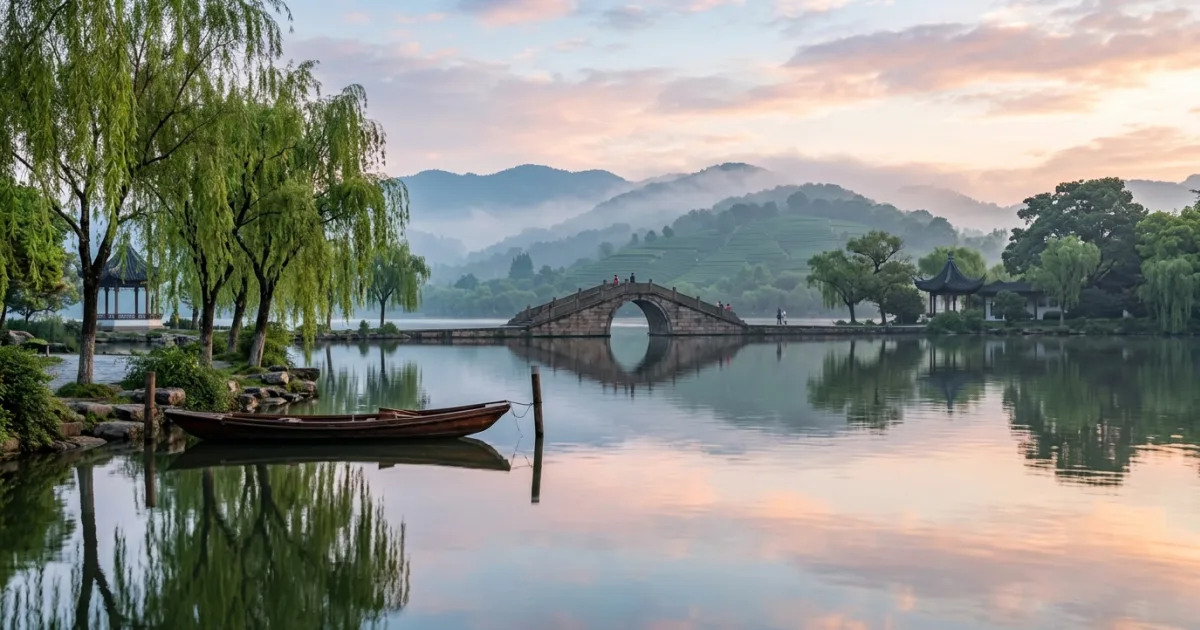
Zhejiang Province lies along the East China Sea, forming the cultural heartland of the historic Jiangnan region, a phrase translating to 'South of the Yangtze River.' For centuries, the province has represented the pinnacle of Chinese refinement, serving as the setting for iconic imperial poetry, flourishing silk production, and the green tea trade. Its capital, Hangzhou, was famously proclaimed an earthly paradise by ancient poets and the Italian explorer Marco Polo, driven by the serene charm of West Lake and its surrounding pagodas.
Today, Zhejiang combines classical Chinese aesthetics with world-leading digital innovation. It is home to global e-commerce pioneers alongside historic water settlements like Wuzhen, Xitang, and Nanxun, where arched stone bridges cross ancient canal networks. Beyond the urban corridors, the province encompasses the dramatic bamboo canopies of Moganshan, the sacred Buddhist island of Mount Putuo in the Zhoushan Archipelago, and terraced rice paddies in Yunhe, presenting a remarkably multifaceted destination for international visitors.
Reasons to Visit
- West Lake UNESCO Heritage: Stroll along willow-shaded causeways, historic pagodas, and lotus ponds celebrated for over a millennium in classical Chinese art.
- Picturesque Water Towns: Discover traditional canal life, carved wooden facades, and lantern-lit stone alleys in historic settlements such as Wuzhen and Nanxun.
- Longjing Tea Culture: Hike through rolling emerald plantations in Meijiawu to hand-pick tea leaves and participate in authentic roasting and tasting ceremonies.
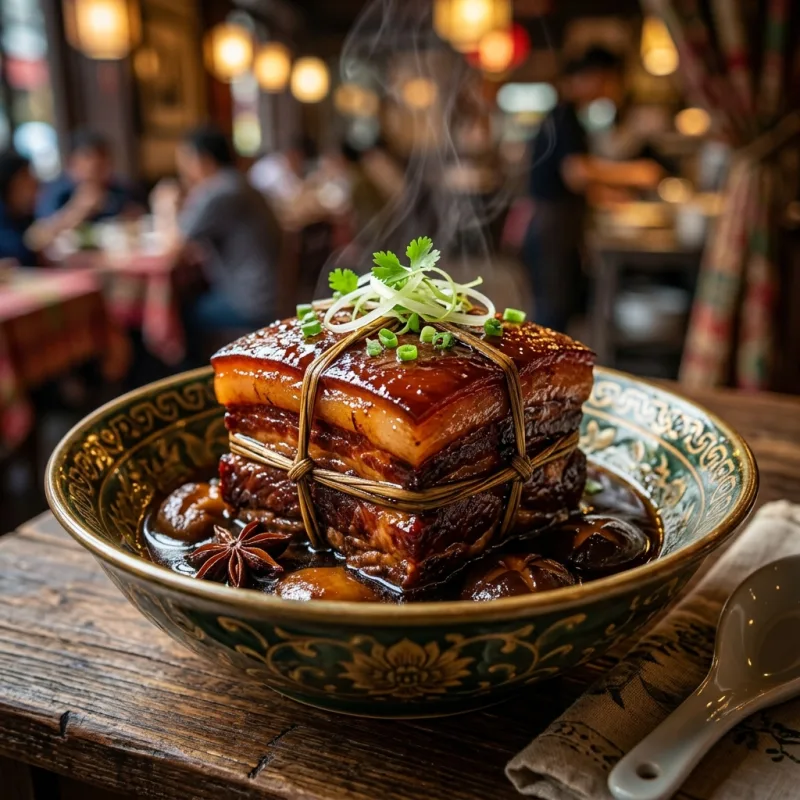
- Culinary Excellence: Sample refined Jiangnan gastronomy, from sweet braised Dongpo pork to fresh river shrimp sauteed with Longjing green tea.
- Coastal and Island Escapes: Journey to Mount Putuo, one of China's four sacred Buddhist mountains, set amidst oceanic shores in Zhoushan.
Things to Avoid
- Avoid visiting major attractions like West Lake and Wuzhen during Chinese National Day Golden Week (early October) and May Day holiday due to overwhelming crowds.
- Avoid accepting spontaneous invitations to off-street 'tea tastings' or art galleries from overly eager English-speaking strangers around tourist spots to prevent overcharged bills.
- Do not rely entirely on foreign physical debit or credit cards, as standard merchant point-of-sale machines rarely process foreign payment chips.
- Avoid hiring unmetered taxis outside major rail stations; instead, use designated taxi queues or ride-hailing services via the Didi mini-program in Alipay.
Local Transportation Tips
Zhejiang features an elite public transit infrastructure. Major cities such as Hangzhou, Ningbo, and Shaoxing boast clean, air-conditioned metro networks with bilingual signage that can be accessed by scanning metro QR codes within Alipay. Regional journeys are best completed via China Railway high-speed bullet trains, which depart multiple times per hour between major hubs. For local canal towns, municipal public buses and water ferries provide scenic, reliable transit options.
Travel Etiquette
- Present and receive objects, tea cups, or business cards with both hands as a traditional sign of respect.
- Refrain from sticking chopsticks vertically into a bowl of rice, as this mirrors funeral incense rituals.
- Maintain quiet composure in public transit cars and keep phone speaker audio turned off.
- Tipping is not customary in Chinese restaurants or taxis; excellent service is appreciated with polite thanks.
Recommended Age Group
Zhejiang offers varied attractions and modern infrastructure that accommodate many traveler profiles, though terrain variations require consideration.
- Babies (0-2 years): Neutral. Modern city hotels and bullet trains accommodate strollers well, but the cobblestones, high thresholds, and arched bridge stairs of ancient water towns present mobility challenges.
- Kids (3-12 years): Recommended. Children enjoy canal boat rides, interactive tea picking, illuminated evening pagoda displays, and modern science museums across Hangzhou and Ningbo.
- Teens (13-19 years): Recommended. High-speed rail travel, trendy cafes, scenic cycling routes around lakes, and vibrant digital retail hubs appeal strongly to teenagers.
- Adults (20-64 years): Recommended. Exceptional historical exploration, premium culinary tours, mountain trekking in Moganshan, and relaxing water town stays offer ideal adult itineraries.
- Seniors (65+ years): Recommended. Flat boardwalks around West Lake, smooth bullet trains, quiet tea pavilions, and respected cultural sites offer a comfortable and enriching experience for mature visitors.
Accessibility Level: Medium
- High-speed train stations and urban metro lines feature elevators, tactile paving, and level train boarding platforms.
- Modern areas around Hangzhou's West Lake offer wide, paved pathways suitable for manual and electric wheelchairs.
- Ancient water towns like Wuzhen and Xitang contain numerous steep, stepped stone bridges that lack ramps, making interior historic canals difficult for manual wheelchair users without assistance.
- Accessible restrooms are widely available across major rail terminals, airports, and Tier-1 scenic attractions.
Did You Know?
Hangzhou was the imperial capital of the Southern Song Dynasty from 1132 to 1276 CE, during which it grew to become the most populous and prosperous city in the medieval world. Furthermore, the Grand Canal, running from Beijing to Hangzhou, is the longest and oldest artificial waterway on Earth, spanning nearly 1,800 kilometers.
Cool Statistics
- West Lake covers an area of 6.38 square kilometers and has inspired over 1,500 classical poems.
- Zhejiang's Grand Canal has been continuously functioning as an active transport corridor for over 1,400 years.
- Longjing (Dragon Well) tea is picked exclusively by hand, requiring over 60,000 tender buds to produce a single kilogram of premium tea.
- The Zhoushan Archipelago contains over 1,390 individual islands, forming China's largest archipelago.






Buy a compatible power adapter for your trip