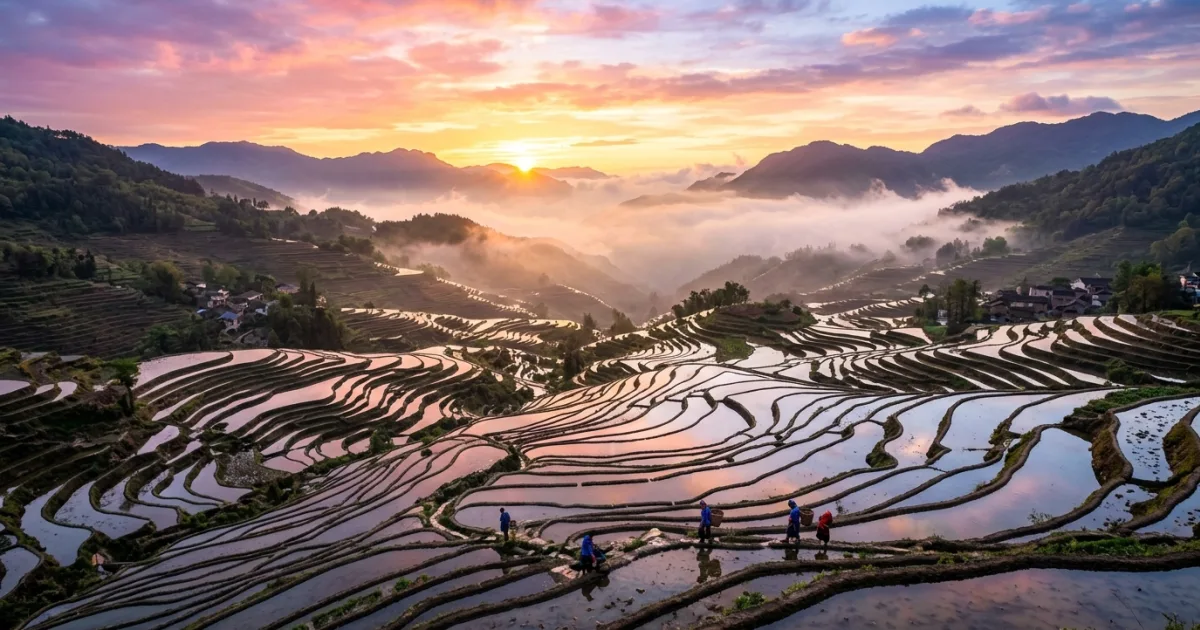
Southeast Yunnan represents one of the most culturally diverse and geographically complex pockets of southwest China. Bordering Vietnam to the south, the Honghe and Wenshan regions serve as an ecological and civilizational crossroad. The terraced landscape of the Ailao Mountains showcases sustainable agriculture engineered by the indigenous Hani people over millenniums, capturing mountain precipitation in intricate gravity-fed canal systems.
Historic trading towns such as Jianshui showcase pristine courtyard architecture, classical scholar gardens, and Confucian learning institutions dating back to imperial eras. Meanwhile, karst wetland regions like Puzhehei offer tranquil waterways framed by limestone pinnacles, providing an alternative to heavily traversed tourist centers.
Reasons to Visit
- Witness the sunrise over the UNESCO-listed Yuanyang Rice Terraces filled with reflecting water.
- Wander through classical Ming and Qing dynasty residential courtyards in Jianshui.
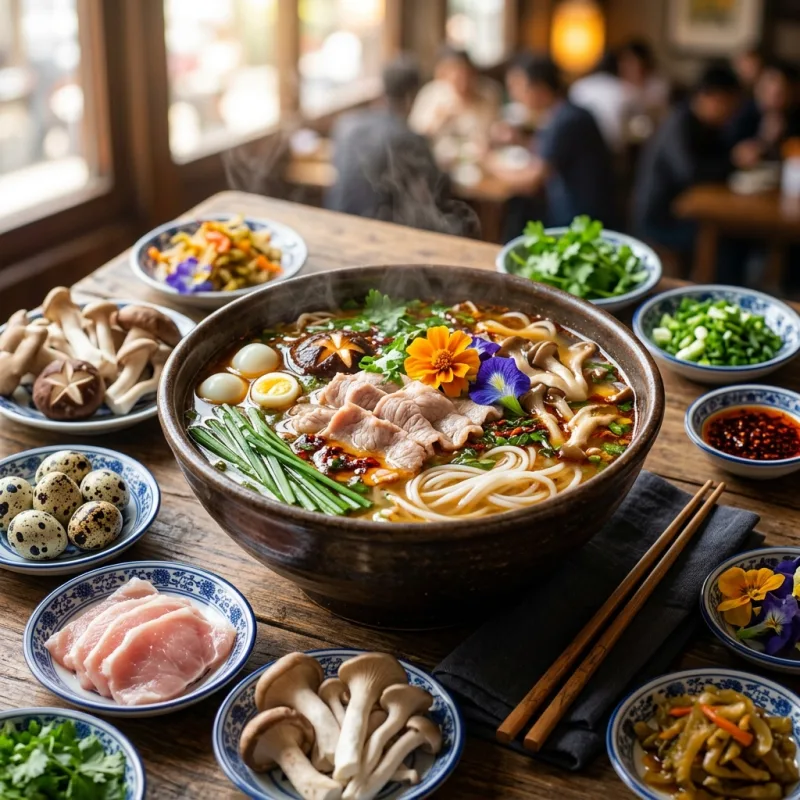
- Taste authentic Crossing-the-Bridge Rice Noodles in their birthplace of Mengzi.
- Experience vibrant, traditional weekly hill-tribe markets alive with Hani, Yi, and Miao textiles.
- Cruise serene karst lotus lakes in wooden skiffs through Puzhehei's nature reserve.
Things to Avoid
- Do not attempt to navigate narrow rural dirt terrace tracks in heavy rain without sturdy footwear.
- Avoid booking flights into distant small airports when convenient high-speed rail runs direct from Kunming.
- Do not photograph ethnic minority elders or religious rituals without asking polite permission first.
- Avoid rigid tight schedules, as mountain roads can face delays due to morning fog or seasonal landslides.
Local Transportation Tips
High-speed passenger trains link Kunming with southern transit hubs like Jianshui, Mengzi, and Mile in under two hours. To reach the remote mountain villages of Yuanyang or the waterways of Puzhehei, travelers rely on reliable public long-distance buses, regional shared vans, or chartered local drivers. In historic towns like Jianshui, pedal-assist e-bikes and walking are the easiest modes of travel.
Travel Etiquette
- Remove your shoes when invited into traditional timber-and-earth Hani or Yi homes.
- Never step directly on the threshold beam of a doorway in ancestral temples or village dwellings.
- Accept tea or food handed to you with both hands as a traditional gesture of respect.
- Dress modestly when visiting village shrines, sacred forests, or active Buddhist and Confucian temples.
Recommended Age Group
Southeast Yunnan caters exceptionally well to active travelers and culture seekers, though mountain topography requires mobility.
- Babies (0-2 years): Neutral. Mountain staircases and uneven cobblestone paths make baby stroller use impractical; carriers are essential.
- Kids (3-12 years): Recommended. Children love the scenic water trains in Jianshui, rural village farm life, and boat rides in Puzhehei.
- Teens (13-19 years): Recommended. Incredible opportunities for photography, cycling historic alleys, and discovering unique culinary traditions.
- Adults (20-64 years): Recommended. Ideal demographic for long photography walks, architectural touring, hiking, and ethnic heritage experiences.
- Seniors (65+ years): Recommended. Historic towns like Jianshui and Mile offer flat, leisurely exploration, though remote terraces require gentle pacing due to steps.
Accessibility Level: Medium
- High-speed rail stations in Jianshui, Mengzi, and Mile are fully modernized with elevators and tactile paving.
- Historic villages and rice terrace observation platforms feature extensive stone staircases with limited ramp infrastructure.
- Accessible vehicles can be pre-arranged with private tour agencies based out of Kunming.
Did You Know?
The Honghe Hani Rice Terraces rely on zero artificial reservoirs; the Hani people protect dense hilltop cloud forests, which naturally gather rainwater and slowly release it downward through miles of hand-carved stone trenches.
Cool Statistics
- The Honghe Hani Rice Terraces encompass over 16,600 hectares of UNESCO-protected cultural landscape.
- Some individual mountain faces feature up to 3,000 continuous terrace tiers carved from valley to summit.
- Jianshui's Confucius Temple is the second-largest Confucian temple complex in mainland China, dating to 1285.






Buy a compatible power adapter for your trip