Arunachal Pradesh remains one of Asia's most ecologically intact and culturally diverse regions. Occupying the junction between the Indian subcontinent and the Tibetan plateau, the state features vertical relief that rises from tropical Brahmaputra plains to glacial Himalayan ramparts. Dense evergreen rainforests shelter endangered snow leopards, red pandas, and the elusive clouded leopard, making it an internationally recognized biodiversity hotspot.
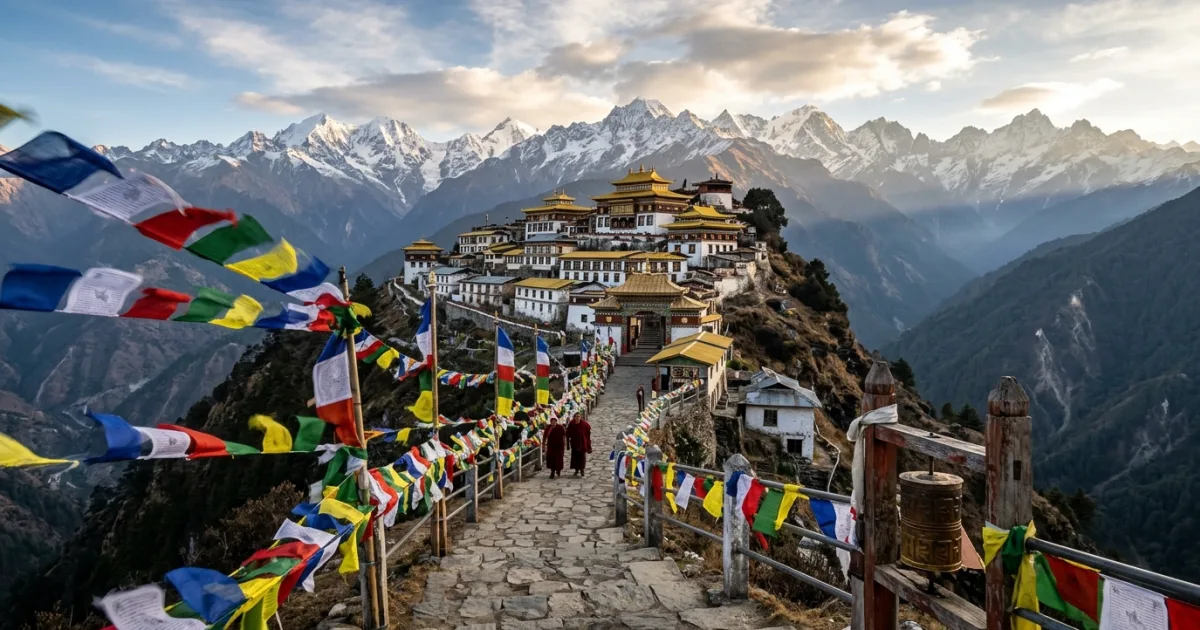
Culturally, the state is distinguished by its preservation of ancestral heritage. In western districts, the Monpa people maintain Mahayana Buddhist traditions surrounding Tawang Monastery, India's largest monastery founded in 1680. Further east, tribes such as the Apatani, Nyishi, and Mishmi preserve animistic Donyi-Polo rituals, sophisticated pine-and-bamboo forestry practices, and traditional elevated wooden longhouses.
Reasons to Visit
- Behold the sweeping scale of Tawang Monastery, perched dramatically above alpine river valleys.
- Experience the ancient sustainable wet-rice and fish agro-ecosystem of the UNESCO-tentative Ziro Valley.
- Drive the dramatic military highways cutting through Sela Pass and the turquoise waters of Paradise Lake.
- Witness rare hornbills and pristine primary cloud forests within Namdapha National Park.
- Discover genuine, hospitable indigenous homestays unmarred by commercial mass tourism.
Things to Avoid
- Do not attempt to travel without physical copies of your valid ILP or PAP permits, as army and police checkpoints are frequent and strict.
- Avoid driving after sunset; mountain roads lack streetlights, fog sets in rapidly, and rockfalls are an unpredictable hazard.
- Do not photograph tribal elders, religious rituals, or military installations without explicit advance permission.
- Avoid planning rigid schedules; mountain roadblocks, weather disruptions, and long vehicle transit times require flexible travel days.
Local Transportation Tips
Shared Tata Sumo jeeps form the lifeblood of regional passenger transit between major towns such as Tezpur, Bomdila, Tawang, and Ziro. For greater flexibility and access to remote side valleys, hiring a private 4-wheel-drive vehicle (Mahindra Bolero or Scorpio) along with a seasoned mountain driver is standard and highly recommended. Self-driving requires advanced mountain driving skills and substantial ground clearance.
Travel Etiquette
- Always walk clockwise around Buddhist chortens (stupas), mani prayer walls, and monastery inner sanctuaries.
- Dress modestly with covered shoulders and knees when visiting gompas and rural tribal villages.
- Remove shoes before entering Buddhist temple chambers or traditional tribal bamboo homes.
- Accept local hospitality such as rice beer (apong) or butter tea with both hands as a sign of respect.
Recommended Age Group
Traveling across Arunachal Pradesh involves long transit days, rough terrain, and high elevations, making it best suited for older, adaptable travelers.
- Babies (0-2 years): Not Recommended. Extreme elevation changes, basic medical facilities, and bumpy 8-10 hour driving stretches pose significant health and comfort challenges.
- Kids (3-12 years): Neutral. Children with travel stamina and tolerance for long car journeys can enjoy the wildlife and open landscapes, though remote amenities remain basic.
- Teens (13-19 years): Recommended. Active teenagers will thrive on mountain trekking, cultural discovery, and adventurous overland jeep travel.
- Adults (20-64 years): Recommended. Perfect for photographers, road-trippers, and hikers who appreciate untouched nature and deep cultural heritage.
- Seniors (65+ years): Neutral. Older travelers who manage altitude well and can handle arduous road travel will find spiritual solace in the monasteries, but limited accessibility makes specialized planning vital.
Accessibility Level: Medium
- Public infrastructure across Arunachal Pradesh is largely inaccessible to manual or powered wheelchairs due to steep natural terrain and broken pavements.
- Buddhist gompas and traditional stilt homes almost universally require climbing uneven stone or wooden staircases.
- Travelers with restricted mobility will require a dedicated private vehicle, custom routing focused on gentle lower valleys, and personalized assistance.
Did You Know?
Dong Valley in Arunachal Pradesh is the very first place in India to receive the rays of the rising sun every morning, with daylight breaking as early as 4:00 AM during midsummer.
Cool Statistics
- 82% forest cover, making it the most forested large state in India
- Over 500 distinct species of wild orchids native to its valleys
- Home to 26 major tribes and over 100 sub-tribes speaking distinct dialects






Buy a compatible power adapter for your trip