Marathwada holds a commanding historical and cultural footprint across the geographic center of Maharashtra. Encompassing the districts of Chhatrapati Sambhajinagar, Jalna, Beed, Parbhani, Hingoli, Nanded, Latur, and Dharashiv, this plateau region preserves centuries of dynastic dominance under the Satavahanas, Rashtrakutas, Yadavas, Bahmanis, Mughals, and the Nizams of Hyderabad. It stands as a monument to pluralistic Indian history, housing sacred rock sanctuaries, formidable military bastions, and spiritual centers revered by Buddhists, Jains, Hindus, and Sikhs alike.
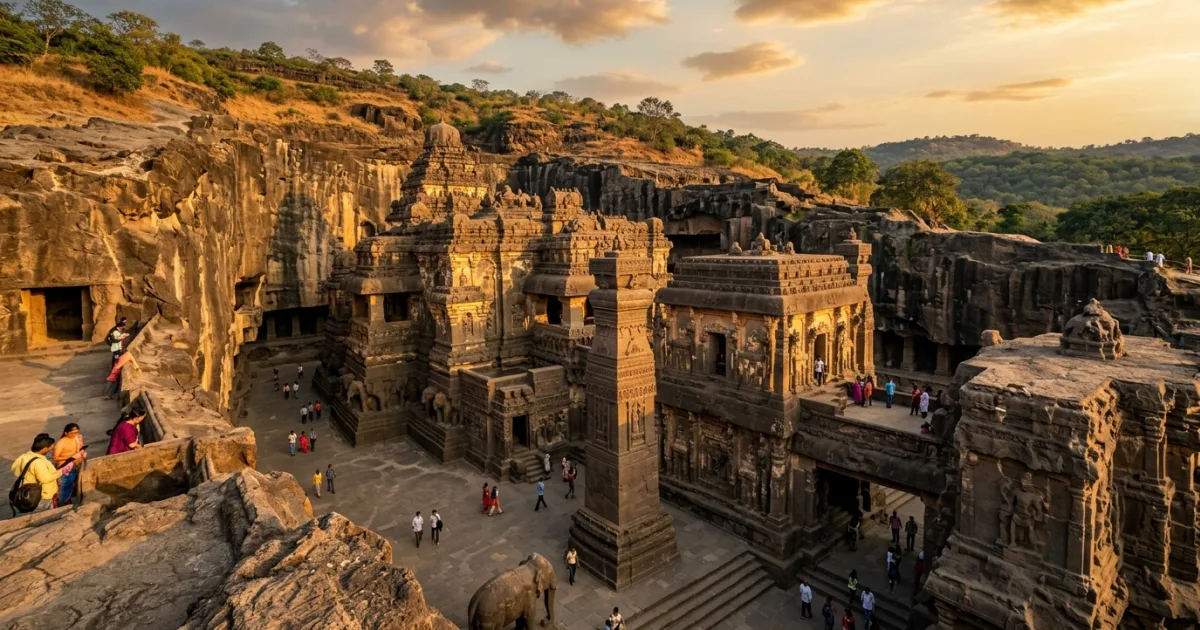
Natural wonders coexist with classical human craftsmanship throughout the landscape. The monolithic Kailash Temple at Ellora represents one of humanity's greatest architectural feats, carved top-to-bottom from a single basalt cliff. Eastward, Lonar Lake in nearby Buldhana borders the region as an ancient basalt meteor impact crater, while river valleys yield traditional agriculture and historic weaving hamlets. Marathwada rewards curious travelers with dramatic sights, genuine warmth, and deeply rooted regional heritage that remains remarkably unmarred by overtourism.
Reasons to Visit
- Marvel at the UNESCO World Heritage rock-cut art and frescoes of Ajanta and the monolithic Kailash Temple at Ellora.
- Explore defensive architecture at the impregnable medieval citadel of Daulatabad Fort with its subterranean maze passages.
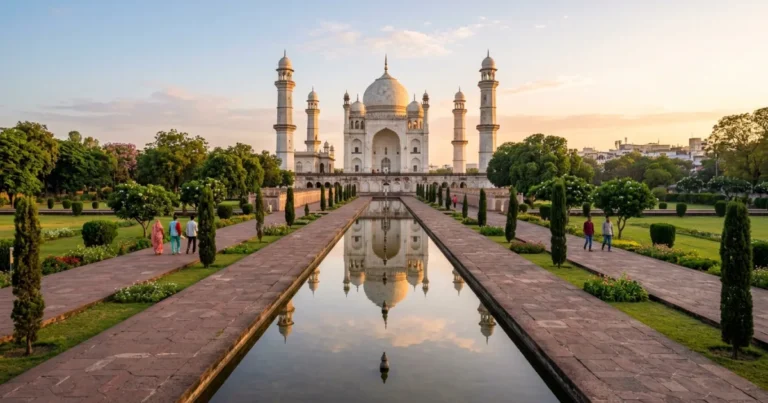
- Discover the elegant Mughal craftsmanship of Bibi Ka Maqbara, often admired as the 'Taj of the Deccan'.
- Experience sacred pilgrimages across three revered Jyotirlinga temples and the historic Hazur Sahib gurdwara in Nanded.
- Witness centuries-old silk and zari weaving traditions producing exquisite Paithani sarees in Paithan.
Things to Avoid
- Do not schedule visits to Ellora on Tuesdays or Ajanta on Mondays, as the complexes are closed on those respective days.
- Avoid touching or using camera flashes on ancient mural paintings inside the Ajanta Caves to prevent pigment degradation.
- Avoid visiting Daulatabad Fort during midday summer heat without substantial water, sun protection, and proper footwear.
- Do not accept unsolicited tout services outside major monument entrances; use authorized ASI guides with visible identity cards.
Local Transportation Tips
Local transportation across Marathwada is reliable and varied. Intercity connectivity is serviced by Maharashtra State Road Transport Corporation (MSRTC) buses running frequent schedules between major towns, alongside express trains connecting Chhatrapati Sambhajinagar and Nanded to Mumbai, Pune, and Hyderabad. Within cities and tourist clusters, auto-rickshaws are the primary mode of travel; ensure meter use or agree on fixed rates beforehand. For visiting remote cave sites and forts, pre-booking private air-conditioned car rentals through local operators or hotel travel desks remains the most convenient option.
Travel Etiquette
- Remove your shoes and deposit leather items outside when entering Hindu temples, gurdwaras, and sacred sanctums.
- Dress respectfully by covering shoulders and knees when visiting historic religious sites across the region.
- Seek permission before photographing local artisans, monks, or residents in smaller rural towns.
- Receive prasad (sacred offerings) and give money or objects using your right hand.
Recommended Age Group
Marathwada's attractions involve substantial walking, climbing uneven stone steps, and exploring open heritage grounds, making physical mobility an important consideration.
- Babies (0-2 years): Not Recommended. Steep rock steps, rugged terrain, and limited stroller accessibility at cave and fort sites make traveling with infants physically strenuous.
- Kids (3-12 years): Recommended. Older children will be fascinated by the secret dark passages of Daulatabad Fort, massive cave temples, and expansive historical ramparts.
- Teens (13-19 years): Recommended. Teenagers will enjoy the active hiking, rich photo backdrops, historical architecture, and adventurous exploring across ancient rock sites.
- Adults (20-64 years): Recommended. This demographic will appreciate the deep art history, complex architectural feats, vibrant regional culinary scenes, and easy road logistics.
- Seniors (65+ years): Neutral. Many prominent caves feature steep stairways and uneven basalt paths; however, battery-operated golf carts and chair palanquins (dolis) are available for hire to assist mobility-restricted travelers at Ellora and Ajanta.
Accessibility Level: Medium
- Ajanta and Ellora Caves provide wheelchair assistance and ramps at selected base viewing points, though ancient upper cave chambers require manual assistance or palanquin carriers.
- Battery-operated shuttle vehicles run between parking terminals and main cave access areas at Ajanta to assist mobility.
- City attractions like Bibi Ka Maqbara feature flat garden walkways with minimal steps, offering good accessibility.
- Major modern hotels in Chhatrapati Sambhajinagar offer elevator access, ground-level dining, and step-free entrances.
Did You Know?
Cave 16 at Ellora, housing the Kailash Temple, is the largest monolithic rock excavation in the world, chiseled out of approximately 200,000 tonnes of basalt rock by 8th-century artisans starting from the top down without structural scaffolding.
Cool Statistics
- Contains 34 major carved caves at Ellora and 30 Buddhist rock-cut caves at Ajanta.
- Spans 8 historic administrative districts across an area of approximately 64,590 square kilometers.
- Hosts 3 of the 12 sacred Jyotirlinga shrines located throughout India.







Buy a compatible power adapter for your trip