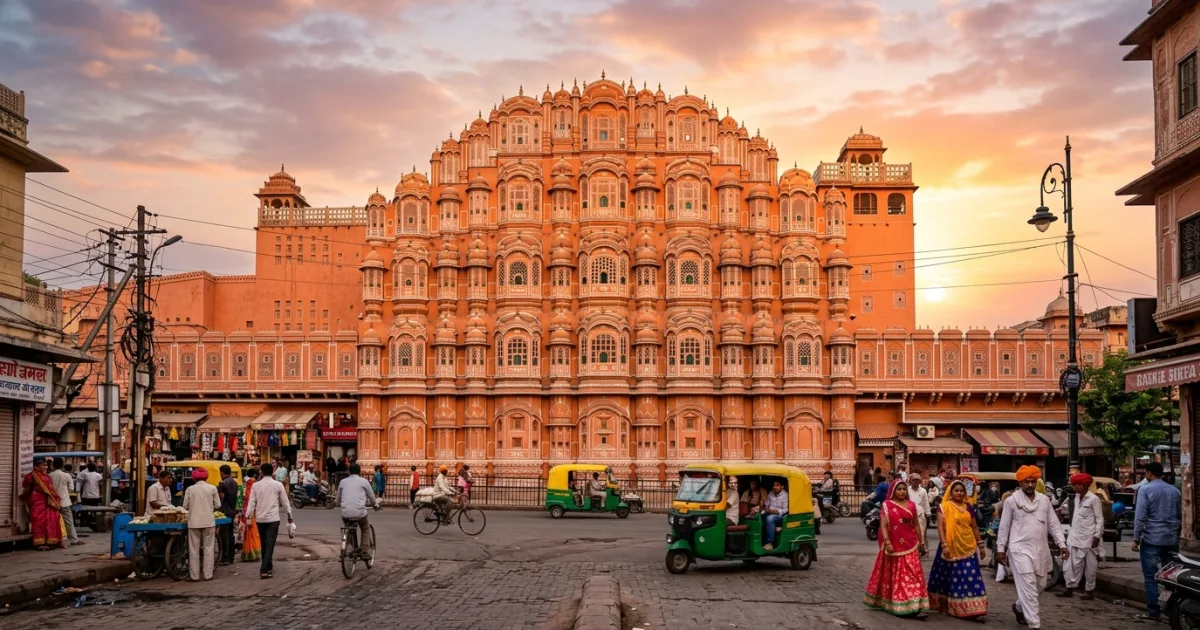
Jaipur is a city that effortlessly bridges the gap between the old and the new. As you navigate through its chaotic yet charming streets, you are constantly reminded of its royal past. The city's architecture is a stunning amalgamation of Rajput, Mughal, and European styles, best exemplified by the City Palace complex which still serves as the residence of the royal family. The iconic Hawa Mahal, with its intricate latticework, was designed to allow royal ladies to observe street festivals unseen, standing today as a symbol of the city's architectural ingenuity.
Beyond the monuments, Jaipur is a paradise for shoppers and food enthusiasts. The bustling lanes of Johari Bazaar and Bapu Bazaar offer everything from precious gemstones and Kundan jewelry to block-printed textiles and traditional mojari footwear. Culinary explorers will find delight in the city's street food, from the spicy Pyaaz Kachori to the sweet Ghewar. Whether you are riding an elephant up to the majestic Amber Fort or enjoying a quiet sunset at the Jal Mahal (Water Palace), Jaipur promises an immersive cultural experience.
Reasons to Visit
- Architectural Marvels: Explore stunning structures like the Hawa Mahal, City Palace, and the UNESCO-listed Amber Fort.
- Rich History: Dive deep into the legacy of the Rajput rulers and their fascinating astronomical advancements at Jantar Mantar.
- Vibrant Shopping: Shop for world-renowned textiles, blue pottery, and exquisite gemstone jewelry in historic bazaars.
- Culinary Delights: Taste authentic Rajasthani cuisine, famous for its rich flavors and unique dishes like Dal Baati Churma.
- Cultural Festivals: Experience the vibrant local culture through festivals like the Jaipur Literature Festival and the Kite Festival.
Things to Avoid
- Drinking Tap Water: Always stick to bottled or properly filtered water to avoid waterborne illnesses.
- Engaging with Touts: Ignore overly aggressive street vendors and unofficial guides who may overcharge or lead you to tourist traps.
- Disrespectful Clothing: Avoid wearing revealing clothes, especially when visiting temples and religious sites.
- Unmetered Rickshaws: Do not get into an auto-rickshaw without agreeing on a fare first, or simply use a ride-hailing app.
Local Transportation Tips
Getting around Jaipur is relatively easy thanks to a variety of transport options. Auto-rickshaws and cycle-rickshaws are ubiquitous and perfect for short distances, though haggling is required. For a hassle-free experience, ride-hailing apps like Uber and Ola are highly recommended and widely available. The Jaipur Metro is clean and efficient, though its network is currently limited to specific corridors. For a full day of sightseeing, hiring a private air-conditioned taxi through your hotel or a reputable agency is often the most comfortable choice.
Travel Etiquette
- Dress Modestly: Both men and women should dress conservatively, covering shoulders and knees, particularly at religious sites.
- Remove Shoes: Always take off your shoes before entering a temple or a local's home.
- Public Displays of Affection: Avoid overt public displays of affection, as Indian society is generally conservative.
- Photography: Always ask for permission before photographing locals, especially women in rural or traditional attire.
- Use Your Right Hand: Use your right hand for eating, passing objects, and shaking hands, as the left hand is considered unclean in Indian culture.
Recommended Age Group
Jaipur offers a diverse range of experiences that cater to various age groups, though the heat and crowds require some consideration.
- Babies (0-2 years): Neutral. The heat, noise, and lack of stroller-friendly pavements can make navigating the city challenging with an infant.
- Kids (3-12 years): Recommended. Children will be fascinated by the forts, elephant rides (though ethical concerns exist), and the colorful culture.
- Teens (13-19 years): Recommended. Teens will enjoy the vibrant shopping scene, photography opportunities, and the rich history of the forts.
- Adults (20-64 years): Recommended. Perfect for adults interested in history, architecture, culinary exploration, and shopping.
- Seniors (65+ years): Recommended. While the forts involve some walking and stairs, many sites are accessible, and the cultural immersion is highly rewarding. Hiring a private car is advised for comfort.
Accessibility Level: Medium
- Monuments: Major sites like the City Palace and Jantar Mantar are relatively flat and wheelchair accessible, but older forts like Amber Fort have steep ramps and uneven cobblestones.
- Transport: Wheelchair-accessible vehicles are not standard; it is best to arrange specialized transport through dedicated tour operators in advance.
- Accommodation: Many modern and luxury heritage hotels offer accessible rooms and elevators, but budget accommodations often lack these facilities.
- Pavements: Street navigation can be difficult due to crowded, uneven, or non-existent sidewalks in the older parts of the city.
Did You Know?
Did you know that the Jantar Mantar in Jaipur houses the world's largest stone sundial? Built by the Rajput king Sawai Jai Singh II in 1734, this UNESCO World Heritage site features 19 architectural astronomical instruments that can still accurately measure time, predict eclipses, and track stars today.
Cool Statistics
- Founding Year: 1727, making it one of the earliest planned cities in modern India.
- UNESCO Sites: Jaipur is home to two UNESCO World Heritage Sites: Amber Fort and Jantar Mantar.
- Pink Makeover: The city was painted pink in 1876 to welcome the Prince of Wales.
- Sundial Accuracy: The Vrihat Samrat Yantra sundial at Jantar Mantar is accurate to within two seconds.







Buy a compatible power adapter for your trip