Disclosure: This site contains affiliate links. We may earn a commission if you make a purchase, at no extra cost to you.

>
>
>
>
>
Mount Abu
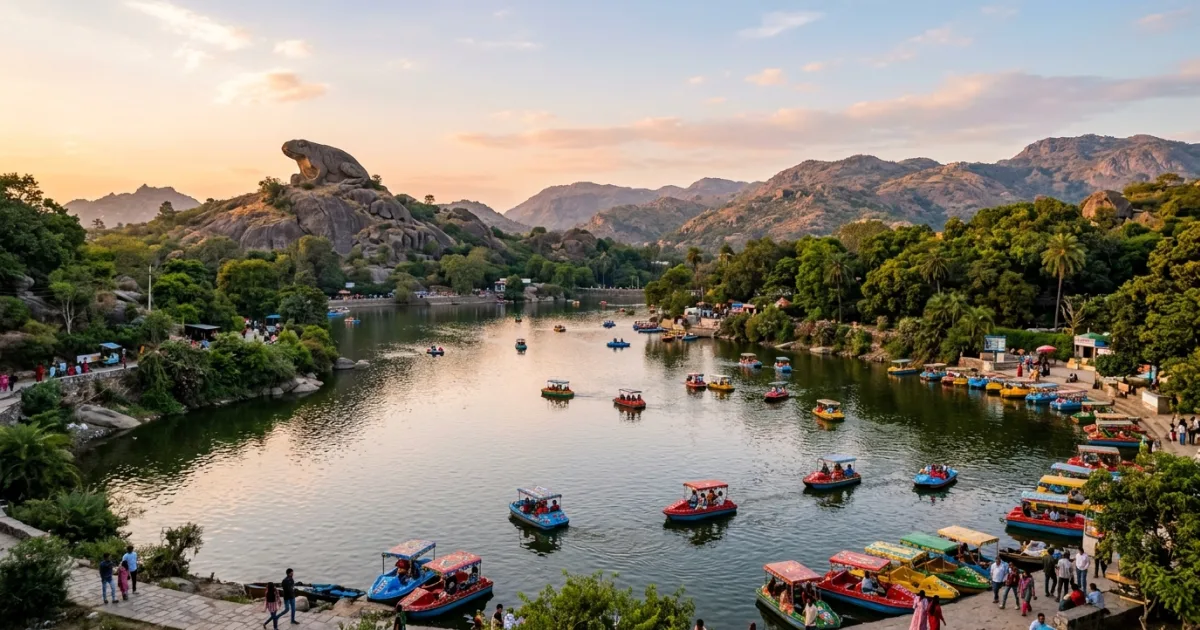
Panoramic view of Nakki Lake and rugged hills in Mount Abu Rajasthan

Mount Abu Overview & Key Highlights

Mount Abu stands at an elevation of 1,220 meters as the sole hill station in the arid state of Rajasthan, nestled in the rocky Aravalli Range. Renowned for its dramatically cooler microclimate compared to the surrounding plains, the town provides an oasis of verdant pine forests, serene lakes, and sacred pilgrimage points. The town's historical tapestry spans centuries, shaped by Parmar rulers, Rajput royalty, and spiritual traditions that established Mount Abu as an enduring sanctuary for meditation and retreat. Beyond its natural forest cover, the town is globally celebrated for the Dilwara Temples, a complex of 11th- to 13th-century Jain shrines displaying some of the most intricate marble carvings in the world. Visitors can cruise the calm waters of Nakki Lake, trek up to Guru Shikhar—the highest peak in the Aravalli Range—or marvel at the natural oddity of Toad Rock. Mount Abu effortlessly combines tranquil highland retreats, architectural marvels, and accessible adventure routes suitable for multi-generational travelers.

Mount Abu Travel Guide: Logistics & In-Depth Tips

Mount Abu sits at an elevation of 1,220 meters, dramatically rising out of the arid plains of southwestern Rajasthan. Part of the ancient Aravalli mountain range, this forested plateau provides a cool refuge marked by rocky granite outcrops, dense subtropical scrub, and sparkling inland water bodies. For centuries, the mountain served as a hermitage for sages, venerated in Hindu mythology as Arbudaanchal, before flourishing into an epicenter of Jain artistry and a summer retreat for British administrators and Rajput royals.

Today, the town functions as a multi-layered destination offering both quiet contemplation and outdoor activity. Travelers encounter the pristine white marble architecture of the Dilwara Temples alongside bustling lakeside bazaars and secluded hiking trails leading to panoramic summits like Guru Shikhar. Its unique geographical setting combines the royal heritage of Mewar and Marwar with the refreshing topography of an alpine oasis.

Reasons to Visit

  • Marvel at the intricate marble relief ceilings of the 11th-century Dilwara Temples, unrivaled in stone craftsmanship.
  • Escape the intense desert heat of the plains in a pleasant mountain microclimate with lush surroundings.
  • Pedal-boat across the serene waters of Nakki Lake, steeped in folklore and framed by peculiar granite boulders like Toad Rock.
  • Stand atop Guru Shikhar at 1,722 meters to gaze across the sweeping panoramas of the Aravalli Range.
  • Experience cultural diversity through traditional Rajasthani dance, local handicrafts, and authentic regional thalis.

Things to Avoid

  • Do not wear leather belts, carry leather bags, or wear shoes into the Dilwara Temples; all leather must be left outside.
  • Do not display food or leave backpacks open around monkeys at major viewpoints, as they can be aggressive.
  • Avoid wandering into unlit perimeter trails or the wildlife sanctuary after dark due to resident sloth bears.
  • Do not drive recklessly along the ghat roads leading up from Abu Road; honk on blind hairpin corners.
  • Avoid hiring unverified touts offering non-existent express passes to religious shrines.

Local Transportation Tips

Local transportation within Mount Abu relies heavily on taxis, unmetered auto-rickshaws, and self-drive rental scooters. Because distances between key sites like Dilwara, Nakki Lake, and Guru Shikhar span several kilometers across hilly terrain, renting a scooter (around 400-600 INR per day) is the most flexible and economical method for independent travelers. For groups and families, fixed-rate day cabs can be chartered from the central taxi stand. Nakki Lake and the immediate town center are easily explored on foot.

Travel Etiquette

  • Dress conservatively at all religious sanctuaries; cover knees, shoulders, and heads when requested.
  • Always remove footwear before stepping onto temple platforms or entering local homes.
  • Ask for permission prior to photographing local residents, particularly sadhus or tribal community members.
  • Show respect during worship rituals by speaking in hushed tones and refraining from touching holy idols.
  • Bargain respectfully in bazaars, maintaining a polite and good-humored demeanor.

Recommended Age Group

Mount Abu offers distinct experiences suited to varying mobility levels and interests across multiple generations.

  • Babies (0-2 years): Neutral. Cobblestone paths, uneven hill trails, and strict steps at temples make strollers impractical, requiring baby carriers.
  • Kids (3-12 years): Recommended. Children thoroughly enjoy paddle-boating on Nakki Lake, spotting wildlife, climbing Toad Rock, and exploring lush gardens.
  • Teens (13-19 years): Recommended. Great terrain for light trekking, rock scrambling, photography, and exploring lively market bazaars.
  • Adults (20-64 years): Recommended. Perfect balance of world-class architectural history, scenic vistas, road trips, and relaxing retreats.
  • Seniors (65+ years): Recommended. The cool climate is restorative, though visiting certain viewpoints and temple interiors requires climbing flights of stairs; handrails are limited.

Accessibility Level: Medium

  • Dilwara Temples feature multiple stone thresholds, narrow entryways, and flights of steps with limited wheelchair accessibility.
  • The Nakki Lake promenade is mostly flat and paved, providing good accessibility for manual wheelchairs and mobility scooters.
  • Guru Shikhar and Toad Rock involve dozens of steep granite steps and are not wheelchair accessible.
  • Public transportation lacks low-floor ramps; hiring private high-clearance taxis is strongly advised for travelers with mobility challenges.

Did You Know?

Legend holds that Nakki Lake was scooped out entirely by the fingernails (nakh) of Hindu gods to protect against a wicked demon, earning the water body its sacred name and status.

Cool Statistics

  • Highest peak in the Aravalli Range: Guru Shikhar at 1,722 meters (5,650 feet).
  • Age of the oldest temple inside Dilwara complex: Vimal Vasahi, built in 1031 CE.
  • Average summer temperature variance: 10°C to 15°C cooler than the nearby desert plains.

Address:

Mount Abu, Sirohi District, Rajasthan, India

Find Nearby Accommodations

Basic Info

address icon

COUNTRY & Region

India,
Asia

ACCESSIBILITY LEVEL​

Medium
Currency icon

LOCAL CURRENCY​

Indian Rupee (INR)
Price level icon
Low
Safety Level icon

SAFETY LEVEL

Duration icon

Recommended Duration

• 1-7 days
• Full day

Electricity

electricity icon

Electricity

220-240V, 
50Hz
Plug Socket icon

Plug Type

• Type C (Round pin)
• Type D (Three round pins in a triangular pattern)
• Type M (Three round pins, larger)
Plug types
Click To View Plug Types
Mount Abu is part of our
Coolcation collection

Activities To Do In Mount Abu

Best Time To Visit Mount Abu

Mount Abu is a year-round destination, but the ideal visiting period depends heavily on temperature preferences and weather tolerance.

  • October to March (Peak Winter Season): Offers the most pleasant conditions with daytime temperatures hovering between 15°C and 25°C, dropping close to freezing at night, making it perfect for sightseeing and hiking.
  • July to September (Monsoon Season): Transforms the hills into lush, misty green landscapes with cascading seasonal waterfalls, though heavy downpours can occasionally disrupt road transit.
  • April to June (Summer Season): Popular as an escape from the scorching 45°C plains of Rajasthan and Gujarat, with pleasant daytime averages between 28°C and 34°C.

Average Temperatures Per Month

Remember to check the weather forecast a few days before the trip and before heading to the airport.

Safety Level icon

Safety Level

Mount Abu is a safe, peaceful town with low crime rates. The primary concern is wildlife: Langur monkeys are prevalent near temples and viewpoints and will snatch unsecured food or shiny accessories. After dark, sloth bears inhabit the peripheral forests near Trevor's Tank; avoid solitary walks through unlit wilderness after sunset. When navigating mountain roads, always use experienced hill drivers, as blind curves can be tricky.

The rating is based on multi-year peace, crime, and security indices. Before you go, always verify current conditions through official government travel advisories.

Emergency Numbers

Police: 112
Ambulance: 108

No internet needed • Includes local translations • Free for TravelingWiz readers

Spoken Languages

Hindi, Rajasthani (Marwari), Gujarati, English

Learn The Language

  • Namaste: Hello / Greetings
  • Dhanyavaad: Thank you
  • Yeh kitne ka hai?: How much does this cost?
  • Kripya: Please
  • Haan / Nahin: Yes / No
  • Madad kijiye: Please help me
  • Kahan hai…?: Where is…?
  • Paani: Water
Travel Booking Partner - TravelingWiz

Trip Cost & Budgeting for Mount Abu, 2026

Everything you need to know about money while traveling
Is Mount Abu expensive for tourists in 2026? No, Mount Abu remains an affordable destination with reasonable travel costs. Based on our Human Verified prices, you can expect to pay around 150 INR for a cappuccino, 200 INR for a domestic beer, and 350 INR for a meal at a mid-range restaurant. Accommodation and local transport are equally reasonable for visitors. Use the data table below to calculate your specific daily budget based on your travel style.
Currency icon

LOCAL CURRENCY​:

Indian Rupee (INR)
Price level icon
Low
While upscale hotels accept cards, cash or UPI is necessary for smaller shops, taxis, and local vendors.

Per person, per day – pocket cash for small purchases.

Local: 380
Indian Rupee (INR)
≈ 30 USD

Full daily spend estimation (accommodation, food, transportation, attractions).

Travel Style
Indian Rupee (INR)
≈ USD ($)
Budget
2100
24
Mid-range
3800
48
Comfort
8350
114

The Prices, Daily costs, and calculator results are estimates for planning purposes only. Actual costs may vary based on season, booking timing, personal spending habits, and currency fluctuations. TravelingWiz cannot be held responsible for discrepancies between these estimates and your final trip expenses.

  • • Rent a two-wheeler for around 500 to 700 INR per day to save significantly on local taxi fares.
  • • Dine at local thali joints and Rajasthani bhojnalayas near Nakki Lake for authentic meals under 250 INR.
  • • Book your hotel in advance outside of peak weekend rushes and festival dates like Diwali to secure better rates.
  • • Take public buses or shared cabs from Abu Road railway station instead of private taxis to lower transfer costs.

Pre-Order Tickets

Avoid disappointment when tickets sell out — and skip the long lines by booking online in advance. You’ll often save up to 20% too.
Save up to 20%

Travel Discounts & Coupons

Save on hotels, attractions, transport, and gear — find verified discounts for smarter travel spending.
Verified Coupons

What To Pack

  • Light woolens or fleece jacket for chilly evenings and winter mornings
  • Modest clothing covering shoulders and knees for temple visits
  • Sturdy walking shoes with reliable grip for rocky paths and marble steps
  • Slip-on footwear or easily removable socks, as shoes and leather items are banned inside Dilwara Temples
  • High-SPF sunscreen, UV-blocking sunglasses, and a wide-brimmed sun hat
  • Refillable water bottle with integrated filtration system
  • Mosquito repellent and basic motion sickness medication for winding mountain roads
We couldn't find tips for Mount Abu.
If you got any, please share

Recommended Itineraries for Traveling to Mount Abu

We couldn't find itineraries for Mount Abu.
you can contact us for custom trip plan

Food & Drink Highlights

Local Food Overview

The cuisine of Mount Abu heavily reflects the confluence of Rajasthani traditions and neighboring Gujarati influences. Due to the sacred status of the Jain and Hindu shrines throughout the region, the culinary scene is overwhelmingly pure vegetarian. Meals highlight hearty lentils, slow-roasted flatbreads, and aromatic gravies cooked in clarified butter (ghee). Street-side food culture thrives around Nakki Lake, offering piping hot kachoris, spiced roasted sweet corn, and thick milk-based sweets like rabdi.
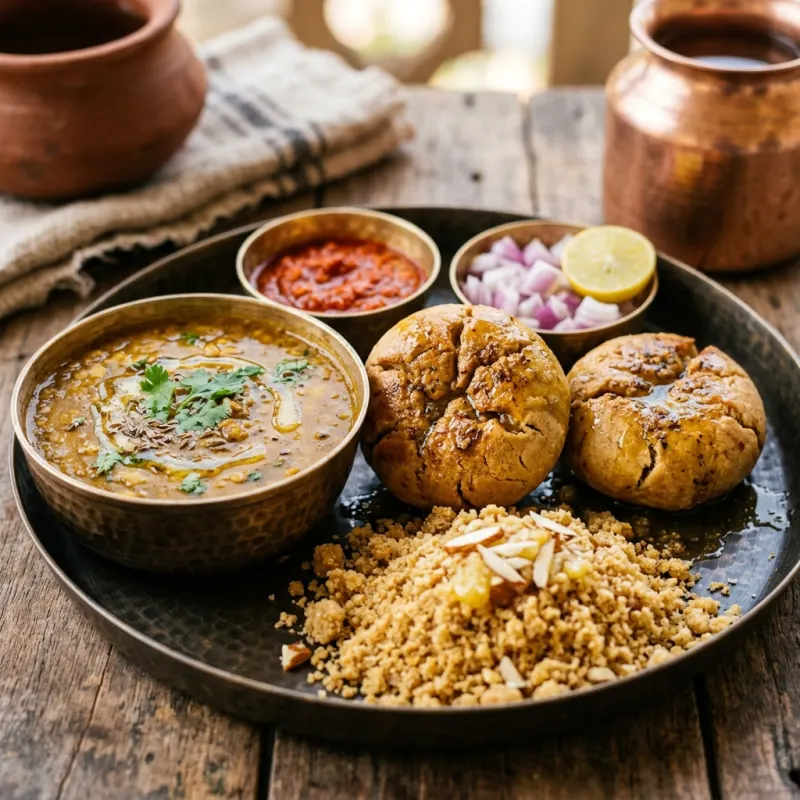
Authentic Rajasthani Dal Baati Churma thali with ghee and lentils

Must Try Dish

Dal Baati Churma - A quintessential Rajasthani feast featuring hard wheat balls baked over coals, cracked open and drenched in pure ghee, accompanied by spicy mixed-lentil curry and sweet crushed wheat churma. It provides a rich, balanced blend of savory spice, earthy texture, and comforting sweetness essential after a day of hiking.
Food Experiences Title Icon

Food
Experiences

Discover cooking classes, tastings and local food tours

No food experience found
Maya, the human travel expert at TravelingWiz, offering curated, non-AI expertise

Maya’s Final Checklist for Mount Abu

Logistics shouldn’t be the focus of your trip—the experience should. I’ve hand-vetted these essential partners to ensure your arrival, stay, and exploration are as smooth as an Athenian breeze.

Where to Stay

From boutique hotels to local apartments—compare thousands of options and find the perfect stay in the best neighborhood.

Air Travel

Getting there should be seamless. Compare the best routes and prices across top airlines to start your journey on the right note.

Local Guides

Connect with experts who know the destination best. Get personalized advice and insider tips to help you plan your perfect trip.

Travel Protection

The “Engineer’s” rule: always have a backup. Secure your trip with a plan that covers every “what if” and unexpected change.

Car Rentals

Explore at your own pace with total freedom. Compare reliable rental options and find the right vehicle for your adventure.

Visa Services

Don’t let paperwork slow you down. Get expert assistance with your application to ensure all your entry documents are in order.

FAQs

Mount Abu is most famous for being the only hill station in Rajasthan, the architectural masterwork of the Dilwara Jain Temples, Nakki Lake, and its cool climate compared to the surrounding desert plains.
No. Strict rules prohibit mobile phones, cameras, and photography of any kind inside the Dilwara Temple complex. You must store them in secure lockers outside the entrance.
Yes. While located near the border of dry-state Gujarat, Mount Abu is in Rajasthan where alcohol is legally sold in licensed shops, bars, and resorts.
A stay of 2 to 3 days is ideal to comfortably explore the Dilwara Temples, Guru Shikhar, Nakki Lake, Achalgarh Fort, and scenic viewpoints without rushing.
The nearest airport is Maharana Pratap Airport in Udaipur (UDR), located approximately 165 kilometers (102 miles) away, which takes about 3 to 3.5 hours by taxi.

Your Insights Matter

TravelingWiz grows through the stories of our community. If you’ve recently explored ,Mount Abu share your tips and stories to help us perfect our guides for the next traveler.

Related Articles

Check out our related articles and blog posts to learn even more about the destination.

No related articles found

Don’t Travel Alone

Share with your friends and family

Where should we send your offline card?

We hate spam just as much as you do

newsletter_consent *