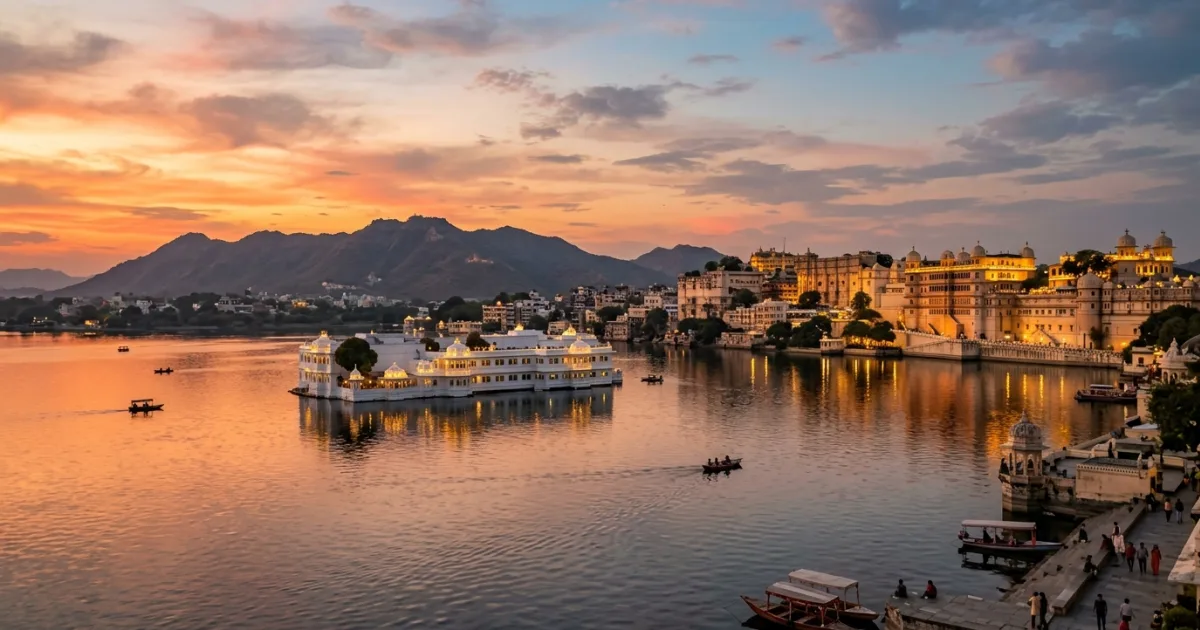
Nestled in the Aravalli Range, Udaipur is a city that wears its royal history with pride. Founded in 1559 by Maharana Udai Singh II, it was established as the new capital of the Mewar kingdom after the fall of Chittorgarh. Unlike many other Rajasthani cities that are defined by their arid desert landscapes, Udaipur is an oasis of tranquility, defined by its interconnected lake system, which includes Lake Pichola, Fateh Sagar Lake, and Swaroop Sagar Lake.
The city's architecture is a stunning amalgamation of Rajput military engineering and Mughal decorative techniques. The City Palace, towering over Lake Pichola, is a labyrinth of courtyards, pavilions, terraces, and hanging gardens. Beyond the palaces, Udaipur's soul lies in its vibrant bazaars, traditional arts like miniature painting, and the rhythmic sounds of folk music and dance that echo through the havelis at sunset. It is a destination that seamlessly blends the grandeur of the past with the lively pulse of modern Indian life.
Reasons to Visit
- City Palace: Rajasthan's largest palace complex, offering a deep dive into royal history and spectacular views of the city.
- Lake Pichola: Take a sunset boat ride to see the shimmering waters reflecting the Taj Lake Palace and Jag Mandir.
- Sajjangarh (Monsoon Palace): Perched on a hill overlooking the city, it provides the best panoramic sunset views in Udaipur.
- Bagore Ki Haveli: A historic mansion on the waterfront that hosts the Dharohar folk dance show every evening.
- Jagdish Temple: A large, intricately carved Hindu temple built in 1651, located just outside the royal palace gates.
Things to Avoid
- Avoid drinking tap water or consuming ice in drinks from street vendors to prevent waterborne illnesses.
- Do not wear revealing clothing when visiting temples; ensure shoulders and knees are covered.
- Avoid accepting unsolicited offers for 'cheap' gems or miniature paintings from street touts, as these are often scams.
- Do not get into an auto-rickshaw without negotiating the fare first or insisting on using the meter/app.
- Avoid visiting during the peak summer months (April-June) when temperatures can be uncomfortably high.
Local Transportation Tips
Udaipur's local transport network is heavily reliant on auto-rickshaws (tuk-tuks), which are perfect for navigating the narrow, winding streets of the Old City. While they are ubiquitous, it is crucial to negotiate the fare before starting your journey. For a more standardized pricing experience, ride-hailing apps like Uber and Ola operate in the city and offer both cars and auto-rickshaws. Walking is the best way to explore the immediate vicinity of the City Palace and the ghats, though comfortable shoes are a must due to uneven cobblestones and steep inclines. Bicycles and scooters are also available for rent for those who prefer to explore at their own pace.
Travel Etiquette
- Remove your shoes before entering temples, mosques, and sometimes even traditional shops or homes.
- Use your right hand for eating, passing objects, and shaking hands, as the left hand is traditionally considered unclean.
- Ask for permission before taking close-up photographs of local people, especially women in rural attire.
- Public displays of affection should be kept to a minimum to respect local conservative norms.
- When bargaining in markets, keep the tone friendly and polite rather than aggressive.
Recommended Age Group
Udaipur offers a rich cultural experience that appeals to a wide range of travelers, though its historic infrastructure requires some consideration.
- Babies (0-2 years): Neutral. While Indians are incredibly welcoming to infants, navigating the narrow, crowded streets and steep palace stairs with a stroller is very difficult. A baby carrier is essential.
- Kids (3-12 years): Recommended. Children will enjoy the boat rides, the colorful puppet shows, and the expansive courtyards of the palaces, though the historical details might go over their heads.
- Teens (13-19 years): Recommended. The vibrant markets, photography opportunities, and rich history make it an engaging destination for teenagers.
- Adults (20-64 years): Recommended. Ideal for adults seeking romantic getaways, cultural immersion, architectural photography, and culinary exploration.
- Seniors (65+ years): Recommended. Seniors will appreciate the slow pace, heritage hotels, and scenic beauty, though those with mobility issues should plan carefully around the stairs in historic sites.
Accessibility Level: Medium
- Many of Udaipur's top attractions, including the City Palace, feature steep stairs, narrow doorways, and uneven cobblestone paths, making wheelchair access challenging.
- The Old City's streets are narrow, crowded, and lack proper sidewalks, which can be difficult for travelers with mobility impairments.
- Some high-end heritage hotels and modern resorts offer excellent accessible facilities, including ramps and elevators.
- Boat rides on Lake Pichola require stepping down into the boats, which may require assistance.
- Travelers requiring accessible facilities should arrange private, specialized transport and verify hotel accessibility in advance.
Did You Know?
Udaipur gained international fame when it served as the primary filming location for the 1983 James Bond film, 'Octopussy'. To this day, many cafes and guesthouses in the Old City host nightly screenings of the movie for tourists.
Cool Statistics
- Udaipur was founded in 1559 by Maharana Udai Singh II.
- The construction of the City Palace took nearly 400 years, with contributions from 22 generations of Maharanas.
- Lake Pichola, the city's most famous lake, was originally created in 1362 by a local banjara (gypsy) tribesman before the city was even founded.
- The Taj Lake Palace was built in 1746 as a winter palace and covers an entire island of 4 acres.






Buy a compatible power adapter for your trip