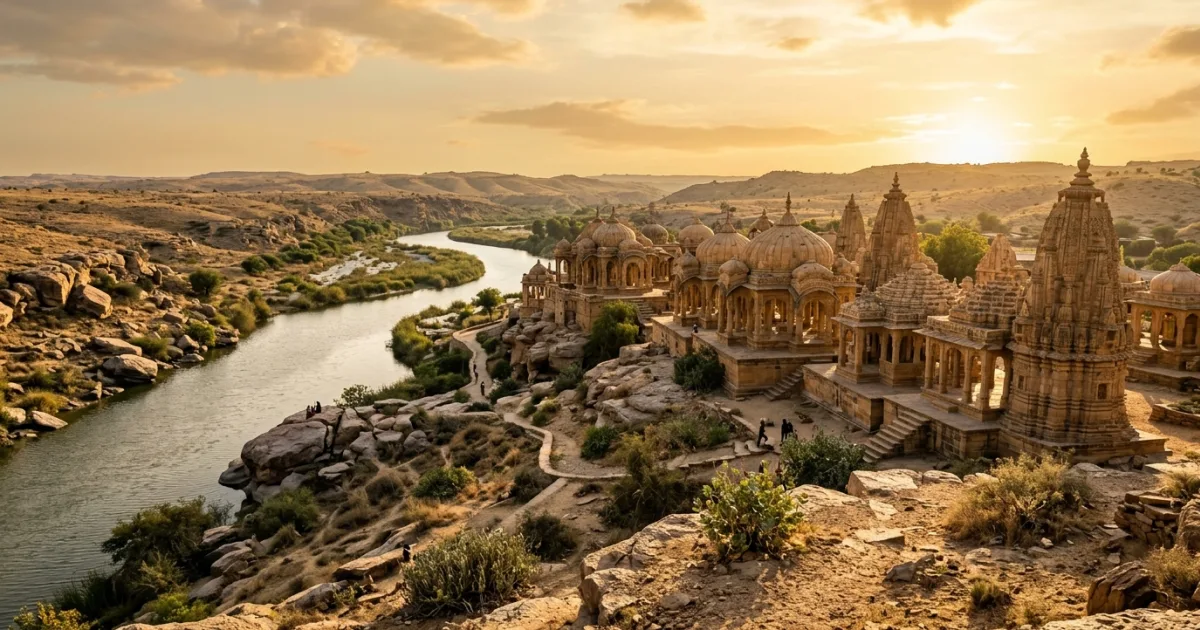
Bundelkhand is an expansive historical expanse anchored between the Indo-Gangetic Plain and the Deccan Plateau. Within the boundaries of Uttar Pradesh, it encompasses the administrative districts of Jhansi, Jalaun, Lalitpur, Hamirpur, Mahoba, Banda, and Chitrakoot. Its geomorphology is defined by ancient granite hills, dramatic boulder fields, and sweeping river valleys formed by the Betwa, Ken, and Dhasan rivers. For centuries, this challenging topography fostered fierce independent warrior clans, notably the Chandelas who ruled between the 9th and 13th centuries, followed by the Bundela Rajputs.
Rather than polished tourist enclaves, the region provides unvarnished historical authenticity. The colossal battlements of Kalinjar Fort stand as one of the most impregnable strongholds in Asian military history, surviving sieges by Mahmud of Ghazni and Sher Shah Suri. In nearby Deogarh, ancient Gupta-era temples and Jain sanctuaries feature rock-carved iconography dating back over 1,500 years. For travelers passionate about off-the-grid archaeology, legendary history, and open highway exploration, Bundelkhand provides an evocative narrative of central Indian valor.
Reasons to Visit
- Kalinjar Fort: Stand atop the Vindhyan escarpment inside one of India's oldest continuously fortified citadels, featuring the monumental rock-carved Nilkanth temple.
- Jhansi's Freedom Trail: Explore the iconic Jhansi Fort and the Rani Mahal palace, celebrating the life and stand of Rani Lakshmibai during the 1857 rebellion.
- Gupta Heritage at Deogarh: Marvel at the 5th-century Dashavatara Temple, renowned for its refined early Hindu rock panels and forested Jain complex along the Betwa River.
- Untouched Rural Landscapes: Traverse picturesque granite boulder country, dotted with ancient stepwells (baolis) and medieval irrigation lakes built by Chandela kings.
- Vibrant Folk Traditions: Listen to authentic recitations of the Alha-Khand, folk ballads sung by regional bards narrating epic martial feats.
Things to Avoid
- Do not attempt outdoor fortress climbing between noon and 3:30 PM during the hot summer months from April to June.
- Avoid relying purely on international credit or debit cards outside of Jhansi; always hold sufficient local cash.
- Do not wander off marked trails in crumbling sections of Kalinjar or isolated fort ruins, as ancient masonry can be unstable.
- Do not drink unboiled or unsealed tap water in remote villages; stick strictly to reliable filtered sources.
Local Transportation Tips
Indian Railways provides the primary long-distance backbone into the region, with Jhansi Junction operating as an A-grade transit hub connecting major metropolitan cities. For regional exploration, private car hire with an experienced driver is the most practical choice due to sprawling distances between heritage sites and infrequent rural bus schedules. Within regional towns like Banda, Mahoba, and Jhansi, shared auto-rickshaws and battery-operated e-rickshaws handle short urban hops efficiently.
Travel Etiquette
- Dress conservatively when visiting pilgrimage centers and temples, ensuring shoulders and knees are fully covered.
- Remove footwear outside sacred sanctums, stepwell enclosures, and active religious shrines.
- Always request permission before photographing local village elders or women along rural pathways.
- Use your right hand when giving or receiving money, prasad (temple offerings), or food.
Recommended Age Group
Bundelkhand offers an immersive journey for independent explorers, though physical infrastructure varies by district.
- Babies (0-2 years): Not Recommended. Rugged terrain, uneven stone stairs, and limited specialized medical facilities outside major centers pose logistical challenges.
- Kids (3-12 years): Neutral. Children fascinated by castles and warrior lore will enjoy Jhansi Fort, but extensive travel distances and heat may cause fatigue.
- Teens (13-19 years): Recommended. Excellent destination for curious teenagers interested in military architecture, rock-cut ruins, and Indian history.
- Adults (20-64 years): Recommended. Ideal for road-trippers, photographers, and history enthusiasts seeking authentic cultural routes free from commercial crowds.
- Seniors (65+ years): Neutral. Many key heritage sites, including Kalinjar, feature steep climbs and uneven stone steps; comfortable transport and selective pacing are required.
Accessibility Level: Medium
- Major heritage museums and ground courtyards in Jhansi feature partial wheelchair access, though upper ramparts remain stepped.
- Kalinjar Fort and rural temples in Deogarh require navigating ancient stone staircases and natural rock passages, making them inaccessible for travelers with limited mobility.
- Private vehicle hire offers step-free curb access directly to the main entry gates of major regional monuments.
Did You Know?
Kalinjar Fort was historically deemed invincible by medieval military commanders; the formidable Afghan ruler Sher Shah Suri tragically lost his life during the siege of this very fortress in 1545 when a stray cannonball ricocheted off its massive stone ramparts and ignited his own powder magazine.
Cool Statistics
- 800+ Feet: Elevation of Kalinjar Fort's rocky plateau above the surrounding Bundelkhand plains.
- 1,500+ Years: Age of the Gupta-period Dashavatara Temple reliefs preserved in Deogarh.
- 7 Districts: Number of administrative districts composing the Uttar Pradesh segment of Bundelkhand.






Buy a compatible power adapter for your trip