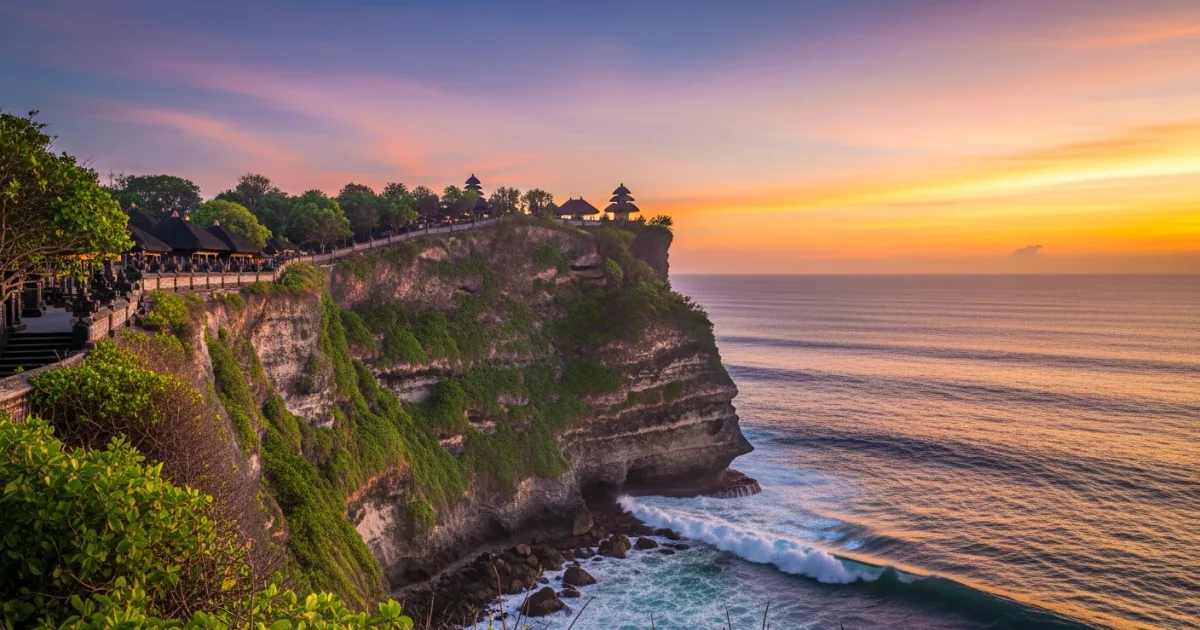
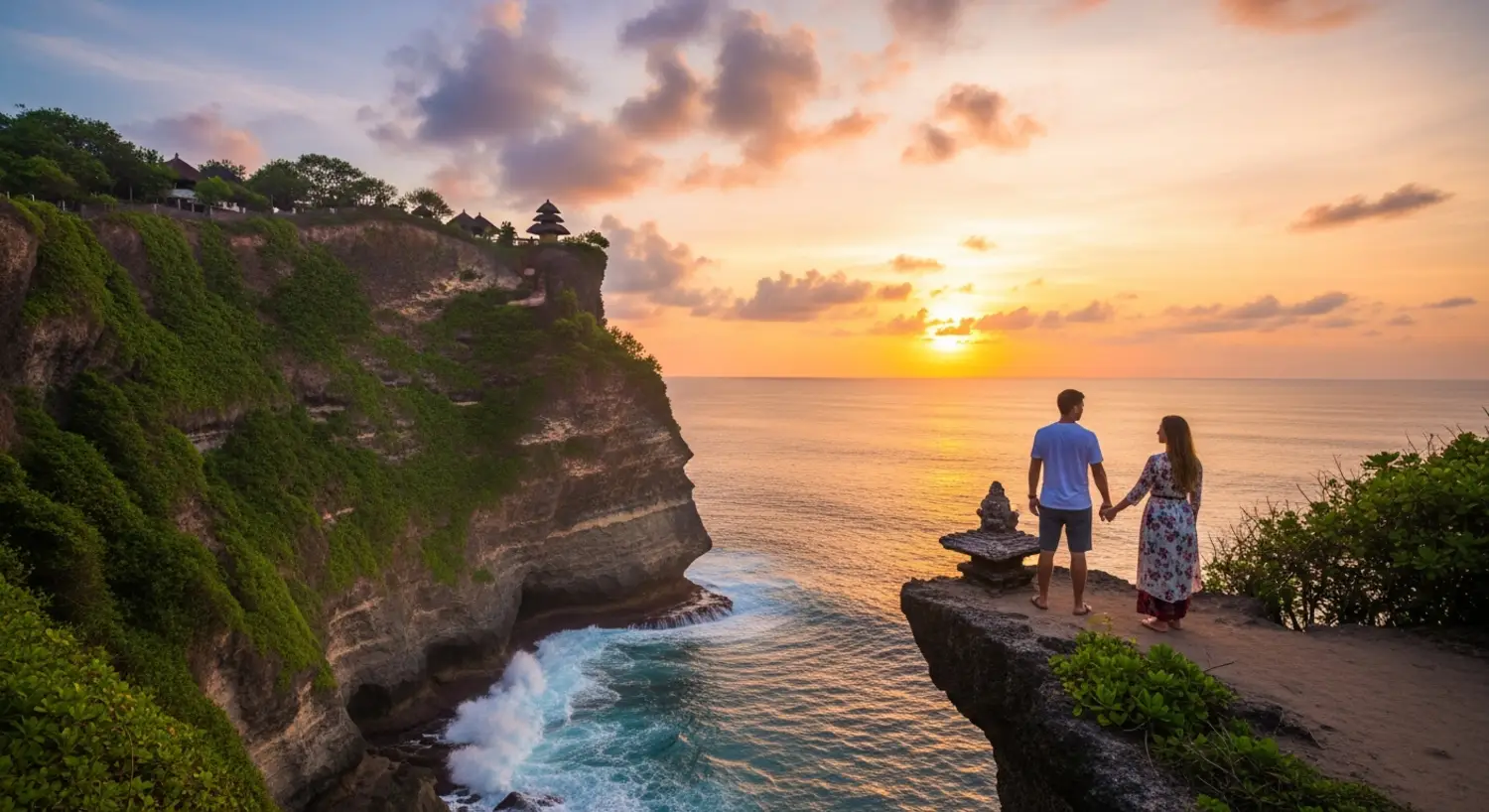
Uluwatu, situated on the Bukit Peninsula of Bali, Indonesia, is a captivating destination celebrated for its breathtaking natural beauty and rich cultural tapestry. Dominated by towering limestone cliffs that plunge into the Indian Ocean, the region offers spectacular panoramic views, particularly at sunset. It is home to the revered Pura Luhur Uluwatu temple, one of Bali's most significant sea temples, where ancient traditions and mesmerizing Kecak fire dances unfold against a dramatic ocean backdrop.
Beyond its spiritual allure, Uluwatu is a world-renowned surfing paradise, attracting wave riders from across the globe to its legendary breaks like Padang Padang, Bingin, and Uluwatu itself. The area also boasts pristine white-sand beaches, hidden coves, and a burgeoning scene of stylish beach clubs, wellness retreats, and diverse culinary experiences, making it a perfect escape for adventurers, relaxation seekers, and culture enthusiasts alike.
Reasons to Visit
- Witness the iconic Pura Luhur Uluwatu temple perched on a cliff.
- Experience world-class surfing at famous breaks like Uluwatu and Padang Padang.
- Enjoy breathtaking sunset views over the Indian Ocean.
- Watch the mesmerizing Kecak fire dance performance.
- Relax on beautiful white-sand beaches and discover hidden coves.
- Indulge in delicious local and international cuisine.
- Explore vibrant beach clubs and wellness retreats.
- Discover stunning cliffside landscapes and natural beauty.
Things to Avoid
- Do not disrespect local customs or religious sites (e.g., dress modestly at temples).
- Avoid feeding the monkeys at Uluwatu Temple, as they can be aggressive and snatch belongings.
- Do not leave valuables unattended on beaches or in open scooter baskets.
- Avoid drinking tap water; stick to bottled or filtered water.
- Do not ride a scooter without a helmet and an international driving permit.
- Avoid excessive bargaining that becomes disrespectful.
Local Transportation Tips
Getting around Uluwatu is primarily done via scooters, taxis, or ride-hailing services. Renting a scooter offers flexibility and is popular among tourists, but requires caution due to traffic and road conditions. Taxis (Bluebird is reputable) and ride-hailing apps like Grab and Gojek are readily available for point-to-point travel. For longer excursions or if you prefer not to drive, hiring a private car with a driver for a day is a convenient option.
Travel Etiquette
- Dress modestly when visiting temples (shoulders and knees covered).
- Always use your right hand when giving or receiving items, especially money.
- Do not point with your feet or step over offerings (canang sari) on the ground.
- Be respectful during religious ceremonies and processions.
- Bargain politely and with a smile at markets, but accept the final price.
- Remove your shoes before entering someone's home or a temple.
- Avoid public displays of affection that might be considered inappropriate.
Recommended Age Group
Uluwatu offers a diverse range of activities and environments, making it suitable for most age groups, though some activities require specific considerations.
- Babies (0-2 years): Neutral. While the natural beauty is undeniable, navigating cliffs and crowded areas with strollers can be challenging. Many resorts are baby-friendly, but direct access to some beaches might be difficult.
- Kids (3-12 years): Recommended. Kids will enjoy the beaches, gentle waves (at certain spots), and the spectacle of the Kecak dance. Monkey encounters at the temple require close supervision. Many family-friendly resorts offer pools and activities.
- Teens (13-19 years): Recommended. Teens will love the surfing opportunities, vibrant beach club scene, and the adventurous spirit of Uluwatu. The stunning scenery and cultural experiences also offer great photo opportunities.
- Adults (20-64 years): Recommended. Uluwatu is ideal for adults, offering a perfect blend of adventure (surfing, cliff jumping), relaxation (spas, beach clubs), culture (temple, dance), and culinary delights.
- Seniors (65+ years): Recommended. Seniors can enjoy the beautiful views, cultural performances, and relaxed atmosphere. However, some areas, especially around the temple and certain beaches, involve stairs and uneven terrain, so mobility should be considered. Many resorts offer easy access and amenities.
Accessibility Level: Medium
- Accessibility in Uluwatu can be challenging due to its cliffside terrain and natural landscapes.
- Many beaches require descending stairs or steep paths.
- Uluwatu Temple involves walking on uneven surfaces and stairs.
- Some modern resorts and restaurants offer better accessibility features, but it's best to inquire in advance.
- Public transportation is not highly accessible; private transport or ride-hailing services are more flexible.
Did You Know?
The Kecak fire dance performed at Uluwatu Temple is a unique Balinese ritual that involves a chorus of men chanting 'cak-cak-cak' in rhythmic unison, creating a captivating human orchestra without musical instruments.
Cool Statistics
- Uluwatu Temple is believed to date back to the 11th century.
- The cliffs around Uluwatu rise up to 70 meters (230 feet) above sea level.
- The area is home to several world-renowned surf breaks, attracting thousands of surfers annually.
- Uluwatu is part of the Badung Regency, one of Bali's most populous and economically significant regions.







Buy a compatible power adapter for your trip