

Low – budget‑friendly basics
Medium – moderate mid‑range costs
High – pricey lodging, dining & transport
Disclosure: This site contains affiliate links. We may earn a commission if you make a purchase, at no extra cost to you.
Low – budget‑friendly basics
Medium – moderate mid‑range costs
High – pricey lodging, dining & transport
5 shields = Excellent – very low crime or conflict.
4 shields = Safe – low risk, routine care.
3 shields = Relatively safe – use normal street smarts.
2 shields = Use caution – higher crime or periodic unrest.
1 shields = Avoid – active conflict or extreme danger.
Scores are derived from multi-year peace, homicide and security indices blended into a single 1-to-5 scale.
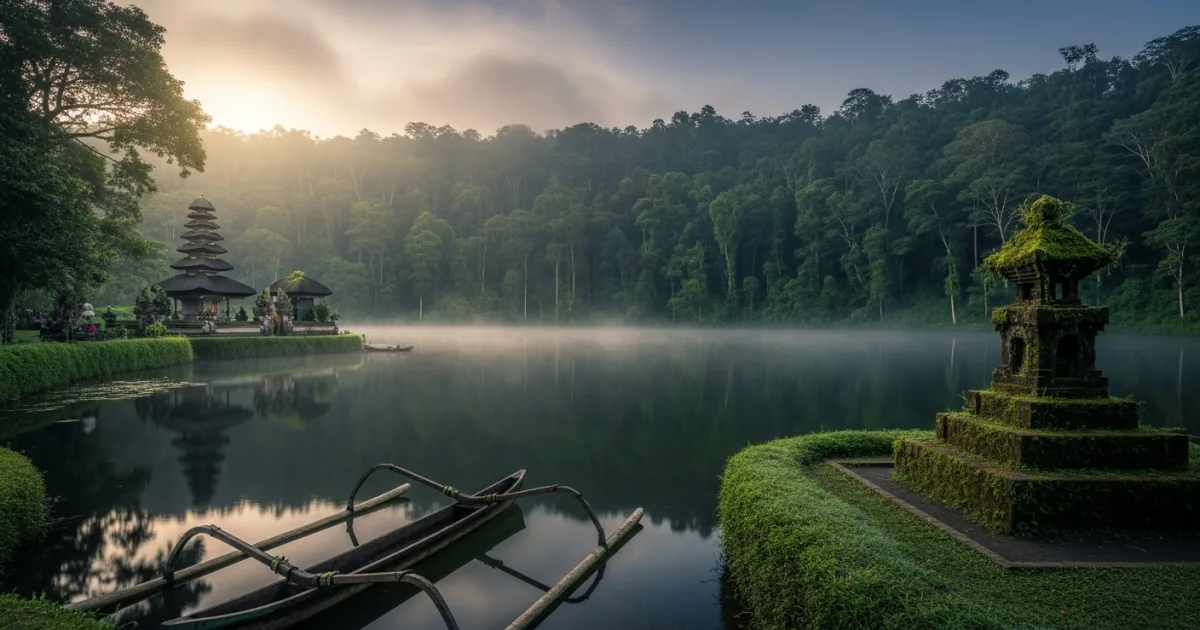
Tamblingan Lake is a pristine crater lake located in the lush highlands of Munduk, Bali. Surrounded by dense rainforests and ancient temples, it offers a serene escape from the island's bustling coastal areas. The lake is part of a caldera that also houses Lake Buyan and Lake Bratan, making it a vital ecological and spiritual site for the local Balinese people. Visitors to Tamblingan Lake can immerse themselves in untouched nature, as motorized boats are strictly prohibited to preserve its tranquility. Traditional wooden canoes, known as 'perahu', are available for peaceful paddling across the misty waters. Trekking through the surrounding jungle reveals hidden shrines, exotic flora, and an authentic glimpse into Bali's spiritual heritage.
Tamblingan Lake (Danau Tamblingan) is one of three volcanic crater lakes located in the Bedugul caldera, alongside Lake Bratan and Lake Buyan. Situated at an altitude of over 1,000 meters above sea level, the climate here is noticeably cooler and crisper than Bali's coastal regions. The lake is deeply revered by the local communities, surrounded by numerous ancient lakeside temples (Pura) that play a crucial role in the region's water irrigation system (Subak).
Unlike its more commercialized neighbors, Tamblingan remains largely untouched by modern tourism infrastructure. The absence of motorized watercraft ensures a silent, mystical atmosphere, often enhanced by the morning mist that rolls off the surrounding mountains. It is a premier destination for eco-tourism, offering visitors a chance to reconnect with nature through guided jungle treks that showcase giant ficus trees, wild orchids, and diverse birdlife, culminating in a peaceful paddle across the lake in a traditional dugout canoe.
The most common way to reach Tamblingan Lake is by renting a scooter or hiring a private car with a driver from major tourist hubs like Ubud, Canggu, or Lovina. The drive involves navigating steep, winding mountain roads, so confident driving skills are required if going independently. Once at the lake, all exploration is done on foot or via traditional wooden canoes hired from local guides.
Tamblingan Lake offers a rugged, natural experience that is best suited for active travelers.
Tamblingan Lake gets its name from two Balinese words: 'Tamba' meaning medicine, and 'Elingang' meaning spiritual ability. Legend has it that during an ancient epidemic, a holy priest used the lake's water as medicine to cure the surrounding villages.

The best time to visit Tamblingan Lake is during Bali's dry season, which runs from April to October. During these months, the weather is generally clear, making it ideal for trekking and canoeing.
| Month | °C | °F |
|---|---|---|
| Jan | 27 | 81 |
| Feb | 26 | 79 |
| Mar | 27 | 81 |
| Apr | 27 | 81 |
| May | 27 | 81 |
| Jun | 26 | 79 |
| Jul | 25 | 77 |
| Aug | 25 | 77 |
| Sep | 26 | 79 |
| Oct | 26 | 79 |
| Nov | 27 | 81 |
| Dec | 27 | 81 |
Remember to check the weather forecast a few days before the trip and before heading to the airport.
5 shields = Excellent – very low crime or conflict.
4 shields = Safe – low risk, routine care.
3 shields = Relatively safe – use normal street smarts.
2 shields = Use caution – higher crime or periodic unrest.
1 shields = Avoid – active conflict or extreme danger.
Scores are derived from multi-year peace, homicide and security indices blended into a single 1-to-5 scale.
The rating is based on multi-year peace, crime, and security indices. Before you go, always verify current conditions through official government travel advisories.
No internet needed • Includes local translations • Free for TravelingWiz readers

Low – budget‑friendly basics
Medium – moderate mid‑range costs
High – pricey lodging, dining & transport
Per person, per day – pocket cash for small purchases.
Full daily spend estimation (accommodation, food, transportation, attractions).
Travel Style | Indonesian Rupiah (IDR) | ≈ USD ($) |
|---|---|---|
Budget | 660000 | 37 |
Mid-range | 1200000 | 67 |
Comfort | 2640000 | 148 |
The Prices, Daily costs, and calculator results are estimates for planning purposes only. Actual costs may vary based on season, booking timing, personal spending habits, and currency fluctuations. TravelingWiz cannot be held responsible for discrepancies between these estimates and your final trip expenses.
Choose a ready-made itinerary, plan your own trip, and keep TravelingWiz by your side while you travel.
Get the TravelingWiz app →
Discover cooking classes, tastings and local food tours
Logistics shouldn’t be the focus of your trip—the experience should. I’ve hand-vetted these essential partners to ensure your arrival, stay, and exploration are as smooth as an Athenian breeze.

Compare accommodation options and choose a stay that suits your plans and budget.
Connect with local guides for personalized help planning and exploring.
The “Engineer’s” rule: always have a backup. Secure your trip with a plan that covers every “what if” and unexpected change.
Don’t let paperwork slow you down. Get expert assistance with your application to ensure all your entry documents are in order.
Check out our related articles and blog posts to learn even more about the destination.
Share with your friends and family
