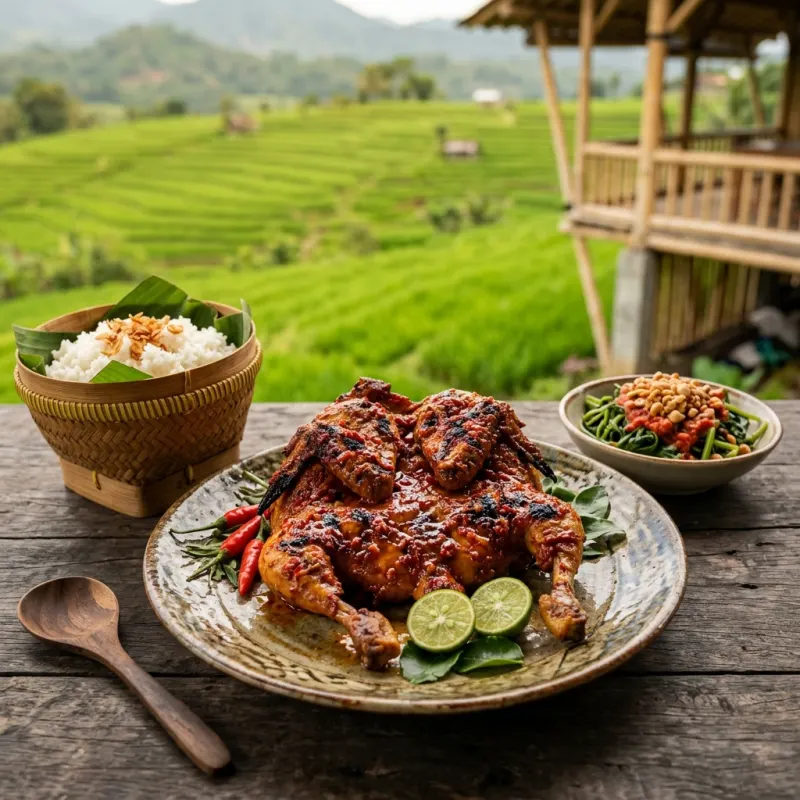
Tetebatu provides an intimate window into Lombok's agrarian soul, set dramatically against the southern contours of Mount Rinjani. Spanning elevations between 400 and 700 meters above sea level, the landscape consists of contoured rice paddies irrigated by natural spring water networks that have functioned for generations. Unlike the beach hubs of Kuta Lombok or the Gili Islands, Tetebatu prioritizes slow exploration through agro-forests laden with nutmeg, cacao, vanilla vines, and robusta coffee plants.
The village functions as a living cultural reserve where visitors engage directly with the indigenous Sasak community. Travelers can witness traditional handloom songket weaving in neighboring craft settlements like Pringgasela, observe iron-forging techniques in Loyok, or spend mornings wandering through dense canopy corridors home to the rare Javan lutung (ebony leaf monkey). The region's peaceful environment and genuine hospitality make it one of Indonesia's premier destinations for ethical, low-impact nature travel.
Reasons to Visit
- Spectacular, uncrowded multi-tiered rice terraces offering sweeping vistas of the Mount Rinjani volcanic ridge.
- Refreshing waterfall expeditions to tucked-away gorges including Sarang Walet, Air Terjun Durian Indah, and Kokok Beluq.
- Authentic cultural immersion with friendly Sasak villagers who welcome guests to explore coffee roasting, spice processing, and artisanal craftwork.
- Mild, pleasant mountain temperatures providing respite from coastal heat and humidity.
- Superb birdwatching and wildlife viewing opportunities in the pristine monkey forest reserves bordering Gunung Rinjani National Park.
Things to Avoid
- Avoid entering residential village compounds or walking through sacred burial sites in revealing beachwear or swimwear.
- Do not attempt to navigate deep river caves or the slippery Rinjani buffer zone trails during heavy afternoon thunderstorms.
- Avoid traveling to the area without sufficient cash, as digital payments and card terminals are practically nonexistent.
- Do not feed wild black macaques or grey long-tailed monkeys in the forest reserve, as human food disrupts their natural foraging habits.
Local Transportation Tips
Transportation within Tetebatu primarily relies on walking, as the majority of rice paddies, orchards, and scenic viewpoints are linked by earthen footpaths inaccessible to motorized vehicles. For traveling to surrounding hamlets, waterfalls, or craft villages, renting a 110cc–125cc scooter from your homestay is the most practical choice. Alternatively, local drivers with cars or passenger-adapted small pickup trucks can be chartered through guesthouse hosts for full-day regional excursions across East Lombok.
Travel Etiquette
- Greet villagers with a gentle smile and a slight nod; using the right hand when handing over money or receiving items is an essential cultural norm.
- Dress modestly with covered shoulders and thighs when walking through residential neighborhoods, school grounds, and markets.
- Always request permission before photographing local farmers, artisans, or village children working in the fields.
- Remove your footwear before entering any homestay residence, traditional home, or prayer area.
Recommended Age Group
Tetebatu appeals strongly to travelers capable of navigating rustic outdoor landscapes and unpaved terrain, making it especially satisfying for adults, nature-loving teens, and active older children.
- Babies (0-2 years): Neutral. Rugged dirt paths and stepped terrace dykes are entirely unsuitable for strollers, requiring baby carriers and extra vigilance regarding tropical insects.
- Kids (3-12 years): Recommended. Active children will relish exploring spice orchards, spotting monkeys in the wild forest canopy, and splashing in shallow natural river pools.
- Teens (13-19 years): Recommended. Excellent terrain for photography, scooter outings, cave exploration, and guided waterfall trekking.
- Adults (20-64 years): Recommended. The ultimate sanctuary for eco-conscious hikers, couples seeking peaceful retreats, and travelers interested in sustainable agriculture and culture.
- Seniors (65+ years): Neutral. While the tranquil mountain atmosphere is delightful, many of the premier waterfall and terrace trails feature steep, muddy descents and uneven stone steps that demand surefooted mobility.
Accessibility Level: Medium
- Terrain across Tetebatu consists primarily of narrow dirt ridges, cobblestone village lanes, and uneven earthen stairs, presenting substantial barriers for manual and motorized wheelchairs.
- Most eco-lodges and homestays feature traditional architectural designs with raised entrance thresholds, step-only access, and narrow gravel paths.
- Wheelchair-accessible public transportation is not currently available in the highland villages; private adapted vehicle hires must be arranged in advance from Mataram.
- Visitors with limited mobility can still enjoy panoramic rice terrace views and authentic Sasak dining from several accessible roadside warungs and panoramic cafe terraces.
Did You Know?
The name 'Tetebatu' translates literally from the indigenous Sasak dialect to 'Stone Bridge' (tete meaning bridge and batu meaning stone), referencing an ancient stone aqueduct bridge built over the river that early villagers utilized to navigate the highland terrain.
Cool Statistics
- Located at an average altitude of approximately 700 meters above sea level, maintaining temperatures 5–8°C cooler than coastal Lombok.
- Home to over 4 native primate troops, including the vulnerable Ebony Leaf Monkey (Trachypithecus auratus kohlbruggei).
- Surrounded by more than 5 distinct scenic waterfalls within an accessible 5-kilometer walking radius.






Buy a compatible power adapter for your trip