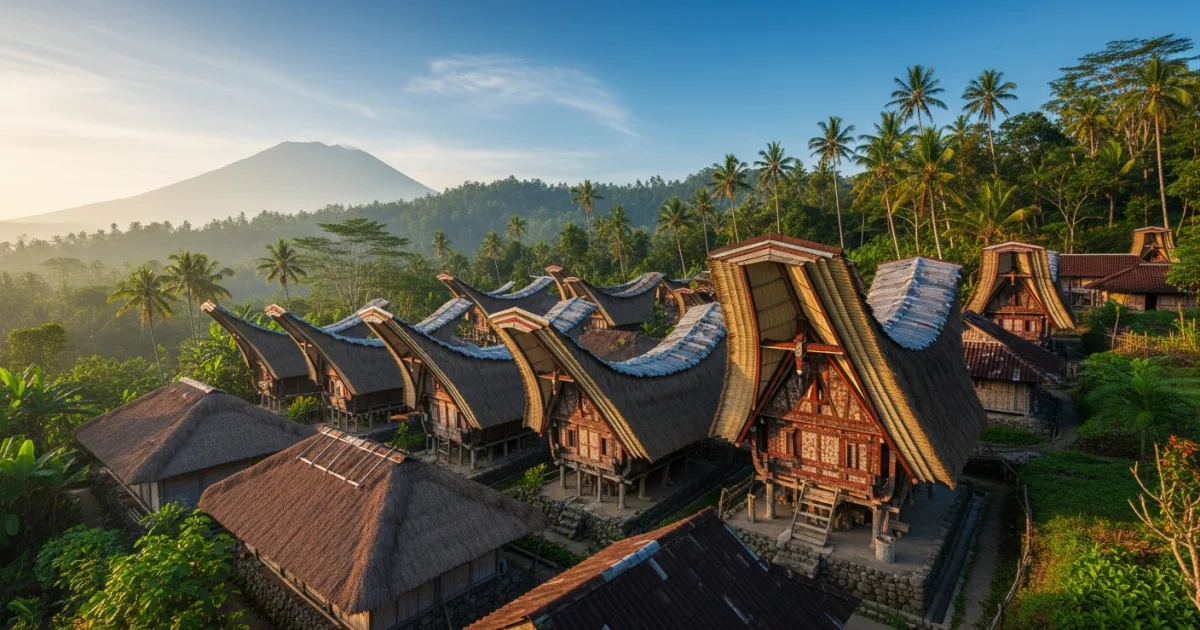
Senaru Traditional Village, known locally as Desa Adat Senaru, is a living museum of the Sasak people, the indigenous inhabitants of Lombok. The village is characterized by its unique architecture, specifically the 'Bale Tani' (traditional houses). These structures are ingeniously built using natural materials from the surrounding environment, including bamboo frames, woven grass walls, and steeply pitched thatched roofs made of alang-alang grass. The design is not only aesthetically pleasing but also highly functional, providing natural ventilation in the tropical heat and resilience against earthquakes.
Life in Senaru revolves around agriculture, community, and a deep spiritual connection to Mount Rinjani, which looms majestically in the background. The villagers maintain a syncretic belief system known as Waktu Telu, which blends Islamic teachings with ancient animist traditions. Visiting Senaru offers a rare opportunity to observe daily routines, from weaving and coffee roasting to the preparation of traditional meals, providing a profound appreciation for a community that honors its heritage amidst a rapidly modernizing world.
Reasons to Visit
- Authentic Cultural Immersion: Experience the daily life and traditions of the indigenous Sasak people firsthand.
- Unique Architecture: Marvel at the traditional Bale Tani houses, constructed entirely without nails using bamboo and woven grass.
- Gateway to Nature: Use the village as a starting point to explore the magnificent Sendang Gile and Tiu Kelep waterfalls.
- Photography Opportunities: Capture stunning images of rustic village life set against the dramatic backdrop of Mount Rinjani's foothills.
- Support Local Communities: Your visit and donations directly support the preservation of this historic settlement.
Things to Avoid
- Disrespectful Attire: Avoid wearing overly revealing clothing; dress modestly to respect the conservative local culture.
- Intrusive Photography: Do not take photos of locals, especially elders and children, without asking for permission first.
- Entering Homes Uninvited: Never enter a traditional house unless you are explicitly invited by the owner or your guide.
- Public Displays of Affection: Keep physical contact with your partner to a minimum, as it is frowned upon in traditional Sasak culture.
- Littering: Do not leave any trash behind; help preserve the pristine environment of the village.
Local Transportation Tips
Within Senaru Traditional Village, the only mode of transportation is walking. The village consists of narrow, unpaved dirt paths and stone steps that weave between the houses. To get to Senaru from other parts of Lombok (such as Mataram, Senggigi, or the airport), you will need to hire a private driver, rent a scooter, or take a shared shuttle bus. The drive from the main tourist areas typically takes about 2.5 to 3 hours through scenic coastal and mountain roads.
Travel Etiquette
- Dress modestly, ensuring shoulders and knees are covered.
- Always ask for permission before taking photographs of people or their homes.
- Use your right hand for giving and receiving items, as the left hand is considered unclean.
- Remove your shoes if you are invited inside a local home.
- Speak softly and avoid loud, disruptive behavior within the village.
- Follow the guidance of your local guide regarding where you can and cannot walk.
Recommended Age Group
Senaru Traditional Village offers a unique cultural experience, but its rustic nature means it is better suited for certain age groups.
- Babies (0-2 years): Not Recommended. The uneven dirt paths, steps, and lack of modern facilities make navigating with strollers impossible and carrying a baby challenging.
- Kids (3-12 years): Neutral. While the cultural aspect is educational, the walking and rustic environment might not hold the attention of all young children.
- Teens (13-19 years): Recommended. Teens will appreciate the authentic cultural experience and the proximity to adventurous hiking trails and waterfalls.
- Adults (20-64 years): Recommended. The village offers a fascinating cultural immersion and serves as a great base for exploring the surrounding natural landscapes.
- Seniors (65+ years): Neutral. The village paths can be steep and uneven, requiring a moderate level of mobility, though the cultural experience is highly rewarding for those who can navigate it.
Accessibility Level: Low
- The village is not wheelchair accessible due to uneven dirt paths, steep inclines, and stone steps.
- Visitors with mobility issues may find navigating the village challenging.
- There are no paved walkways or handrails within the traditional compound.
- Restrooms in the immediate vicinity are basic and may not accommodate accessibility needs.
Did You Know?
Did you know that the traditional Sasak houses in Senaru are built entirely without the use of metal nails? The structures are held together using clever joinery techniques and tied with strong bamboo and rattan strips. Additionally, the doors of the houses are intentionally built low, forcing anyone who enters to bow their head as a sign of respect to the inhabitants.
Cool Statistics
- Elevation: Senaru is located at an altitude of approximately 600 meters (1,968 feet) above sea level.
- Age: The village layout and architectural styles have been preserved for several centuries.
- Population: The traditional compound is home to a tight-knit community of several dozen families.
- Proximity: It is located just a 15-minute walk from the entrance to the famous Sendang Gile waterfall.






Buy a compatible power adapter for your trip