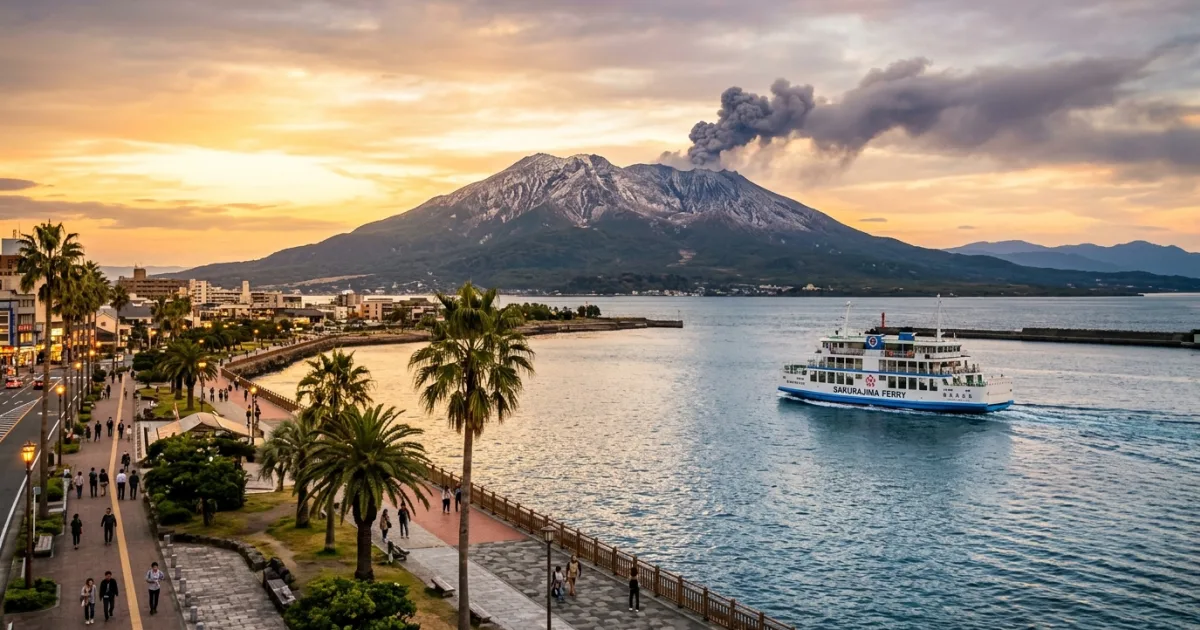
Kagoshima holds a legendary place in Japanese history as the stronghold of the formidable Satsuma domain, whose progressive leaders played a pivotal role in the Meiji Restoration of 1868. Today, this southern capital pairs its samurai heritage with a relaxed, tropical ambiance where palm trees line pristine streets and coastal thermal springs bubble up beneath rocky cliffs. Mount Sakurajima looms continuously across the deep blue water of Kinko Bay, puffing steam and light ash rings into the sky as a quiet reminder of the earth's natural energy.
Urban exploration in Kagoshima unfolds at an unhurried pace, supported by efficient retro streetcars that connect the bullet train terminal at Kagoshima-Chuo with the neon-lit food alleys of Tenmonkan. Travelers can wander centuries-old pine groves in traditional feudal gardens, bathe in steaming volcanic mineral waters, or feast on local Berkshire pork and rich sweet-potato spirits. With welcoming locals, clean sea air, and access to pristine subtropical islands further south, Kagoshima is one of Japan's most captivating, complete regional destinations.
Reasons to Visit
- Witness Sakurajima, one of the world's most accessible and consistently active volcanoes, right across the bay.
- Stroll through Sengan-en, a designated UNESCO World Heritage historic villa featuring traditional landscape gardens framed by the sea.
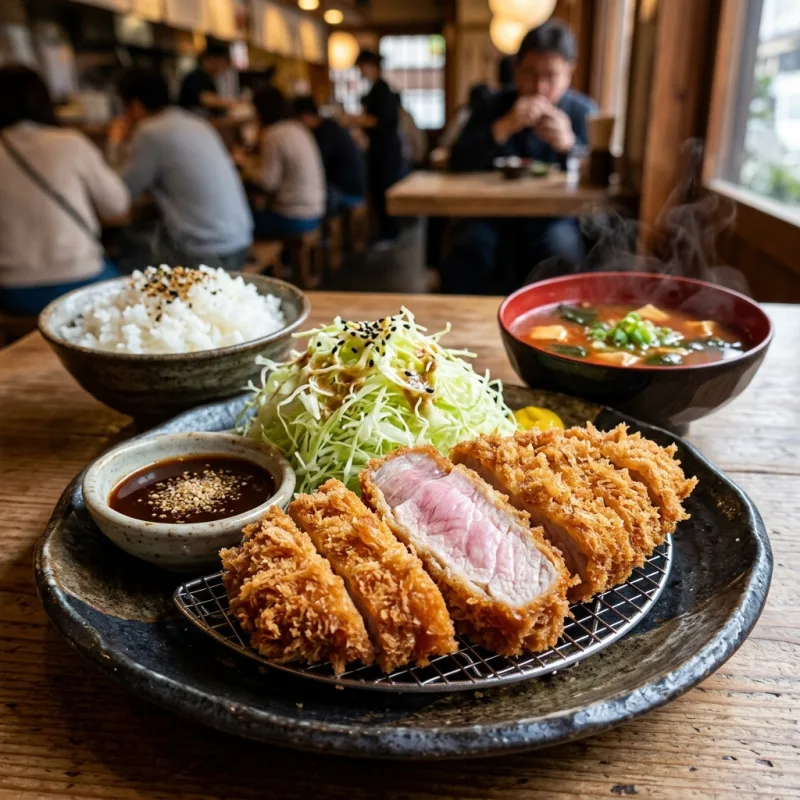
- Indulge in authentic Kurobuta black pork tonkatsu, widely considered the gold standard of Japanese pork cuisine.
- Experience restorative volcanic hot springs, including natural footbaths overlooking the ferry terminal.
- Discover the samurai roots of modern Japan through historic monuments, museums, and samurai residences.
Things to Avoid
- Avoid rubbing your eyes when volcanic ash is falling; rinse them with clean water or carry eye drops instead.
- Avoid wearing brand-new white shoes when walking through Sakurajima trails, as volcanic dust can permanently stain fabric.
- Do not ignore ash disposal rules; always discard collected volcanic residue into designated municipal yellow bags.
- Avoid planning your trip without checking the typhoon forecasts between late July and September.
Local Transportation Tips
Kagoshima is effortless to navigate thanks to its historic and punctual tram system, operated by Kagoshima City Transportation Bureau. Two main streetcar lines connect Kagoshima-Chuo Station, the Tenmonkan shopping and dining district, and Kagoshima Port. Trams charge a flat fare of 170 JPY for adults, payable with major Japanese IC transit cards or exact cash upon exiting. For reaching the volcanic peninsula, the Sakurajima Ferry operates round-the-clock from Kagoshima Port, crossing Kinko Bay in just 15 minutes. Once on the volcano, the Sakurajima Island View loop bus connects the ferry terminal with major observation points like Yunohira.
Travel Etiquette
- Carry your trash with you, as public garbage bins are rare across city parks and tram platforms.
- Rinse and wash thoroughly at bathing stations before entering communal onsen hot spring pools.
- Refrain from eating or drinking while walking down busy streets; enjoy food at stalls, benches, or restaurants.
- Stand on the left side of escalators in Kagoshima, leaving the right side clear for travelers in a hurry.
Recommended Age Group
Kagoshima provides diverse activities ranging from scenic botanical strolls to volcanic explorations, making it widely suitable across generations.
- Babies (0-2 years): Neutral. City transit is clean and stroller-friendly, though occasional airborne volcanic ash requires careful protection for infant eyes and respiratory systems.
- Kids (3-12 years): Recommended. Children love the scenic 15-minute ferry crossing, spotting dolphin pods in Kinko Bay, and examining real volcanic pumice stones.
- Teens (13-19 years): Recommended. Older children and teenagers appreciate the dynamic volcanic scenery, interactive science displays at Sakurajima Visitor Center, and delicious street desserts like Shirokuma shaved ice.
- Adults (20-64 years): Recommended. Perfect demographic for soaking in seaside onsen, sampling local imo-shochu distilleries, exploring feudal samurai gardens, and hiking volcanic lava fields.
- Seniors (65+ years): Recommended. The flat terrain of major city districts, gentle streetcar transportation, soothing mineral thermal baths, and peaceful historic estates make this an exceptional destination for mature travelers.
Accessibility Level: Medium
- Low-floor barrier-free streetcars operate regularly on primary city tram routes, identified with accessibility signage on timetable boards.
- Kagoshima-Chuo Station and the Sakurajima Ferry terminals feature complete step-free elevator access, tactile paving, and accessible multi-purpose restrooms.
- Sengan-en garden provides wheelchair-friendly paved pathways along its primary scenic perimeter, though upper hillside walking trails feature uneven cobblestones.
- Sakurajima Island View tourist loop buses are equipped with wheelchair ramps and designated priority seating areas.
Did You Know?
Due to frequent, harmless ash eruptions from Sakurajima, Kagoshima television channels broadcast a specialized daily 'volcanic ash wind direction' forecast right after the standard weather report so residents know where ash will drift.
Cool Statistics
- Mount Sakurajima erupts on average several hundred times per year, making it one of the most monitored volcanoes on Earth.
- The Sakurajima daikon radish holds the Guinness World Record as the heaviest radish ever cultivated, reaching weights over 30 kilograms (66 lbs).
- Kagoshima Prefecture is home to more than 2,700 natural hot spring sources, ranking second in Japan for geothermal hot spring output.






Buy a compatible power adapter for your trip