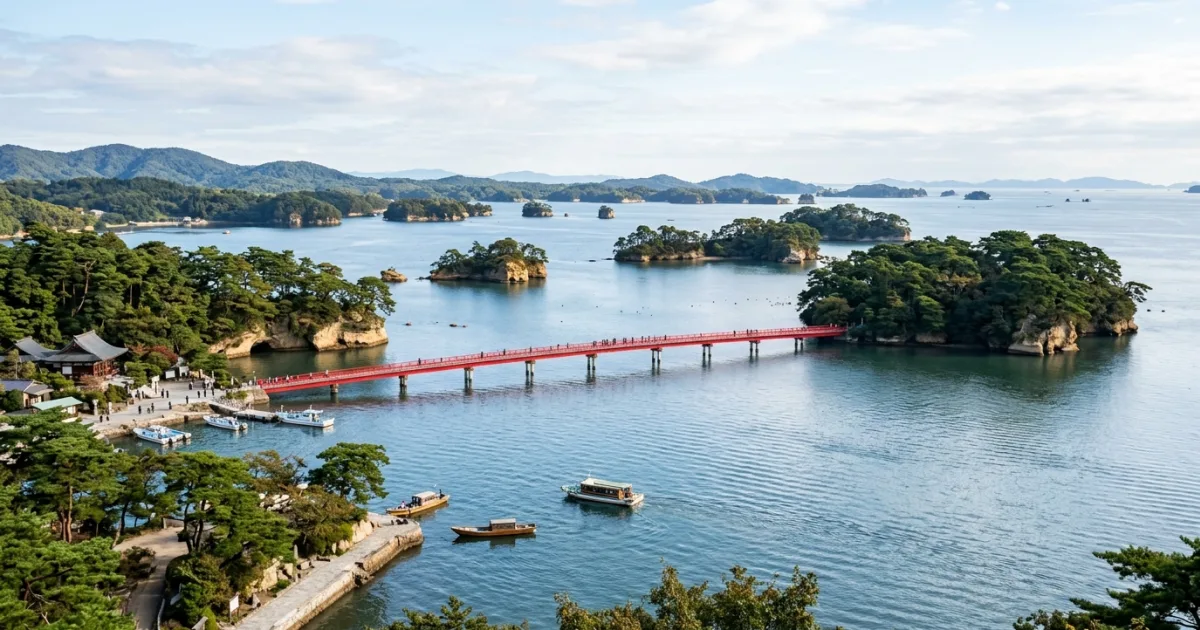
Matsushima Bay is globally celebrated for its collection of several hundred pine-covered sandstone islands, famously ranked alongside Miyajima and Amanohashidate as one of Japan's Nihon Sankei. Established as a sacred retreat during the Heian period, the town evolved into a center of Zen Buddhist scholarship and aristocratic contemplation. Today, it combines historic architecture, tranquil coastal paths, and dynamic fishing port energy within easy reach of the Tohoku region's major transit corridors.
Key attractions line the walkable waterfront, starting with Zuigan-ji, a Rinzai Zen temple rebuilt in 1609 by feudal lord Date Masamune featuring intricate gilded screens and towering cedar groves. Adjacent sits Entsu-in, renowned for its Japanese rock garden, moss-covered paths, and historic mausoleum holding subtle Western-influenced motifs. Beyond the temples, a sequence of vermillion footbridges connects visitors directly to offshore islets, offering unmatched vantage points over the placid sea.
Reasons to Visit
- Behold one of Japan's official Three Great Views across Matsushima Bay.
- Explore National Treasure Zuigan-ji Temple and its ancient cliffside meditation caves.
- Walk the 252-meter vermillion pedestrian bridge to lush Fukuura Island Nature Park.
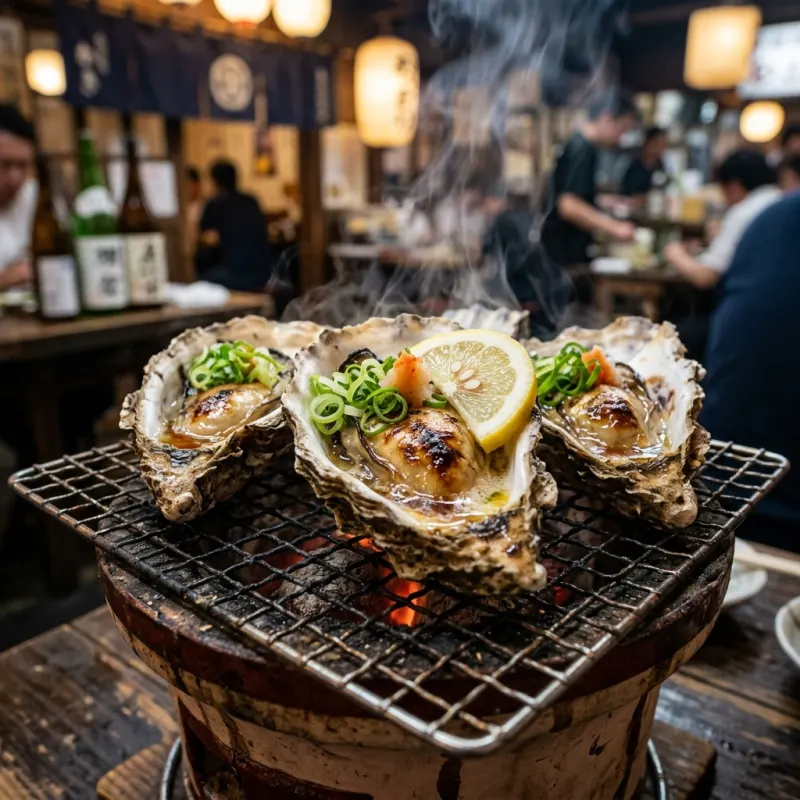
- Feast on freshly harvested Pacific oysters at the waterfront fish market or seasonal shacks.
- Sip matcha green tea in Kanrantei, a historic lakeside teahouse overlooking the islands.
Things to Avoid
- Avoid feeding the black-tailed gulls from cruise boats; feeding was banned to protect pine trees from bird droppings.
- Avoid planning an itinerary relying strictly on Matsushima Station on the JR Tohoku Main Line if walking is difficult; Matsushimakaigan Station on the JR Senseki Line is far closer to the sights.
- Avoid visiting only the central pier; hike up to Saigyo Modoshi no Matsu Park for the best elevated view of the bay.
- Avoid wearing footwear without socks, as you will need to slip off shoes frequently to enter temple halls.
Local Transportation Tips
Matsushima's main tourist district is compact and easily traversed on foot from JR Matsushimakaigan Station. Regional access is serviced by two train lines: the JR Senseki Line (alighting at Matsushimakaigan) and the JR Tohoku Main Line (alighting at Matsushima Station, a 15-minute walk inland from the bay). Bay sightseeing cruises depart regularly from Matsushima Central Pier, offering round-trip tours or one-way routes to Shiogama. Local rental bicycles and taxis are available outside the station for reaching higher viewpoints.
Travel Etiquette
- Remove shoes when stepping onto tatami mats or inside designated temple halls, placing them on entry shelves.
- Refrain from photography inside the main hall of Zuigan-ji where sacred statues and antique sliding doors are preserved.
- Dispose of street food skewers and trash at the stall where purchased, as public waste bins are rare in Japan.
- Maintain quiet, respectful decorum when walking through temple cemeteries and meditation gardens.
Recommended Age Group
Matsushima caters exceptionally well to multiple generations thanks to flat shoreline promenades, peaceful parks, and efficient public transportation.
- Babies (0-2 years): Neutral. Bayfront sidewalks are stroller-friendly, but historic temples feature gravel paths, steps, and mandatory shoe removal that require baby carriers.
- Kids (3-12 years): Recommended. Sightseeing boats, island footbridge crossings, and interactive fishcake grilling provide fun hands-on engagement.
- Teens (13-19 years): Recommended. Striking photography backdrops, unique seafood street food, and historic samurai lore keep older youth engaged.
- Adults (20-64 years): Recommended. World-class Zen architecture, serene nature trails, scenic tea houses, and local seafood offer a balanced itinerary.
- Seniors (65+ years): Recommended. Compact attractions, minimal hills along the coast, abundant seating, and convenient train access make it very accessible.
Accessibility Level: Medium
- Matsushimakaigan Station features elevator access and barrier-free restrooms.
- The coastal promenade and Fukuura Bridge have gentle inclines suitable for manual and electric wheelchairs.
- Historic temple interiors, including Zuigan-ji, involve wooden steps and raised thresholds that require mobility assistance.
- Sightseeing cruise boats provide accessible boarding ramps, though upper observation decks are reachable only by narrow stairs.
Did You Know?
Famed haiku master Matsuo Basho was supposedly so struck by the peerless visual splendor of Matsushima Bay in 1689 that he could not compose an adequate haiku on the spot, falling asleep overwhelmed by its natural harmony.
Cool Statistics
- Matsushima Bay hosts approximately 260 distinct pine-covered islands formed over millennia.
- The footbridge connecting the mainland to Fukuura Island measures 252 meters in length.
- Zuigan-ji's main hall features 10 principal rooms decorated with gold leaf screen paintings from the Momoyama era.






Buy a compatible power adapter for your trip