Tucked into a scenic basin formed by three rivers and overlooked by the volcanic silhouette of Mount Iwate, Morioka represents northern Japan at its most poetic and unhurried. As the political and cultural capital of Iwate Prefecture, it was historically governed by the Nanbu samurai clan from Morioka Castle. While modern infrastructure arrived smoothly with the Shinkansen line, the city retained its human-scale urban rhythm, lined with willows, antique bridges, and timber-framed merchant houses.
International recognition surged when global media highlighted Morioka as a premier global destination, praising its quiet alleyways, absence of overwhelming crowds, and thriving third-wave and legacy coffee cultures. Visitors wander along the pristine Nakatsu River, where 19th-century storehouses sit beside western-style landmarks like the Bank of Iwate Red Brick Building, designed by Kingo Tatsuno, the architect behind Tokyo Station. Whether learning the heritage art of iron kettle casting or partaking in the communal joy of a Wanko Soba challenge, Morioka provides deep, authentic immersion into northeastern Japanese life.
Reasons to Visit
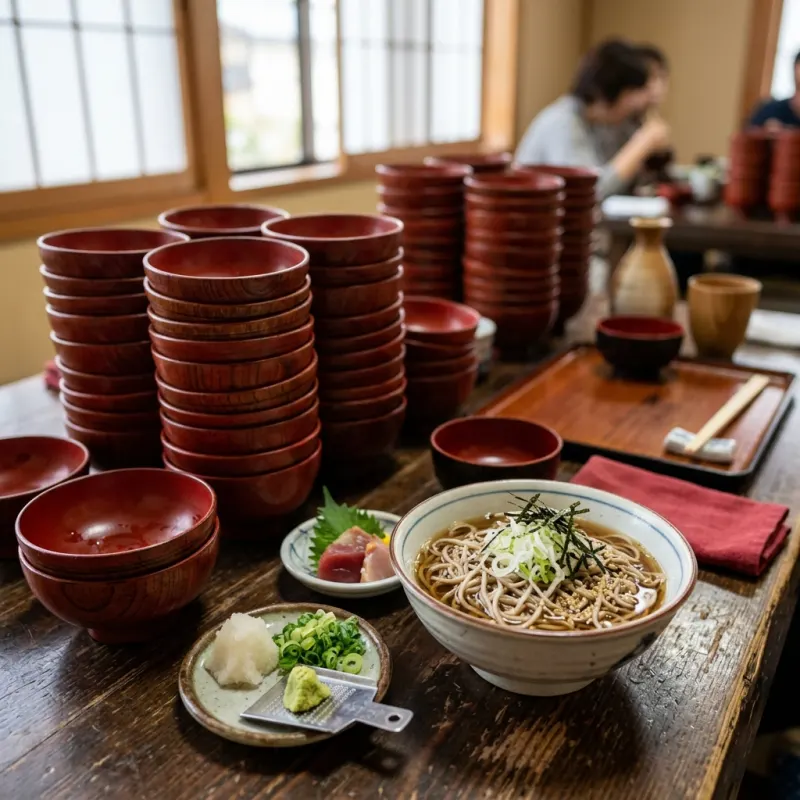
- World-Class Noodle Culture: Taste test the renowned 'Three Great Noodles'—Wanko Soba, Morioka Reimen, and Morioka Jajamen—found only in authentic forms here.
- Historic Architecture: Tour the Bank of Iwate Red Brick Building, Morioka Castle stone ramparts, and Taisho-era western structures preserved along riverside streets.
- Nanbu Ironware Heritage: Visit centuries-old foundries producing world-famous cast iron kettles and teapots revered by tea masters globally.
- Remarkable Walkability: Stroll tranquil, willow-fringed riverside pathways where wild salmon swim in autumn and snow-capped Mount Iwate looms on clear mornings.
- Vibrant Jazz & Cafe Scene: Spend unhurried afternoons in historic kissaten coffee houses and neighborhood vinyl listening bars.
Things to Avoid
- Don't leave without learning the etiquette of Wanko Soba: once you finish eating, you must swiftly slide the wooden lid onto your bowl, or the server will immediately drop in another portion.
- Don't rely solely on mobile cards or foreign digital wallets; smaller local restaurants, craft workshops, and bus routes require yen cash.
- Don't underestimate winter footwear needs; stone staircases at the castle park and riverwalk pavements become slick with black ice.
- Don't skip the local side streets; Morioka's best kissaten, bakeries, and craft shops are tucked away behind the main thoroughfares.
Local Transportation Tips
Morioka Station serves as the primary regional transit interchange. The city's core is centered around a gentle 2-kilometer grid that is effortlessly explored on foot or by bicycle. For effortless transit, hop on the Denden Mushi circular bus, which departs Morioka Station every 10 to 15 minutes, looping clockwise and counterclockwise around downtown sights for a flat 130 JPY fare. Taxis are abundant outside the station's east exit, and regional trains connect easily to surrounding onsen villages like Hanamaki and Tsunagi.
Travel Etiquette
- Slurping noodles enthusiastically is encouraged and signals appreciation for the flavor and texture of the dish.
- When crossing bridges or walking along residential river corridors, keep speaking volumes moderate to respect the quiet neighborhood atmosphere.
- Always remove your shoes and switch to provided slippers when entering historic wooden pavilions, ryokan accommodations, or traditional dining rooms.
- Avoid walking while eating street food; finish snacks near the vendor stall or sit on a designated park bench before moving on.
Recommended Age Group
Morioka's gentle pace, compact downtown layout, and rich hands-on activities cater comfortably across diverse generations.
- Babies (0-2 years): Neutral. Clean sidewalks and spacious riverside parks facilitate strollers, though compact historical cafes and traditional tatami-mat dining rooms can have tight spatial constraints.
- Kids (3-12 years): Recommended. The competitive, game-like experience of Wanko Soba eating, expansive greenery in Takamatsu Park, and craft workshops at Morioka Handi-Works Square keep younger travelers thoroughly engaged.
- Teens (13-19 years): Recommended. Teenagers appreciate the indie vintage shops, vinyl listening cafes, spicy Morioka Reimen dishes, and safe independence for urban exploration.
- Adults (20-64 years): Recommended. Perfect for travelers seeking culinary heritage, scenic riverside architecture, craft breweries, and authentic regional Japanese culture without mass tourism.
- Seniors (65+ years): Recommended. The terrain is flat, public transit via the Denden Mushi bus is simple and inexpensive, and the city offers high comfort levels with minimal physical strain.
Accessibility Level: Medium
- The circular Denden Mushi city transit buses feature low-floor boarding to accommodate wheelchairs and travelers with limited mobility.
- Morioka Shinkansen Station is equipped with elevators, multi-purpose barrier-free restrooms, and tactile paving throughout terminals.
- Morioka Castle Ruins Park features paved pathways on lower tiers, but reaching the upper fortress grounds requires navigating uneven historical stone stairs and inclines.
- Most newer shopping arcades, museums, and hotel facilities are completely step-free, while small historic kissaten and traditional noodle diners may have narrow entries with single-step thresholds.
Did You Know?
Every autumn from October to November, wild salmon migrate from the Pacific Ocean hundreds of kilometers up the Kitakami and Nakatsu Rivers right through the center of downtown Morioka. Locals and travelers lean over the stone parapets of historic bridges like Nakanohashi to watch the fish spawn in the crystalline, shallow waters below.
Cool Statistics
- 400+ Years: The lineage of Nanbu Tekki iron craftsmanship continuously practiced in Morioka since the 17th century.
- 130 JPY: The flat fare to access virtually every downtown landmark via the Denden Mushi loop bus.
- 100+ Bowls: The benchmark number of small Wanko Soba bowls consumed by hearty diners to earn a commemorative wooden certificate.
- 2 Hours 10 Minutes: The lightning-fast transit time from central Tokyo to Morioka aboard the Tohoku Shinkansen.






Buy a compatible power adapter for your trip