Vientiane is the political and historical heart of Laos, resting along the northern banks of the Mekong River directly opposite Nong Khai, Thailand. Established as an administrative center under King Setthathirath in 1560, the city transitioned through Siamese conflicts and French colonial rule before emerging as the relaxed sovereign capital it is today. Its skyline avoids towering glass high-rises, instead balancing low-slung administrative buildings, golden temple spires, and manicured boulevards modeled during the French protectorate era.
The urban fabric of Vientiane is uniquely calm for an Asian metropolis. Travelers encounter quiet morning streets where saffron-robed monks walk in silent alms rounds, transitioning into bustling afternoon commerce at Talat Sao and lively evening gatherings along the pedestrianized Chao Anouvong Park. The city's unique fusion of ancient Buddhist reverence, Indochinese colonial architecture, and burgeoning creative cafés creates an inviting atmosphere for visitors seeking culture without sensory overload.
Reasons to Visit
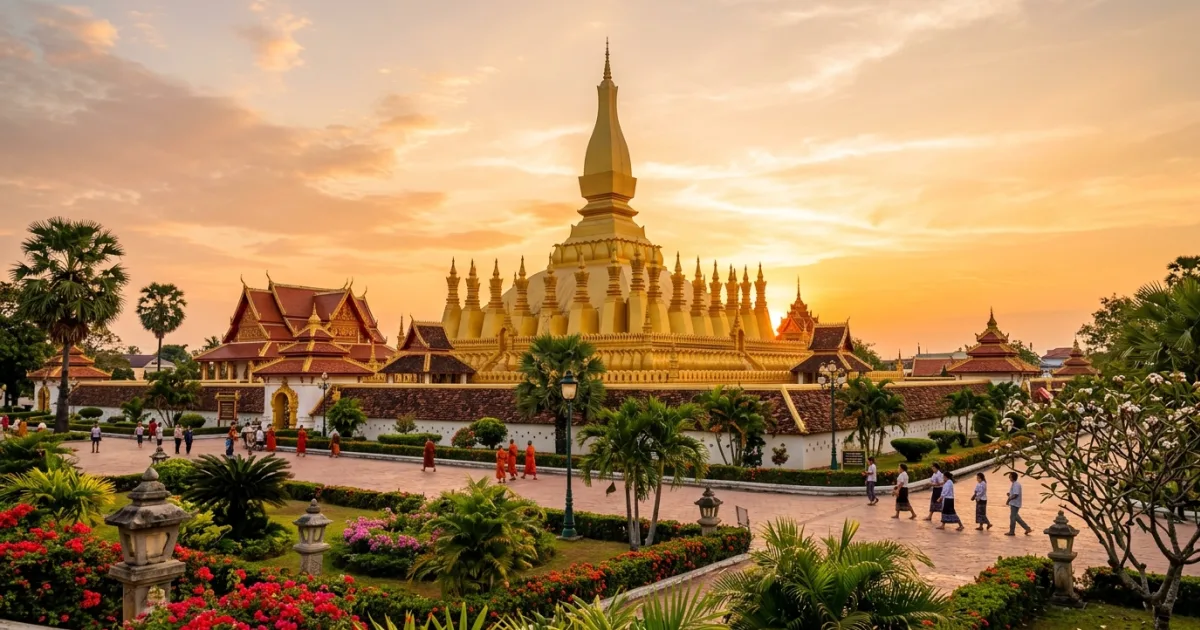
- Magnificent Buddhist Architecture: Home to Pha That Luang, the premier national symbol of Laos, alongside Wat Si Saket with its thousands of miniature Buddha statues.
- Surreal Sculptures at Buddha Park: Xieng Khuan presents over 200 fantastical concrete statues merging Hindu and Buddhist iconography in an open-air riverfront setting.
- World-Class Café & Bakery Scene: Exceptional French baguettes, artisanal pastries, and sustainably sourced high-altitude Lao coffee beans thrive on almost every street corner.
- Stunning Mekong River Sunsets: The riverside promenade transforms nightly into an outdoor community hub framed by vibrant skies and evening night markets.
- Strategic High-Speed Rail Access: The Laos-China Railway connects Vientiane efficiently to Vang Vieng, Luang Prabang, and Boten, making it an effortless launchpad for exploring the country.
Things to Avoid
- Avoid wearing skimpy clothing like tank tops or short shorts when visiting sacred temples, which causes cultural offense.
- Do not accept the first price quoted by unmetered roadside tuk-tuks; negotiate politely beforehand or book via the Loca app.
- Avoid touching anyone on the top of the head, and never point your feet directly toward a Buddha image or a local resident.
- Do not ride motorbikes without a helmet or international driving permit, as traffic police conduct regular checkpoint inspections.
- Avoid drinking untreated tap water, even in midrange hotel rooms.
Local Transportation Tips
Navigating Vientiane is simple due to its flat geography and compact downtown district. Walking and renting city bicycles (approximately $1.50 USD per day) are ideal for exploring the historic riverside core. For longer trips across town or to the railway station, the Loca mobile app provides transparent, upfront pricing for car and taxi rides, eliminating the need to haggle with street drivers. Traditional three-wheeled tuk-tuks (jumbos) remain common, though agreeing on a firm fare prior to departure is essential. Clean, air-conditioned public buses run frequently from Talat Sao Central Bus Station to key outer spots, including Wattay International Airport and Buddha Park.
Travel Etiquette
- Perform the Nop: Greet locals with hands pressed together at chest height and a slight bow, rather than initiating a handshake.
- Remove Shoes: Always step out of your footwear before entering temple ordination halls, pagodas, and private Lao homes.
- Respect Buddhist Monks: Women must never physically touch a Buddhist monk or hand items directly to them; place offerings on a cloth or tray instead.
- Maintain Composure: Lao culture deeply values calm, gentle communication (jai yen); raising your voice or displaying anger is viewed as a loss of face.
- Mind Your Feet: The feet are regarded as the lowest, least clean part of the body spiritually; avoid resting your feet on chairs or pointing them at statues.
Recommended Age Group
Vientiane offers a tranquil atmosphere suitable for diverse travelers, though specific age dynamics apply due to climate and infrastructure.
- Babies (0-2 years): Neutral. Uneven pavements and high afternoon heat can make navigating with strollers cumbersome, though locals are exceptionally welcoming to infants.
- Kids (3-12 years): Neutral. The whimsical statues of Buddha Park and riverside night stalls provide entertainment, but high-energy theme parks or dedicated children's attractions are limited.
- Teens (13-19 years): Recommended. Teenagers will appreciate the quirky history, affordable street food markets, vibrant youth-led cafés, and outdoor cycling options.
- Adults (20-64 years): Recommended. Excellent dining, historical monuments, relaxing spas, and seamless connectivity make it an exceptional urban retreat.
- Seniors (65+ years): Recommended. The calm pace of life, flat terrain, low traffic compared to other regional capitals, and gentle cultural outings suit mature travelers well.
Accessibility Level: Medium
- Sidewalks in the central district are frequently uneven, interrupted by tree roots, or blocked by parked scooters, creating challenges for manual wheelchair users.
- Major national landmarks like Pha That Luang feature wide, flat stone courtyards that are moderately accessible, though temple inner sanctums usually require climbing steps.
- Patuxai monument requires climbing multiple interior staircases to reach the observation decks, with no operational elevators available.
- Low-floor public city buses are limited; pre-arranged private vans or accessible taxis arranged through international hotels offer the smoothest transit.
Did You Know?
The Patuxai war monument, often described as Vientiane's Arc de Triomphe, was constructed in the 1960s using American concrete originally intended by the United States to build a new airport runway for military use, earning the monument the historic nickname 'the vertical runway.'
Cool Statistics
- 6,800+: Number of Buddha images and sculptures housed within the cloisters of Wat Si Saket, the city's oldest surviving temple.
- 1560: The year King Setthathirath officially designated Vientiane as the capital of the Lan Xang Kingdom.
- 45 Meters: The total height of the gold-covered sacred stupa of Pha That Luang.
- 40 Kilometers: Length of the modern high-speed rail line connecting Vientiane Railway Station across the Nam Ngum river corridor northward.






Buy a compatible power adapter for your trip