Lower Myanmar holds immense geographic and historical significance within the nation, stretching along the Andaman Sea and the Gulf of Mottama across the Ayeyarwady and Sittaung river basins. Dominated by historic Mon kingdoms before Burmese integration, this lowland area was heavily reshaped during the colonial period when port cities expanded to facilitate rice and timber exports.
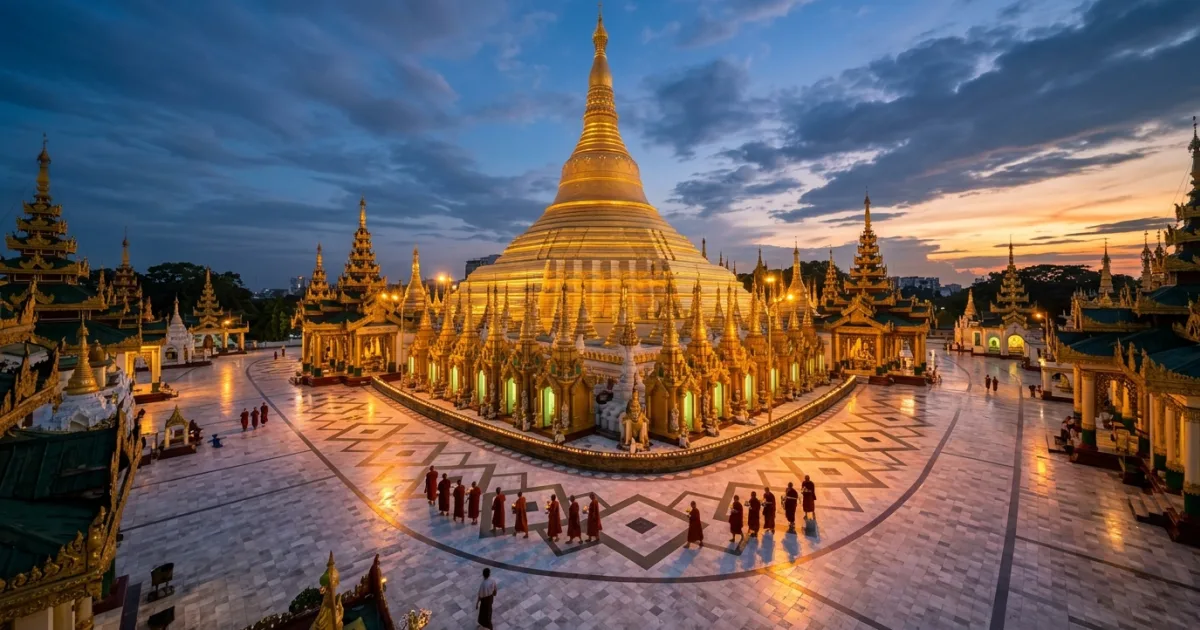
Today, visitors explore the contrast between urban centers like Yangon, with its monumental Shwedagon Pagoda and faded colonial architecture, and the rural riverine settings of the delta. Beyond the cities lie iconic pilgrimage sites such as Kyaiktiyo (the Golden Rock) in Mon State, alongside striking karst limestone caves and serene waterways.
Reasons to Visit
- Marvel at the Shwedagon Pagoda, a 99-meter gold-plated stupa dominating the Yangon skyline.
- Explore authentic morning teahouse traditions serving artisanal tea and fried pastries.
- Witness sacred pilgrimage traditions at Kyaiktiyo Pagoda perched dramatically on a cliff edge.
- Discover rich Mon architectural ruins and early Buddhist heritage throughout Bago.
- Sample coastal seafood preparations infused with vibrant regional aromatics and herbs.
Things to Avoid
- Do not wear shoes or socks into temples, monasteries, or pagoda premises under any circumstances.
- Avoid touching anyone on the top of the head, which is culturally regarded as sacred.
- Do not photograph military installations, soldiers, government buildings, or security checkpoints.
- Avoid drinking unboiled tap water or consuming beverages with unrefrigerated block ice.
- Do not use your left hand alone when handing money or items to elders and service providers.
Local Transportation Tips
Transport within Lower Myanmar centers around regional highways connecting Yangon with Bago, Mawlamyine, and Pathein. Ride-hailing services operate smoothly in large cities, while local trishaws and auto-rickshaws provide transport for short residential distances. For regional transitions, hiring a licensed private driver remains the most reliable and safest method for international visitors navigating current checkpoint protocols.
Travel Etiquette
- Dress modestly by covering shoulders, cleavage, and knees when visiting towns, villages, and spiritual sites.
- Greet locals politely using both hands when presenting business cards or settling bills.
- Refrain from public displays of romantic affection, which run contrary to traditional conservative customs.
- Point feet away from religious statues and people when sitting on the floor in temples or homes.
Recommended Age Group
Lower Myanmar offers remarkable spiritual and historical encounters, yet current infrastructure and security considerations dictate suitability across generations.
- Babies (0-2 years): Not Recommended. Inconsistent medical infrastructure, high humidity, and intense heat create severe logistical difficulties.
- Kids (3-12 years): Not Recommended. Long travel distances, heat, and complex transport arrangements offer few engaging amenities for young children.
- Teens (13-19 years): Neutral. Culturally focused teenagers interested in history and religion will appreciate the monumental sights, though movement requires careful supervision.
- Adults (20-64 years): Recommended. Independent travelers with sound cross-cultural awareness can navigate local transit, cultural interactions, and historic sites effectively.
- Seniors (65+ years): Neutral. Uneven pavements, frequent staircases at pagodas, and tropical humidity require good physical mobility, though private guided tours mitigate difficulty.
Accessibility Level: Medium
- Pagoda compounds feature wide marble platforms but frequently lack ramped entries and require visitors to be barefoot throughout.
- Urban footpaths and streets in regional settlements feature high curbs, missing paving stones, and substantial obstacles.
- Wheelchair-accessible public transit vehicles are virtually non-existent; hiring a spacious private van is necessary.
Did You Know?
The Shwedagon Pagoda in Lower Myanmar is encrusted with more than 4,500 diamonds, including a stunning 76-carat diamond resting at the very apex of the stupa's spire.
Cool Statistics
- Over 60 tons of pure gold leaf gild the structure of the iconic Shwedagon Pagoda.
- The Ayeyarwady Delta accounts for nearly 60% of the entire country's national rice production.
- Bago was the historical imperial capital of the Hanthawaddy Kingdom during the 15th and 16th centuries.






Buy a compatible power adapter for your trip