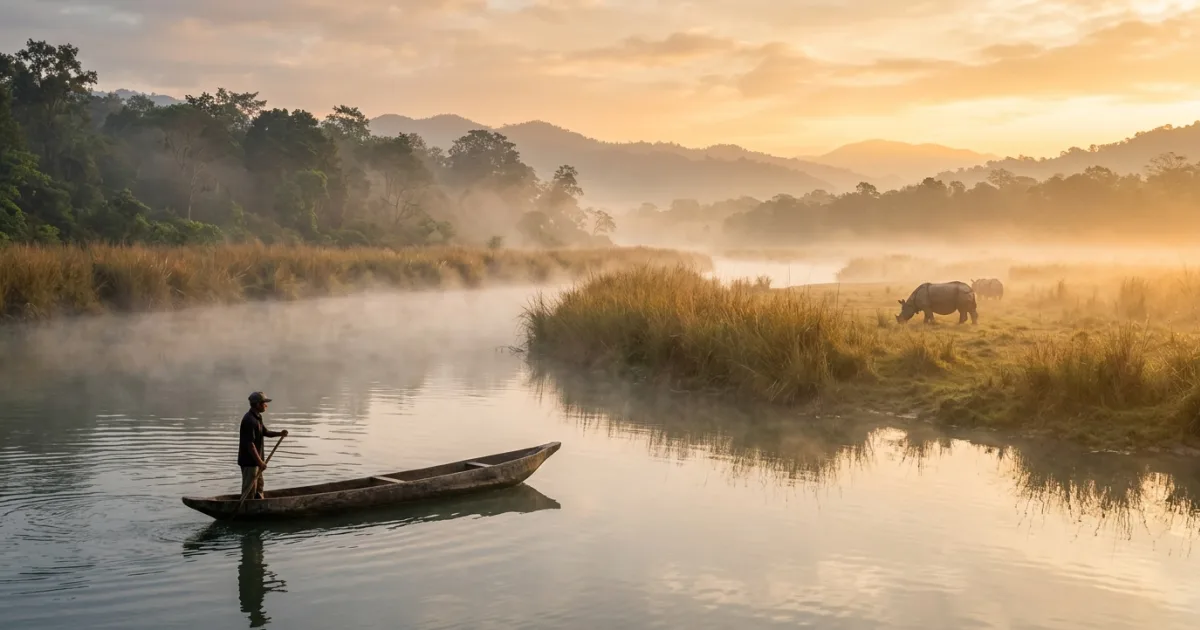
Chitwan and the Terai encompass the subtropical southern lowlands of Nepal, presenting a landscape of sal timberlands, tall elephant grass, and meandering river tributaries. As the country's first national park, Chitwan National Park achieved UNESCO World Heritage status in 1984 for its exceptional biodiversity and successful conservation initiatives. The region hosts robust populations of the greater one-horned rhinoceros, alongside elusive royal Bengal tigers, Asian elephants, and marsh mugger crocodiles.
Culturally, the Terai is the ancestral homeland of the Tharu people, whose distinct mud-plastered architecture, animist traditions, and sustainable agricultural practices have evolved over centuries in harmony with the jungle. Beyond eco-tourism hubs like Sauraha and Meghauli, the greater Terai plains stretch east toward sacred pilgrimage centers and agricultural markets, delivering a multifaceted travel experience rooted in wildlife stewardship, indigenous folklore, and community-based conservation.
Reasons to Visit
- Encounter wild greater one-horned rhinos during quiet wooden canoe floats on the Rapti River.
- Support world-class community anti-poaching initiatives and conservation-led eco-lodges.
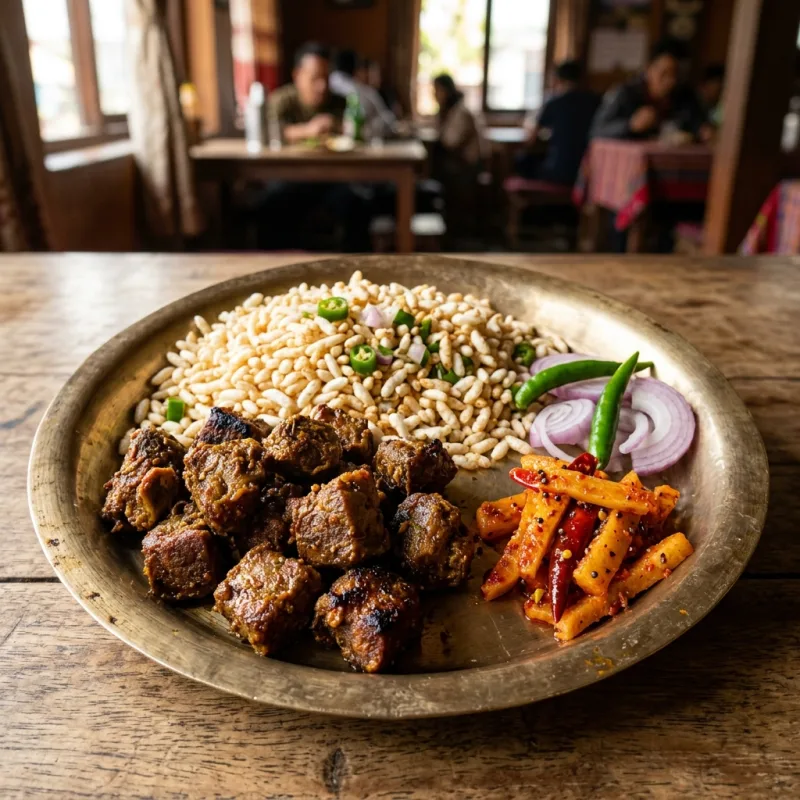
- Experience Tharu cultural dances, traditional mud-and-thatch architecture, and regional culinary heritage.
- Spot over 500 avian species, making it one of South Asia's preeminent birdwatching territories.
- Contrast the alpine imagery of northern Nepal with lush, subtropical riverine jungles.
Things to Avoid
- Avoid wearing brightly colored clothes (red, white, yellow) on jungle walks, as they agitate wildlife.
- Do not patronize commercial elephant riding camps that use hooks or tight restraining chains.
- Avoid approaching riverbanks alone at dusk or dawn due to active crocodile and rhino movements.
- Do not drink unboiled or untreated tap water anywhere in the Terai region.
Local Transportation Tips
Transit within tourist hubs like Sauraha is largely conducted on foot or via rented bicycles, which are ideal for exploring village tracks and river dikes. For regional trips between towns like Bharatpur and Sauraha, auto-rickshaws (tempos) and local taxis operate at negotiable rates. Jungle exploration takes place via open-air safari jeeps, human-powered dugout canoes, or on guided foot patrols organized by certified local operators.
Travel Etiquette
- Remove your shoes before entering local Tharu homes and community temples.
- Always ask permission before taking close-up portraits of village residents, particularly elders and children.
- Keep speaking voices to a whisper during canoe safaris and forest hikes to preserve wildlife calm.
- Dress modestly by covering shoulders and knees when passing through rural villages and sacred sites.
Recommended Age Group
Chitwan and the Terai provide rewarding wilderness and cultural learning adventures across varied generational demographics.
- Babies (0-2 years): Not Recommended. Subtropical heat, high mosquito presence, and rough safari jeep trails pose notable challenges for infants.
- Kids (3-12 years): Recommended. Children thoroughly enjoy spotting wild rhinos, river canoeing, and visiting peaceful village centers.
- Teens (13-19 years): Recommended. Excellent destination for active adolescents interested in wildlife tracking, bird photography, and cycling.
- Adults (20-64 years): Recommended. Prime demographic for full-day wilderness walks, wildlife photography expeditions, and eco-lodge retreats.
- Seniors (65+ years): Recommended. Highly accessible flat terrain, comfortable river safaris, and vehicle tours allow older travelers to experience the jungle without steep hikes.
Accessibility Level: Medium
- Terrain across the Terai is flat, eliminating the steep staircases and mountain inclines typical of northern Nepal.
- Upscale eco-resorts in Meghauli and Sauraha feature ground-floor bungalows with wide walkways, though paved access is limited in budget homestays.
- Traditional dugout canoes and high-clearance safari jeeps require physical agility to board and do not feature wheelchair lifts.
- Local village dirt paths can become muddy and uneven during and immediately following the rainy season.
Did You Know?
The Tharu people of the Terai historically developed a genetic resistance to malaria, carrying the thalassemia gene, which allowed them to thrive for centuries in the dense, mosquito-infested jungles where outsiders could not survive.
Cool Statistics
- Chitwan National Park protects an area of 952.63 square kilometers of primary subtropical forest.
- Nepal achieved multiple years of 'Zero Poaching' of rhinos through integrated community and military park protection.
- Over 70% of Chitwan National Park's vegetation consists of towering Sal (Shorea robusta) trees.






Buy a compatible power adapter for your trip