Disclosure: This site contains affiliate links. We may earn a commission if you make a purchase, at no extra cost to you.
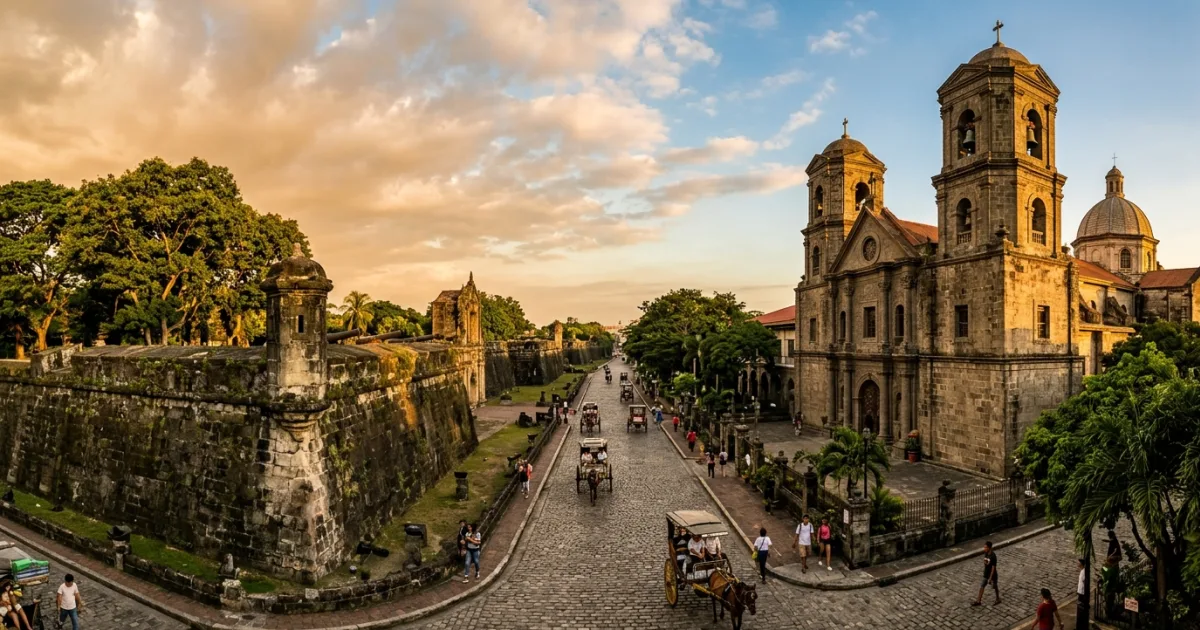
Historic stone walls and church bell tower in Intramuros, Manila at sunset

Basic Info

COUNTRY & Region

Philippines,
Asia

ACCESSIBILITY LEVEL​

  • High: Widely accessible with good facilities for disabilities.
  • Medium: Some accessible options, but limitations exist.
  • Low: Limited accessibility; many barriers for disabilities.
Medium

LOCAL CURRENCY​

Philippine Peso (PHP)

Price Level

Low – budget‑friendly basics

Medium – moderate mid‑range costs

High – pricey lodging, dining & transport

Medium

SAFETY LEVEL

5 shields = Excellent – very low crime or conflict.

4 shields = Safe – low risk, routine care.

3 shields = Relatively safe – use normal street smarts.

2 shields = Use caution – higher crime or periodic unrest.

1 shields = Avoid – active conflict or extreme danger.

Scores are derived from multi-year peace, homicide and security indices blended into a single 1-to-5 scale.

Recommended Duration

1-7 days, Full day

Manila Overview & Key Highlights

Manila stands on the eastern shore of Manila Bay on the island of Luzon, serving as the dense, historic capital of the Philippines. The metropolis juxtaposes centuries of Spanish colonial heritage within the walled district of Intramuros against rapidly evolving creative districts, bustling waterfront promenades, and monumental civic institutions. Travelers navigate an energetic urban fabric defined by baroque stone churches, sprawling street markets, and modern skyscraper enclaves. The city functions as the cultural and culinary engine of the archipelago, showcasing diverse regional cuisines and a storied past marked by pre-colonial settlements, Spanish rule, and Second World War history. Urban explorers encounter world-class museums, vibrant independent contemporary art galleries, and a thriving street-level coffee and cocktail scene. While traffic density demands measured pacing, Manila rewards visitors with warm Filipino hospitality, evocative historic architecture, and unforgettable bay sunsets.

Manila Travel Guide: Logistics & In-Depth Tips

Manila is an energetic metropolis rooted on the eastern edge of Manila Bay. Founded as a fortified Spanish outpost in 1571 over an earlier indigenous settlement, it served as the critical Asian hub for the trans-Pacific Galleon Trade connecting Asia to the Americas. Today, the city forms the core of a sprawling metropolitan region of over thirteen million residents, creating an intense, layered urban environment where historic colonial remnants sit beside contemporary commerce.

A visit to Manila offers an authentic look into the soul of the Philippines. Beyond its historic perimeter, travelers find Binondo, recognized as the world's oldest Chinatown, renowned for historic bakeries and dim sum halls. Meanwhile, adjacent central areas showcase the country's preeminent art collections at the National Museum Complex, bustling bayside sunsets along Roxas Boulevard, and progressive design scenes that highlight the dynamic resilience of the Filipino spirit.

Reasons to Visit

  • Intramuros and Colonial Architecture: Walk through centuries of history along the stone ramparts of Fort Santiago and inside San Agustin Church, a UNESCO World Heritage site.
  • Binondo Culinary Scene: Explore the world's oldest Chinatown to sample handmade dumplings, pork buns, and traditional hopia pastries.
  • National Museum Complex: View Juan Luna's monumental Spoliarium alongside world-class anthropological and natural history collections with free admission.
  • Manila Bay Sunsets: Experience the world-famous golden hour hues across the harbor from historic promenades and waterfront lounges.
  • Vibrant Contemporary Art: Discover Southeast Asia's thriving creative community through galleries in hubs like the Escolta revival district and Pasay.

Things to Avoid

  • Do not take unmetered street taxis waiting outside airports or tourist spots; always use app-based bookings to ensure regulated pricing.
  • Avoid scheduling tightly packed cross-town itineraries during morning and evening rush hours when road congestion peaks.
  • Do not drink municipal tap water directly; rely on filtered or purified bottled water.
  • Avoid displaying expensive cameras, watches, or smartphones openly in crowded street markets.

Local Transportation Tips

Navigating Manila requires patience and tactical route planning due to heavy traffic congestion. The LRT-1, LRT-2, and MRT-3 light rail lines provide inexpensive transit across main north-south and east-west arteries, bypassing traffic during commuter peaks. For cross-district hops, the Grab smartphone application is the safest and most efficient service, offering upfront cashless pricing. Traditional jeepneys and motorized tricycles cover localized feeder routes and provide cultural immersion, though they are best navigated once familiar with specific neighborhood routes.

Travel Etiquette

  • Respecting Elders: The traditional gesture of 'Mano' (placing an elder's hand to your forehead) and addressing older individuals or service staff with 'Po' and 'Opo' conveys deep respect.
  • Modest Dress at Sacred Sites: Cover your shoulders and wear long pants or knee-length skirts when stepping inside operational Catholic churches and shrines.
  • Saving Face: Address disagreements or service confusion calmly and politely; raising your voice in public causes discomfort and impedes resolution.
  • Warm Greetings: A friendly smile and polite conversational inquiries are customary and readily welcomed by locals across all service interactions.

Recommended Age Group

Manila accommodates travelers of various profiles, but urban infrastructure and intense tropical humidity influence travel ease across age brackets.

  • Babies (0-2 years): Neutral. Tropical heat, variable sidewalk surfaces, and dense crowds make navigating with strollers challenging in historic districts.
  • Kids (3-12 years): Neutral. Modern indoor museums like the Mind Museum and air-conditioned shopping arcades offer comfort, though long transit times require patience.
  • Teens (13-19 years): Recommended. Young travelers will enjoy vibrant food streets, heritage bike tours in Intramuros, dynamic shopping districts, and colorful street photography.
  • Adults (20-64 years): Recommended. Perfect for cultural immersion, rich colonial history, thriving culinary districts, and nightlife exploration.
  • Seniors (65+ years): Neutral. Historic cobblestones and uneven terrain in heritage sectors can challenge mobility, though private transport and attentive local hospitality provide assistance.

Accessibility Level: Medium

  • Cobblestone roadways and elevated stone curbs in Intramuros present navigation hurdles for manual wheelchair users without assistance.
  • Major national cultural sites, including the National Museum of Fine Arts and National Museum of Natural History, are fully equipped with wheelchair ramps and operational passenger elevators.
  • Light rail stations have variable elevator accessibility; booking accessible private transport via Grab or hotel concierges is strongly recommended.
  • Modern shopping malls and major international hotels provide wide accessible entrances, dedicated restrooms, and flat, step-free access throughout.

Did You Know?

San Agustin Church inside Intramuros, completed in 1607, is the oldest stone church in the Philippines and survived both major earthquakes and the severe artillery bombardments of the 1945 Battle of Manila that leveled surrounding neighborhoods.

Cool Statistics

  • 1571: The year Manila was officially declared a Spanish colonial capital city.
  • 1594: The year Binondo was established, making it the oldest Chinatown in the world.
  • 43,000+: Residents per square kilometer, making Manila proper one of the most densely populated cities on Earth.

Address:

Manila, Philippines

Find Nearby Accommodations

Electricity

220-240V, 
60Hz

Plug Type

Type A (Flat blade), Type B (Flat blade with grounding pin), Type C (Round pin)
Plug types
Click To View Plug Types
Manila is part of our
Micro Adventures collection

Activities To Do In Manila

Best Time To Visit Manila

Manila experiences a tropical wet-and-dry climate characterized by clear heat distinctions across the calendar year.

  • Dry Season (December to April): Optimal travel conditions with lower humidity, cooler breezes from December to February, and minimal rainfall.
  • Hot Peak (March to May): High daytime temperatures frequently exceeding 34°C (93°F), best spent balancing indoor museums and shaded morning tours.
  • Southwest Monsoon Season (June to November): Frequent torrential afternoon rains and potential typhoon disruptions that can cause localized street flooding.

Average Temperatures Per Month

Average monthly temperaturesMonthly source values, with Celsius and Fahrenheit equivalents in the following data table.20°68°24°75°28°82°31°88°35°95°JanJan: 26°C / 79°FFebFeb: 27°C / 81°FMarMar: 28°C / 82°FAprApr: 29°C / 84°FMayMay: 30°C / 86°FJunJun: 28°C / 82°FJulJul: 28°C / 82°FAugAug: 27°C / 81°FSepSep: 27°C / 81°FOctOct: 27°C / 81°FNovNov: 27°C / 81°FDecDec: 27°C / 81°F
View temperature data
Average monthly temperatures
Month°C°F
Jan2679
Feb2781
Mar2882
Apr2984
May3086
Jun2882
Jul2882
Aug2781
Sep2781
Oct2781
Nov2781
Dec2781

Remember to check the weather forecast a few days before the trip and before heading to the airport.

Safety Level

5 shields = Excellent – very low crime or conflict.

4 shields = Safe – low risk, routine care.

3 shields = Relatively safe – use normal street smarts.

2 shields = Use caution – higher crime or periodic unrest.

1 shields = Avoid – active conflict or extreme danger.

Scores are derived from multi-year peace, homicide and security indices blended into a single 1-to-5 scale.

Keep valuables, jewelry, and smartphones secure and out of sight in crowded markets like Divisoria and Quiapo to prevent opportunistic pickpocketing. Avoid walking unlit side streets alone late at night, and always use official booking apps for transportation rather than hailing unmarked vehicles.

The rating is based on multi-year peace, crime, and security indices. Before you go, always verify current conditions through official government travel advisories.

Emergency Numbers

Police: 911
Ambulance: 911

No internet needed • Includes local translations • Free for TravelingWiz readers

Spoken Languages

Filipino (Tagalog) and English are the official languages, with English spoken proficiently across hospitality, business, and transport.
Travel Booking Partner - TravelingWiz

Learn The Language

  • Kumusta: Hello / How are you?
  • Salamat: Thank you
  • Magkano ito?: How much is this?
  • Oo / Hindi: Yes / No
  • Pakiusap: Please
  • Saan ang…?: Where is the…?
  • Masarap!: Delicious!
  • Paalam: Goodbye

Trip Cost & Budgeting for Manila, 2026

Everything you need to know about money while traveling
Is Manila expensive for tourists in 2026? Manila remains quite affordable for international travelers, offering great value for accommodation and dining. Based on Human Verified prices, a cappuccino costs around 160 PHP, a domestic beer is roughly 100 PHP, and a meal at a mid-range restaurant averages 500 PHP. While luxury areas can cost more, overall daily expenses remain very reasonable. Use the data table below to calculate your specific daily budget based on your travel style.

LOCAL CURRENCY​:

Philippine Peso (PHP)

Price Level:

Low – budget‑friendly basics

Medium – moderate mid‑range costs

High – pricey lodging, dining & transport

Medium

Cards Vs. Cash

Credit cards are accepted in major malls and hotels, but cash is essential for street food, taxis, and markets.

How Much Cash to Carry (on you)

Per person, per day – pocket cash for small purchases.

Local: 2000
Philippine Peso (PHP)
≈ 31 USD

Average Daily Costs (per person)

Full daily spend estimation (accommodation, food, transportation, attractions).

Travel Style
Philippine Peso (PHP)
≈ USD ($)
Budget
3350
52
Mid-range
6050
95
Comfort
13300
208
Note

The Prices, Daily costs, and calculator results are estimates for planning purposes only. Actual costs may vary based on season, booking timing, personal spending habits, and currency fluctuations. TravelingWiz cannot be held responsible for discrepancies between these estimates and your final trip expenses.

Best Value Tips

  • • Use ride-hailing apps like Grab or JoyRide to avoid inflated taxi meters and ensure transparent pricing.
  • • Dine at local eateries or popular chains like Jollibee for delicious and affordable meals.
  • • Take the LRT or MRT train lines during off-peak hours for extremely cheap transit between major city hubs.
  • • Withdraw cash from ATMs situated inside shopping malls for increased security and transaction reliability.

Tours & Tickets

Explore tours, attractions, and ticket options to plan your visit.
Plan ahead

Travel Offers & Coupons

Browse travel offers and coupons from our affiliate partners.
Affiliate partner offers

What To Pack

  • Breathable lightweight cotton or linen clothing suited for high tropical humidity and heat.
  • A sturdy umbrella or compact waterproof poncho for sudden afternoon downpours.
  • Comfortable walking shoes with cushioned soles for navigating uneven cobblestones in Intramuros.
  • Modest attire with covered shoulders and knees for visiting active historic churches like San Agustin Church.
  • Universal travel adapter compatible with Type A, B, and C wall sockets.
  • Insect repellent containing DEET or Picaridin for urban parks and evening outdoor dining.
Only the good stuff!
Browse recommended travel gear
Check out our free packing list tool

Recommended Itineraries for Traveling to Manila

Take your itinerary with you

Choose a ready-made itinerary, plan your own trip, and keep TravelingWiz by your side while you travel.

Get the TravelingWiz app

Food & Drink Highlights

Local Food Overview

Manila's culinary landscape blends indigenous Austronesian traditions with centuries of Spanish, Chinese, and American influences. The city is famous for its assertive balance of sour, savory, and sweet flavors, highlighted by hearty stews, charred pork skewers, and fresh seafood preparations. Dining experiences range from traditional carinderias and Binondo noodle houses to avant-garde tasting menus celebrating native heritage ingredients.

Must Try Dish

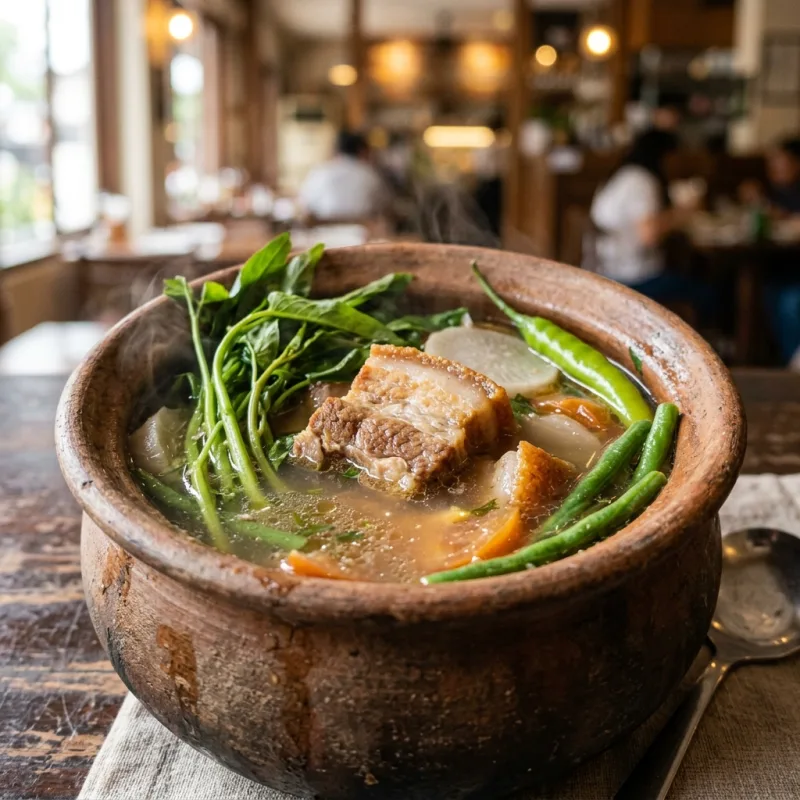
Sinigang na Baboy - A quintessential Filipino sour soup featuring tender cuts of pork simmered with water spinach, radish, and string beans in an aromatic, tamarind-infused broth. The distinctive tang awakens the palate and showcases the core souring philosophy foundational to traditional Philippine home cooking.
Bowl of traditional Filipino pork sinigang soup with vegetables

Maya’s Final Checklist for Manila

Logistics shouldn’t be the focus of your trip—the experience should. I’ve hand-vetted these essential partners to ensure your arrival, stay, and exploration are as smooth as an Athenian breeze.

Maya, the human travel expert at TravelingWiz, offering curated, non-AI expertise

Where to Stay

Compare accommodation options and choose a stay that suits your plans and budget.

Air Travel

Compare flight options and find a route that fits your plans.

Local Guides

Connect with local guides for personalized help planning and exploring.

Travel Protection

The “Engineer’s” rule: always have a backup. Secure your trip with a plan that covers every “what if” and unexpected change.

Car Rentals

Compare rental options and choose a car that suits your trip.

Visa Information

Don’t let paperwork slow you down. Get expert assistance with your application to ensure all your entry documents are in order.

FAQs

Ride-hailing services like Grab are the most reliable and comfortable method for international travelers. For specific corridors, the LRT and MRT transit lines bypass heavy surface road congestion, while walking is best kept to self-contained districts like Intramuros.
Tap water is not recommended for direct consumption by visitors. Stick to filtered, bottled, or boiled water, which is standard practice in hotels and dining establishments throughout the city.
Intramuros is the primary historic destination. It contains Fort Santiago, San Agustin Church, and preserved defensive stone ramparts detailing Spanish colonial rule and the events of World War II.

Your Insights Matter

TravelingWiz grows through the stories of our community. If you’ve recently explored ,Manila share your tips and stories to help us perfect our guides for the next traveler.

Where should we send your offline card?

We hate spam just as much as you do

newsletter_consent *