Disclosure: This site contains affiliate links. We may earn a commission if you make a purchase, at no extra cost to you.

>
>
>
Northern Thailand

Northern Thailand

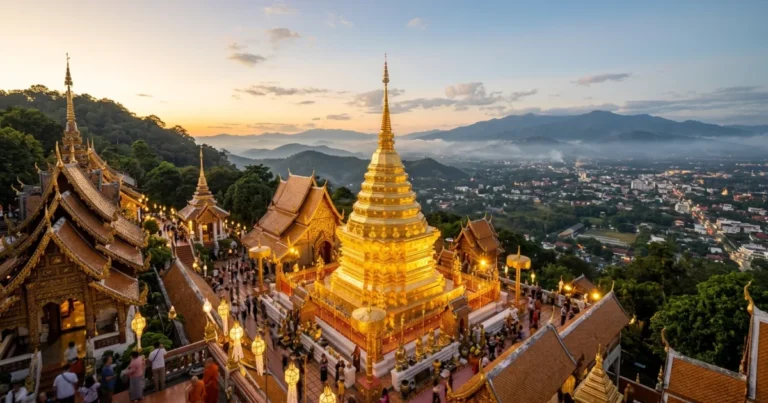
Panoramic view of misty mountains and golden temple stupa in Northern Thailand at dawn

Northern Thailand Overview & Key Highlights

Northern Thailand offers a dramatic landscape of undulating mountain ranges, ancient teak temples, and deep-seated Lanna cultural traditions. Major urban centers like Chiang Mai and Chiang Rai blend rich history with modern cafe culture and digital infrastructure, while peripheral provinces like Mae Hong Son and Nan offer pristine national parks and peaceful country roads. The region provides distinct cooler microclimates compared to southern Thailand, creating ideal conditions for hiking, wildlife observation, and road tripping. Visitors will discover exceptional gastronomy rooted in local herbs, dynamic night markets teeming with hill-tribe textiles, and preserved historical sites dating back to the thirteenth century. Ethical elephant rescue sanctuaries, mountain tea plantations, and winding motorcycle passes make Northern Thailand a deeply rewarding destination for cultural explorers, remote workers, and active adventurers seeking authentic local connections away from commercial beach tourism.

Northern Thailand Travel Guide: Logistics & In-Depth Tips

Northern Thailand encompasses the historic cradle of the Lanna Kingdom, an empire that flourished from the 13th to the 18th centuries across mountainous valleys border-linked to modern Myanmar and Laos. Topographically, the region is characterized by high, north-south running granite mountain ranges intercut by fertile river basins, including the Ping, Wang, Yom, and Nan rivers. These geological features gave rise to independent fortified valley settlements (Mueang) that developed unique artistic styles visible today in tiered wooden wats, sweeping eaves, and intricate brass metalwork.

Today, Northern Thailand stands as a hub for both traditional agrarian culture and forward-thinking sustainability. The region produces some of Asia's finest shade-grown Arabica coffee, nurtured by royal crop-replacement initiatives that transitioned hill communities away from historical opium cultivation. From the digital innovation and cafe culture of Chiang Mai to the surreal contemporary sacred art of Chiang Rai and the quiet, mist-shrouded roads of Mae Hong Son, Northern Thailand presents a multifaceted travel experience defined by unhurried pace, spiritual devotion, and deep environmental reverence.

Reasons to Visit

  • Magnificent Lanna Architecture: Admire preserved teakwood temples such as Wat Phra That Lampang Luang and Chiang Mai's Wat Chedi Luang.
  • World-Class Highland Coffee: Tour organic Arabica coffee farms in mountain enclaves like Mae Kampong and Doi Chang.
  • Scenic Road Loops: Experience legendary motorcycling routes, notably the 1,864 curves of the Mae Hong Son Loop.
  • Distinctive Regional Gastronomy: Sample herbaceous curries, fermented sausages, and Khao Soi that cannot be replicated in southern Thailand.
  • Ethical Wildlife Encounters: Observe rescued Asian elephants roaming freely in verified, non-riding community-based forest sanctuaries.

Things to Avoid

  • Elephant Riding and Animal Shows: Avoid facilities that allow riding, bathing shows, or use bullhooks, which perpetuate animal distress.
  • Visiting During March-April: Avoid scheduling strenuous outdoor trips during the height of the regional smoke haze and burning season.
  • Disrespectful Temple Attire: Do not enter temple halls with bare shoulders, shorts above the knee, or footwear on.
  • Unlicensed Motorbiking: Do not rent high-powered motorcycles without appropriate motorcycle licenses, insurance coverage, and mountain riding experience.
  • Drinking Unfiltered Tap Water: Avoid untreated municipal tap water; opt for reverse-osmosis filtration stations or sealed bottled water.

Local Transportation Tips

Urban transit in Northern Thailand is dominated by red shared pickup trucks known as Songthaews, which operate on flexible routes for low, fixed fares, alongside ride-hailing apps like Grab and Bolt in major cities. Intercity travel between provincial capitals is served by comfortable VIP coaches such as the Greenbus network, or scenic train lines connecting Lampang and Chiang Mai. For remote mountain exploration, renting a car or hiring a licensed local driver remains the safest and most efficient choice.

Travel Etiquette

  • Respect the Monarchy: Treat all images, statues, and currency bearing the Royal Family with utmost deference; criticism is strictly prohibited by law.
  • Mind Your Feet: Never point the soles of your feet toward people, monks, or Buddha statues, as feet are considered spiritually unclean.
  • Do Not Touch Heads: The head is considered the sacred seat of the soul; avoid touching anyone on the head, including young children.
  • Practice the Wai: Greet locals with a polite palm-to-palm gesture at chest level, accompanied by a respectful slight bow.
  • Quiet Temple Conduct: Speak softly within temple grounds, turn off phone ringers, and ask permission before photographing resident monks.

Recommended Age Group

Northern Thailand caters wonderfully to a wide spectrum of travelers thanks to its low crime rates, accessible medical facilities in major cities, and varied pace of travel.

  • Babies (0-2 years): Neutral. Cobblestone temple compounds and steep mountain paths present stroller challenges, though private transport and modern hospitals are readily available in Chiang Mai.
  • Kids (3-12 years): Recommended. Children thrive visiting ethical elephant observation centers, exploring jungle waterfalls, taking gentle bamboo rafting trips, and learning traditional crafts.
  • Teens (13-19 years): Recommended. Excellent destination for adventurous youth interested in mountain trekking, ziplining, night food markets, and cultural photography.
  • Adults (20-64 years): Recommended. Perfect balance of outdoor adventures, cultural discoveries, world-class cuisine, wellness spas, and vibrant digital nomad communities.
  • Seniors (65+ years): Recommended. Slow-paced cultural tours, flat historic Old Town walking routes, affordable luxury wellness resorts, and high-standard private medical facilities make it very comfortable.

Accessibility Level: Medium

  • Historic Temple Access: Ancient wats often have raised thresholds, stone stairs, and lack ramp access, making interior wheelchair access challenging without assistance.
  • Sidewalk Infrastructure: Urban footpaths in provincial towns can be uneven with utility poles and high curbs; transport by private van or taxi is recommended for mobility-impaired visitors.
  • Modern Accommodations: High-end boutique resorts and international hotel brands in Chiang Mai offer step-free access, roll-in showers, and ground-level suites.
  • Accessible Sightseeing: Paved boardwalks at Doi Inthanon's summit and Ang Ka nature trail feature wheelchair-accessible wooden boardwalks through high-elevation cloud forests.

Did You Know?

Northern Thailand's Doi Inthanon is the easternmost extension of the Himalayan mountain system, forming part of the Thanon Thong Chai Range that bridges mainland Southeast Asia with the Tibetan Plateau.

Cool Statistics

  • 1,864: Total number of hairpin turns along the iconic Mae Hong Son Loop roadway.
  • 2,565 m: Height of Doi Inthanon, marking the highest topographical point in the Kingdom of Thailand.
  • 700+ Years: Documented history of the Lanna culture, founded by King Mengrai in the year 1296.

Address:

Northern Thailand, Thailand

Find Nearby Accommodations

Basic Info

address icon

COUNTRY & Region

Thailand,
Asia

ACCESSIBILITY LEVEL​

Medium
Currency icon

LOCAL CURRENCY​

Thai Baht (THB)
Price level icon
Low
Safety Level icon

SAFETY LEVEL

Duration icon

Recommended Duration

• More than a week

Electricity

electricity icon

Electricity

220-240V, 
50Hz
Plug Socket icon

Plug Type

• Type A (Flat blade)
• Type B (Flat blade with grounding pin)
• Type C (Round pin)
• Type O (Three round pins)
Plug types
Click To View Plug Types
Northern Thailand is part of our
Coolcation collection

Things To Do In Northern Thailand

Total: 1

Activities To Do In Northern Thailand

Best Time To Visit Northern Thailand

Northern Thailand experiences three distinct seasons: cool/dry, hot/smoky, and green/monsoon. Visiting during the proper window drastically alters outdoor visibility and air quality.

  • November to February (Peak Season): The ideal travel window offering clear skies, minimal rainfall, and crisp highland temperatures between 15°C and 28°C.
  • June to October (Green Season): Moderate to heavy afternoon downpours turn rice terraces emerald green; waterfalls surge, temperatures remain pleasant, and tourist crowds are minimal.
  • March to May (Hot & Smoky Season): Extreme heat exceeding 38°C combined with dense agricultural smoke and PM2.5 spikes, making outdoor trekking and photography challenging.

Average Temperatures Per Month

Remember to check the weather forecast a few days before the trip and before heading to the airport.

Safety Level icon

Safety Level

Northern Thailand is exceptionally safe for solo travelers and families, with very low rates of violent crime. The greatest hazards stem from motor vehicle accidents, particularly on winding mountain passes like the Mae Hong Son Loop; wear a certified helmet, carry an International Driving Permit, and avoid riding after dark. Air quality drops severely during the burning season (February to April), requiring sensitive travelers to monitor AQI levels closely. Tap water is not potable; drink filtered or bottled water.

The rating is based on multi-year peace, crime, and security indices. Before you go, always verify current conditions through official government travel advisories.

Emergency Numbers

Police: 191 (Tourist Police: 1155)
Ambulance: 1669

No internet needed • Includes local translations • Free for TravelingWiz readers

Spoken Languages

Thai is the official language.

Learn The Language

  • Sawasdee krub / Sawasdee ka: Hello / Goodbye (polite particle depends on speaker’s gender).
  • Khop khun krub / ka: Thank you very much.
  • Tao rai krub / ka?: How much does this cost?
  • Mai phet: Not spicy (crucial for local food orders).
  • Aroy mak: Delicious / Very tasty.
  • Hong nam yoo tee nai?: Where is the restroom?
  • Mai bpen rai: You’re welcome / No problem.
  • Chai / Mai chai: Yes / No.
Travel Booking Partner - TravelingWiz

Trip Cost & Budgeting for Northern Thailand, 2026

Everything you need to know about money while traveling

Northern Thailand ranks among the most budget-friendly destinations in all of Southeast Asia, offering remarkable value for lodging, dining, and internal transportation. With TravelingWiz's Human Verified data, a typical traveler should expect to spend around $52 USD per day for a mid-range trip. A freshly prepared bowl of Khao Soi at a local market costs around 50 to 70 THB ($1.50 to $2.00 USD), while artisanal single-origin highland coffees average 60 to 90 THB. Click the Trip Cost Calculator button below the table to work out your personal budget for this trip.

Currency icon

LOCAL CURRENCY​:

Thai Baht (THB)
Price level icon
Low
Cash is indispensable in Northern Thailand. While upscale hotels, fine dining restaurants, and shopping malls in Chiang Mai accept major credit cards, open-air markets, street food stalls, songthaews, and rural shops operate strictly on cash. ATMs are widespread throughout cities and towns but charge a standard 220 THB withdrawal fee for foreign debit cards; withdraw larger amounts at once to minimize fees.

Per person, per day – pocket cash for small purchases.

Local: 195
Thai Baht (THB)
≈ 6 USD

Full daily spend estimation (accommodation, food, transportation, attractions).

Travel Style
Thai Baht (THB)
≈ USD ($)
Budget
1070
32
Mid-range
1940
59
Comfort
4250
129

The Prices, Daily costs, and calculator results are estimates for planning purposes only. Actual costs may vary based on season, booking timing, personal spending habits, and currency fluctuations. TravelingWiz cannot be held responsible for discrepancies between these estimates and your final trip expenses.

  • Eat at Local Night Bazaars: Street markets like Chiang Mai's Chang Phuak Gate or Chiang Rai's Night Bazaar offer exceptional local meals for under $2 USD per dish.
  • Use Songthaews for Short Urban Trips: Shared red trucks (Rod Daeng) cost 30 to 50 THB per ride within city centers, far cheaper than private taxis.
  • Rent a 125cc Scooter: Daily scooter rentals cost roughly 200 to 300 THB ($6 to $9 USD), offering maximum freedom for exploring regional waterfalls and temples (valid International Driving Permit required).
  • Book Local Eco-Tours Direct: Book ethical elephant sanctuaries and mountain homestays directly through local operators to avoid third-party agency markups.
  • Travel During the Shoulder Green Season: Visit in late September or October for discounted luxury boutique hotels and stunning, lush countryside scenery before peak rates apply.

Pre-Order Tickets

Avoid disappointment when tickets sell out — and skip the long lines by booking online in advance. You’ll often save up to 20% too.
Save up to 20%

Travel Discounts & Coupons

Save on hotels, attractions, transport, and gear — find verified discounts for smarter travel spending.
Verified Coupons

What To Pack

  • Warm Layers and Fleece: Temperatures drop below 10°C (50°F) during winter nights (November to February) in highland areas like Doi Inthanon.
  • Modest Temple Attire: Lightweight pants and long skirts that cover knees and shoulders for sacred wats.
  • Sturdy Trekking Shoes: Breathable, high-traction hiking boots for steep, uneven jungle trails and bamboo paths.
  • Slip-on Footwear: Comfortable sandals or slip-on shoes for frequent removal before entering temples and local homes.
  • High-Filtration N95 Masks: Essential if traveling during the annual agricultural burning season from mid-February through April.
  • Biodegradable Insect Repellent: High-strength DEET or natural eucalyptus spray for forested river valleys and nature reserves.
  • Universal Power Adapter: Thailand utilizes a mix of Type A, B, C, and O wall sockets.
We couldn't find tips for Northern Thailand.
If you got any, please share

Recommended Itineraries for Traveling to Northern Thailand

We couldn't find itineraries for Northern Thailand.
you can contact us for custom trip plan

Food & Drink Highlights

Local Food Overview

Northern Thai (Lanna) cuisine is defined by pungent herbs, bitter greens, earthy roots, fermented soybean paste (Tua Nao), and sticky rice (Khao Niao) rather than coconut milk and sweet curries found in the south. Dishes balance salty, sour, bitter, and savory elements, often served on a communal round pedestal table called a Khantoke. Staple culinary components include crispy pork cracklings (Khab Moo), fiery roasted chili dips (Nam Prik Num and Nam Prik Ong), and aromatic herbal pork sausages (Sai Oua).
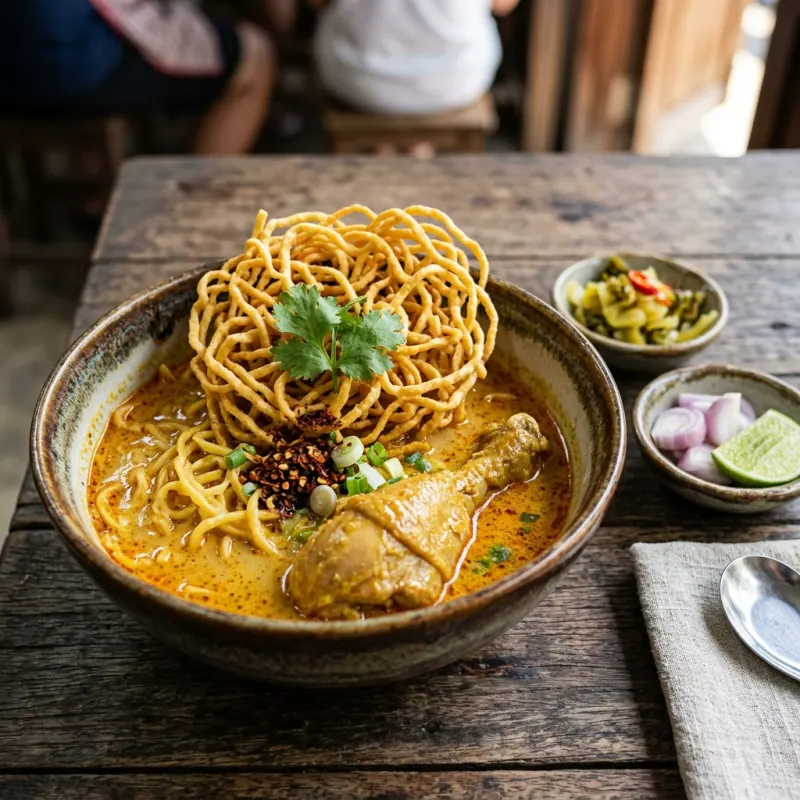
Bowl of authentic Northern Thai Khao Soi curry noodles with chicken and crispy garnish

Must Try Dish

Khao Soi - A deeply flavorful, aromatic curry noodle soup featuring braised chicken or beef submerged in a rich coconut-curry broth flavored with black cardamom, topped with crispy egg noodles and served with pickled mustard greens, raw shallots, and fresh lime wedges.
Food Experiences Title Icon

Food
Experiences

Discover cooking classes, tastings and local food tours

No food experience found
Maya, the human travel expert at TravelingWiz, offering curated, non-AI expertise

Maya’s Final Checklist for Northern Thailand

Logistics shouldn’t be the focus of your trip—the experience should. I’ve hand-vetted these essential partners to ensure your arrival, stay, and exploration are as smooth as an Athenian breeze.

Where to Stay

From boutique hotels to local apartments—compare thousands of options and find the perfect stay in the best neighborhood.

Air Travel

Getting there should be seamless. Compare the best routes and prices across top airlines to start your journey on the right note.

Local Guides

Connect with experts who know the destination best. Get personalized advice and insider tips to help you plan your perfect trip.

Travel Protection

The “Engineer’s” rule: always have a backup. Secure your trip with a plan that covers every “what if” and unexpected change.

Car Rentals

Explore at your own pace with total freedom. Compare reliable rental options and find the right vehicle for your adventure.

Visa Services

Don’t let paperwork slow you down. Get expert assistance with your application to ensure all your entry documents are in order.

FAQs

For regional city connections, VIP public buses and domestic flights operate smoothly. For exploring regional loops like Chiang Mai to Pai or Mae Hong Son, renting a 125cc scooter or hiring a private car with driver provides the most flexibility.
The agricultural burning season typically runs from mid-February through April, resulting in hazardous PM2.5 air pollution across Chiang Mai, Chiang Rai, and surrounding valleys. Plan visits between November and January to avoid poor air quality.
Many sanctuaries are strictly ethical rescue centers with no riding, no hooks, and no performance shows, focusing on observation and habitat rehabilitation. Always vet sanctuaries thoroughly prior to booking.
Yes, Thai law requires an International Driving Permit with a motorcycle endorsement along with your home license. Police checkpoints frequently inspect foreign riders and issue fines for non-compliance.

Your Insights Matter

TravelingWiz grows through the stories of our community. If you’ve recently explored ,Northern Thailand share your tips and stories to help us perfect our guides for the next traveler.

Related Articles

Check out our related articles and blog posts to learn even more about the destination.

No related articles found

Don’t Travel Alone

Share with your friends and family

Where should we send your offline card?

We hate spam just as much as you do

newsletter_consent *