

Low – budget‑friendly basics
Medium – moderate mid‑range costs
High – pricey lodging, dining & transport
Disclosure: This site contains affiliate links. We may earn a commission if you make a purchase, at no extra cost to you.
Low – budget‑friendly basics
Medium – moderate mid‑range costs
High – pricey lodging, dining & transport
5 shields = Excellent – very low crime or conflict.
4 shields = Safe – low risk, routine care.
3 shields = Relatively safe – use normal street smarts.
2 shields = Use caution – higher crime or periodic unrest.
1 shields = Avoid – active conflict or extreme danger.
Scores are derived from multi-year peace, homicide and security indices blended into a single 1-to-5 scale.
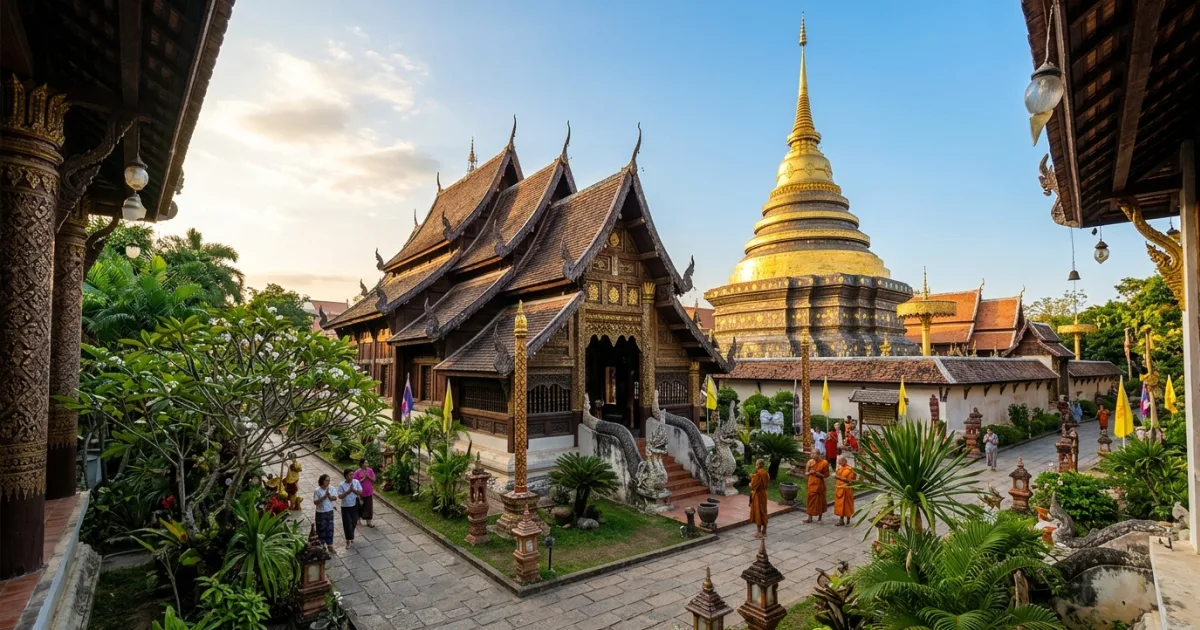
Lampang is a tranquil northern Thai destination renowned for its preserved Lanna heritage, distinctive horse-drawn carriages, and ornate teakwood architecture. Situated along the Wang River just ninety minutes southeast of Chiang Mai, the town offers a slower, unhurried counterpoint to the region's busier tourist circuits. Visitors can explore Burmese-style Buddhist temples such as Wat Phra Kaeo Don Tao and Wat Sri Chum, which reflect the town's prosperous late-nineteenth-century teak-logging boom. Beyond the historic urban center, the surrounding valley presents remarkable natural vistas and spiritual landmarks, most notably the mountaintop pagodas of Wat Chaloem Phra Kiat. Lampang also functions as Thailand's primary ceramic crafting capital, famous across Southeast Asia for its classic rooster bowls produced at the Dhanabadee Ceramic Museum. With a thriving weekend walking street market, welcoming local communities, and minimal commercialization, Lampang delivers an authentic northern Thai experience.
Lampang preserves an authentic architectural and cultural tapestry rarely observed in Thailand’s larger urban centers. Positioned in the fertile Wang River basin, the city evolved from an ancient eighth-century Dvaravati settlement known as Kelang Nakhon into a major commercial teak-logging hub in the late nineteenth century. British, Burmese, and Chinese merchants invested heavily in the province, leaving behind an astonishing collection of gingerbread teakwood mansions, Burmese-style monastic pavilions (pyatthat roofs), and riverfront shophouses that remain intact today.
Unlike heavily commercialized tourist spots, Lampang operates on local rhythms. Mornings begin with monks walking barefoot along quiet lanes to collect alms, while evenings converge around street stalls along the Talat Kao (Old Market) thoroughfare. Beyond the town perimeter, the province encompasses dense teak woodlands, limestone massifs, hot springs in Chae Son National Park, and Wat Phra That Lampang Luang, widely regarded as one of northern Thailand’s most sacred and architecturally intact fortified wooden temple compounds.
Lampang is compact and straightforward to navigate. Central heritage sites can be explored on foot or by renting a bicycle from riverfront guesthouses. For a historic touch, traditional horse-drawn carriages (Rot Ma) operate from designated stands outside the Old Town and major hotels, charging standardized rates (approximately 200 to 300 THB for short routes). Shared blue songthaews cruise along major avenues connecting the train station, bus terminal, and market centers for 20 to 40 THB per trip. To explore provincial sights like Wat Chaloem Phra Kiat or Chae Son National Park, renting an automatic scooter or hiring a private taxi for the day is the most efficient choice.
Lampang caters exceptionally well to visitors looking for relaxed cultural discovery, historical integrity, and scenic landscapes.
The iconic hand-painted 'rooster bowl' (Cham Kai) found in noodle shops all across Thailand was originated and popularized in Lampang during the mid-twentieth century by Chinese-immigrant ceramic craftsmen, utilizing the province's exceptional white kaolin clay deposits.

Lampang experiences a tropical savanna climate characterized by three distinct seasons:
| Month | °C | °F |
|---|---|---|
| Jan | 23 | 73 |
| Feb | 25 | 77 |
| Mar | 29 | 84 |
| Apr | 30 | 86 |
| May | 29 | 84 |
| Jun | 28 | 82 |
| Jul | 28 | 82 |
| Aug | 27 | 81 |
| Sep | 27 | 81 |
| Oct | 26 | 79 |
| Nov | 25 | 77 |
| Dec | 23 | 73 |
Remember to check the weather forecast a few days before the trip and before heading to the airport.
5 shields = Excellent – very low crime or conflict.
4 shields = Safe – low risk, routine care.
3 shields = Relatively safe – use normal street smarts.
2 shields = Use caution – higher crime or periodic unrest.
1 shields = Avoid – active conflict or extreme danger.
Scores are derived from multi-year peace, homicide and security indices blended into a single 1-to-5 scale.
The rating is based on multi-year peace, crime, and security indices. Before you go, always verify current conditions through official government travel advisories.
No internet needed • Includes local translations • Free for TravelingWiz readers

Low – budget‑friendly basics
Medium – moderate mid‑range costs
High – pricey lodging, dining & transport
Per person, per day – pocket cash for small purchases.
Full daily spend estimation (accommodation, food, transportation, attractions).
Travel Style | Thai Baht (THB) | ≈ USD ($) |
|---|---|---|
Budget | 910 | 27 |
Mid-range | 1650 | 49 |
Comfort | 3650 | 108 |
The Prices, Daily costs, and calculator results are estimates for planning purposes only. Actual costs may vary based on season, booking timing, personal spending habits, and currency fluctuations. TravelingWiz cannot be held responsible for discrepancies between these estimates and your final trip expenses.
Choose a ready-made itinerary, plan your own trip, and keep TravelingWiz by your side while you travel.
Get the TravelingWiz app →
Discover cooking classes, tastings and local food tours
Logistics shouldn’t be the focus of your trip—the experience should. I’ve hand-vetted these essential partners to ensure your arrival, stay, and exploration are as smooth as an Athenian breeze.

Compare accommodation options and choose a stay that suits your plans and budget.
Connect with local guides for personalized help planning and exploring.
The “Engineer’s” rule: always have a backup. Secure your trip with a plan that covers every “what if” and unexpected change.
Don’t let paperwork slow you down. Get expert assistance with your application to ensure all your entry documents are in order.
Check out our related articles and blog posts to learn even more about the destination.
Share with your friends and family
