Pai is situated in an expansive, green river valley flanked by the Daen Lao and Thanon Thong Chai ranges in Northern Thailand. Originally a quiet Shan village trading hub, Pai surged in global popularity during the late 20th century among travelers seeking spiritual retreats, pristine nature, and alternative artistic communities. Today, it presents an appealing blend of traditional agrarian lifestyle and relaxed backpacker infrastructure, where bamboo bridges stretch over vibrant rice terraces and acoustic music drifts out of roadside bamboo shacks.
The town center remains compact and walkable, anchored around Chaisongkram Road which transforms nightly into Pai Walking Street. Surrounding the municipality are distinctive natural landmarks, including the eroded terracotta ravines of Pai Canyon (Kong Lan), the crystalline mineral waters of Sai Ngam Hot Spring, and the scenic mountain vantage point of Wat Phra That Mae Yen, guarded by a towering white Buddha statue overlooking the valley floor.
Reasons to Visit
- Dramatic Landscapes: Narrow ridge walks across Pai Canyon offer some of the most panoramic sunset vistas in Southeast Asia.
- Thermal Rejuvenation: Pristine geothermal mineral pools like Sai Ngam and Tha Pai Hot Springs nestled deep within lush jungle canopy.
- Iconic Road Journey: Conquering Route 1095 from Chiang Mai, famed for its 762 curves, mountain vistas, and dramatic elevation changes.
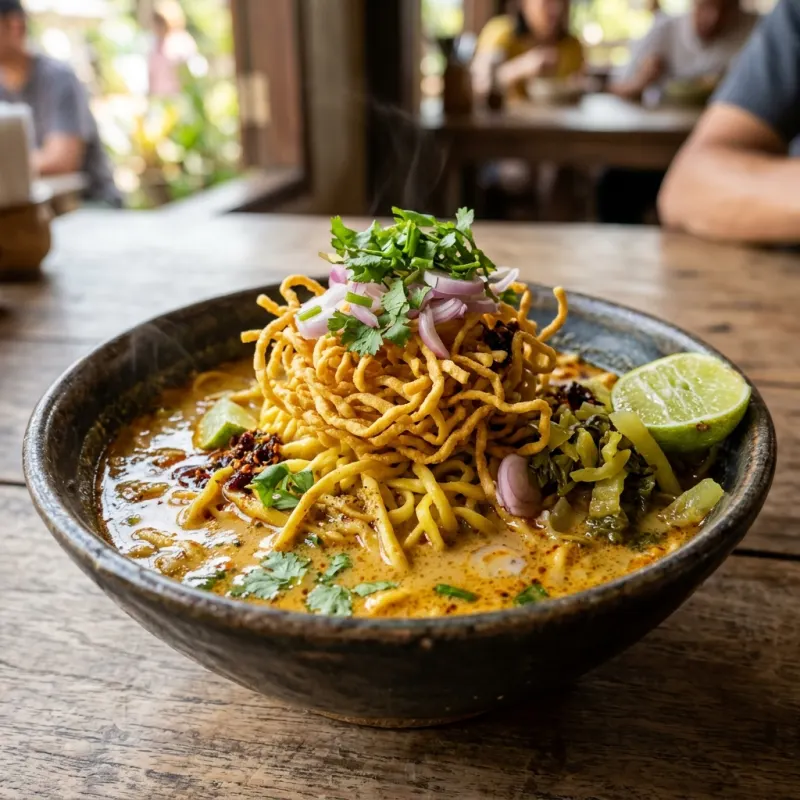
- Vibrant Culinary Scene: A seamless combination of authentic Northern Thai culinary staples and world-class health-conscious plant-based dining.
- Relaxed Pace of Life: An unhurried, community-centric atmosphere ideal for deep rest, digital nomad work sessions, and mindfulness retreats.
Things to Avoid
- Do not rent a scooter if you have zero previous riding experience; the mountain roads claim numerous injuries daily.
- Do not plan travel during March, as seasonal agricultural smoke leads to hazardous air pollution levels.
- Do not touch or point your feet toward Buddha images or monks when visiting local temples.
- Do not swim in waterfalls during torrential monsoon downpours due to sudden flash flooding and strong undercurrents.
- Do not expect credit cards to be accepted at street stalls, local markets, or small rural viewpoints.
Local Transportation Tips
Within town limits, walking and standard bicycles are sufficient for reaching cafes, guesthouses, and the evening market. For touring outlying valleys and waterfalls, renting a 110cc-125cc automatic scooter (costing approximately 150-250 THB per day) is the predominant choice. For non-riders, private songthaew trucks (red or yellow covered pickup taxis) and organized day-van tours can be chartered from town center tour counters to reach Pai Canyon, Lod Cave, and distant hot springs.
Travel Etiquette
- Dress modestly when visiting sacred grounds like Wat Phra That Mae Yen by covering your shoulders and knees.
- Remove footwear before stepping inside Buddhist temples, traditional residences, and select massage studios or boutique shops.
- Return greetings with a polite wai (palms pressed together at chest height with a slight nod) to show respect to local hosts and elders.
- Speak in calm, moderate tones; public displays of anger or shouting cause loss of face and are deeply counter to local culture.
Recommended Age Group
Pai offers extraordinary appeal for independent travelers and active explorers, though its physical terrain and winding access routes require careful planning across different age brackets.
- Babies (0-2 years): Not Recommended. The grueling 762 curves of Route 1095 frequently trigger intense motion sickness, and local pediatric healthcare resources are limited.
- Kids (3-12 years): Neutral. Children enjoy the waterfalls and open nature spaces, but narrow ridge hikes at Pai Canyon and pervasive scooter traffic demand constant supervision.
- Teens (13-19 years): Recommended. Teenagers thrive in the energetic outdoor environment, enjoying river tubing, cave treks, vibrant night markets, and waterfall slides.
- Adults (20-64 years): Recommended. The prime demographic for Pai, offering exceptional balance between outdoor adventure, café culture, remote work options, and wellness retreats.
- Seniors (65+ years): Neutral. Ideal for active retirees who appreciate mountain air and hot springs, but the winding approach road and steep stairs at key temples present mobility challenges.
Accessibility Level: Medium
- Pai Canyon features narrow, uneven dirt footpaths with sudden drop-offs and no safety handrails, making it inaccessible for wheelchair users.
- The evening Walking Street is largely level and paved, though crowded stalls and uneven sidewalk curb drops can present navigation hurdles.
- Most traditional guesthouses and open-air cafes feature step entries without dedicated ramps or ADA-compliant roll-in bathrooms.
- Wheelchair-accessible transport options are minimal in the valley, requiring pre-arranged private adapted vans from Chiang Mai.
Did You Know?
Route 1095, which connects Chiang Mai to Pai, contains precisely 762 mountain turns across a 135-kilometer stretch. Local souvenir shops commemorate this dizzying journey by selling t-shirts and stickers declaring 'I Survived 762 Curves to Pai.'
Cool Statistics
- Elevation: 500 meters (1,640 feet) above sea level, providing cooler microclimates than central Thai plains.
- Number of highway curves from Chiang Mai: Exactly 762 hairpin turns.
- Average temperature variation: Drops up to 15°C between daytime highs and winter nighttime lows.






Buy a compatible power adapter for your trip