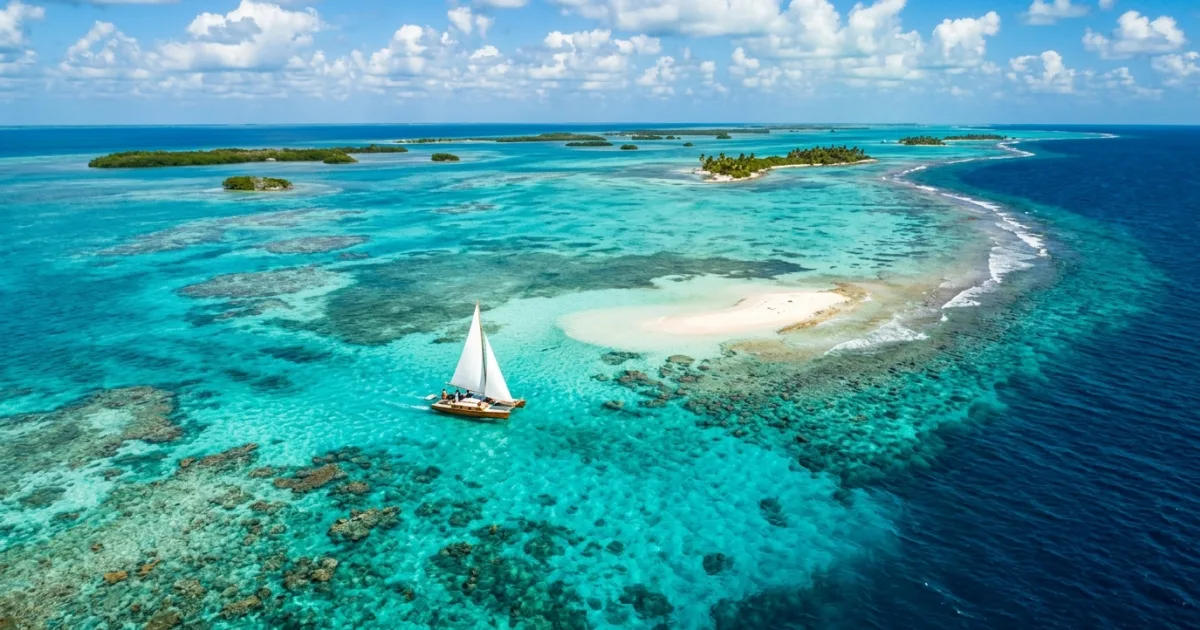
The Belize Cayes and Barrier Reef form a UNESCO World Heritage-recognized marine territory containing exceptional coral formations, coastal lagoons, and hundreds of sand cayes. As the primary portion of the Mesoamerican Barrier Reef System, this marine sanctuary shelters diverse endangered wildlife including West Indian manatees, loggerhead turtles, and American saltwater crocodiles. Prominent population hubs such as Ambergris Caye and Caye Caulker operate as logistical gateways, offering full-service diving centers, maritime tours, and eco-friendly lodges.
Beyond high-profile dive locations, the reef system encompasses secluded atolls such as Turneffe Atoll, Lighthouse Reef, and Glover's Reef, where barrier rim shelves drop thousands of feet into oceanic trenches. Travelers can explore shallow mangrove waterways via kayak, participate in lionfish spearfishing conservation initiatives, or relax on white-sand sandbars surrounded by crystal-clear, warm waters year-round.
Reasons to Visit
- Access the northern hemisphere's largest continuous coral reef system with premier marine biodiversity.
- Snorkel alongside docile nurse sharks, stingrays, and green sea turtles in Hol Chan Marine Reserve.
- Experience the quintessential Caribbean 'Go Slow' lifestyle on traffic-free, sand-street Caye Caulker.
- Take aerial or deep-water scuba diving excursions to the world-renowned Great Blue Hole marine sinkhole.
- Support sustainable fishing cooperatives and active community-led coral reef restoration projects.
Things to Avoid
- Avoid touching, standing on, or kicking live coral heads with swim fins, as physical contact kills coral polyps instantly.
- Do not consume spiny lobster or queen conch outside their strictly enforced legal harvesting seasons.
- Avoid hiring uncertified freelance boat operators who lack official Belize Tourism Board safety certification and life preservers.
- Do not exchange US currency at unofficial rates, as the local exchange rate is permanently pegged at 2 BZD to 1 USD.
Local Transportation Tips
Island-to-island and mainland transportation is provided by regular high-speed water taxis operated by San Pedro Belize Express and Caribbean Sprinter, as well as domestic scheduled flights on small propeller planes via Maya Island Air and Tropic Air. On Ambergris Caye, transportation is dominated by rented golf carts, bicycles, and taxis. Caye Caulker is entirely pedestrian-friendly, with travel conducted exclusively on foot, by cruiser bicycle, or via local golf cart shuttles.
Travel Etiquette
- Apply only mineral-based reef-safe sunscreens at least 20 minutes before entering protected marine waters.
- Respect the relaxed local pace of island life; showing public impatience or raising your voice at service staff is considered rude.
- Always seek permission before photographing local fishermen, artisans, or village residents.
- Dispose of all plastics and trash responsibly, bringing recyclable waste back to mainland facilities whenever possible.
Recommended Age Group
The Belize Cayes and Barrier Reef offer varied experiences across different life stages, best suited for swimmers and outdoor enthusiasts.
- Babies (0-2 years): Not Recommended. Sun exposure, open boat transit over choppy waters, and humid tropical conditions create difficult logistics for infants.
- Kids (3-12 years): Recommended. Shallow sandbars, calm lagoon waters, and up-close marine encounters provide engaging natural educational experiences for confident young swimmers.
- Teens (13-19 years): Recommended. Excellent opportunities for certified scuba diving, stand-up paddleboarding, sea kayaking, and interactive marine conservation projects.
- Adults (20-64 years): Recommended. Perfect balance of premier scuba diving, sailing, coastal relaxation, and laid-back island nightlife.
- Seniors (65+ years): Neutral. Highly enjoyable for relaxed coastal stays and scenic boat trips, though boarding skiffs from wet docks and unpaved sandy pathways may challenge travelers with limited mobility.
Accessibility Level: Medium
- Most inter-island passenger water taxis use open concrete docks that require stepping up or down over moving water, presenting accessibility barriers for wheelchair users.
- Streets on Caye Caulker are packed sand without sidewalks, making manual wheelchair movement labor-intensive; Ambergris Caye features paved roads in central San Pedro.
- Select modern dive operations in San Pedro offer adaptive scuba diving programs with trained instructors for guests with physical disabilities.
- Scenic aerial flights over the Great Blue Hole provide fully seated viewing opportunities for travelers unable to participate in aquatic boat excursions.
Did You Know?
Charles Darwin famously described the Belize Barrier Reef in 1842 as 'the most remarkable reef in the West Indies' due to its extraordinary structural complexity and vibrant biodiversity.
Cool Statistics
- The Belize Barrier Reef stretches roughly 300 kilometers (185 miles) along the country's coast.
- Over 500 species of fish, 65 stony coral varieties, and 350 mollusk species inhabit this reef ecosystem.
- The Great Blue Hole measures roughly 318 meters (1,043 feet) across and plunges to a depth of 124 meters (407 feet).






Buy a compatible power adapter for your trip