Disclosure: This site contains affiliate links. We may earn a commission if you make a purchase, at no extra cost to you.

>
>
>
>
>
Bad Gastein

Bad Gastein

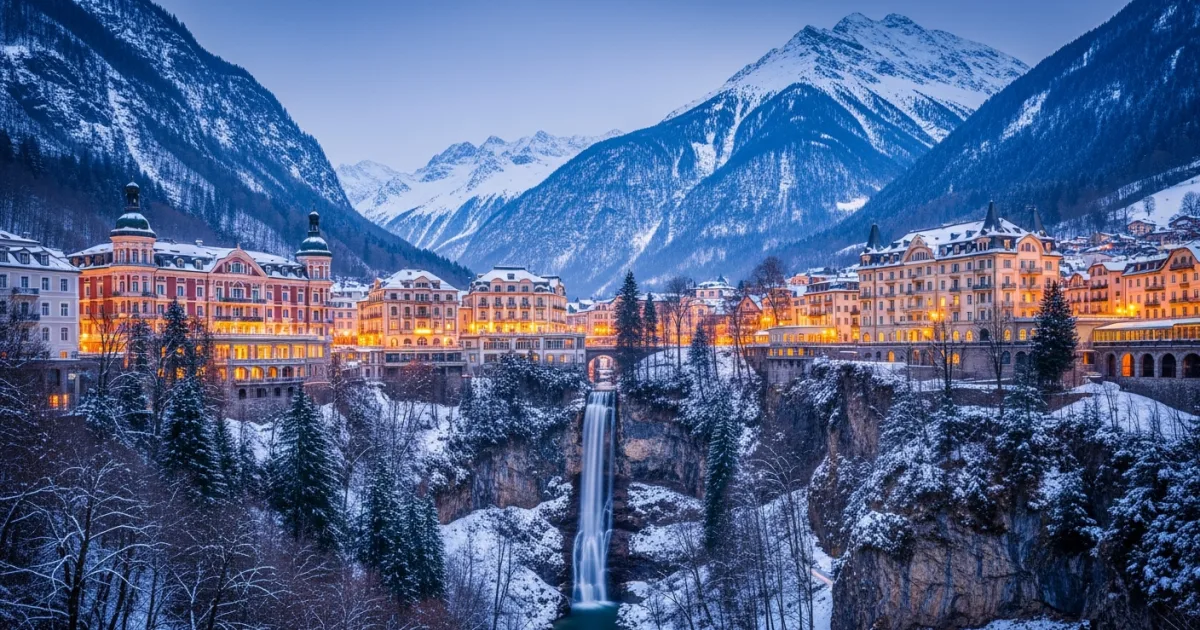
Wide-angle view of Bad Gastein in winter with Belle Époque architecture and the central waterfall

Bad Gastein Overview & Key Highlights

Bad Gastein is a spa and winter sports town situated at an elevation of 1,002 meters in the Hohe Tauern mountains of Salzburg, Austria. The municipality spans 170.6 square kilometers and is renowned for its distinctive Belle Époque architecture built on steep, forested slopes. The Gastein Waterfall, dropping 341 meters in three stages, flows directly through the town center, creating a unique urban landscape. Historically, the town gained prominence in the 19th century as a premier thermal resort destination for European monarchs, utilizing the 18 naturally occurring thermal springs that produce 5 million liters of radon-rich water daily. Modern tourism in Bad Gastein is driven by its integration into the Ski Amadé network, offering access to 760 kilometers of pistes and 270 ski lifts. Summer visitation focuses on the Hohe Tauern National Park, which provides over 600 kilometers of marked hiking trails and high-altitude attractions like the 140-meter-long Stubnerkogel suspension bridge. The local economy relies heavily on hospitality, with numerous historic grand hotels converted into modern wellness retreats. Transportation to the area is facilitated by the Tauern Railway, connecting the town directly to Salzburg and Vienna, making it highly accessible for international and domestic travelers seeking alpine recreation and thermal therapies.

Bad Gastein Travel Guide: Logistics & In-Depth Tips

Bad Gastein's geographical layout is defined by the steep slopes of the Graukogel and Stubnerkogel mountains, forcing its multi-story Belle Époque buildings to be constructed directly into the cliff faces. This vertical urban planning earned the town the moniker 'Monte Carlo of the Alps' during its late 19th-century zenith. The Gastein Waterfall, a central geographical feature, drops 341 meters through the town center, generating negatively ionized air that has historically been marketed for its respiratory health benefits.

The region's thermal water system consists of 18 springs yielding 5 million liters daily at temperatures up to 46°C. This water is naturally enriched with radon gas, which is utilized in the Gasteiner Heilstollen (healing caves) for specialized medical therapies treating musculoskeletal disorders. Beyond wellness, the town serves as a primary hub for the Ski Amadé network, Austria's largest ski association, providing access to 760 kilometers of downhill runs. During the summer, the focus shifts to the Hohe Tauern National Park, where infrastructure like the Stubnerkogel cable car facilitates access to high-altitude hiking trails and the highest suspension bridge in Europe, suspended 2,300 meters above sea level.

Reasons to Visit

  • Ski Amadé Access: Direct connection to 760 kilometers of ski pistes and 270 lifts, making it one of Europe's largest winter sports areas.
  • Felsentherme: A public thermal bath complex built directly into the mountain rock, utilizing naturally heated, mineral-rich spring water.
  • Stubnerkogel Suspension Bridge: A 140-meter-long pedestrian bridge located at 2,300 meters elevation, offering 360-degree views of the Hohe Tauern mountains.
  • Gastein Waterfall: A 341-meter, three-stage waterfall flowing directly through the historic town center.
  • Gasteiner Heilstollen: A unique medical therapy center located inside a former gold mine, utilizing natural radon gas and geothermal heat.

Things to Avoid

  • Off-Piste Skiing Without a Guide: The Hohe Tauern mountains present significant avalanche risks; always hire a certified guide for backcountry excursions.
  • Ignoring Altitude Sickness: Rapid ascents to peaks above 2,500 meters can cause mild altitude sickness; maintain hydration and ascend gradually.
  • Driving Without Winter Equipment: Austrian law mandates winter tires from November 1 to April 15, and snow chains are frequently required on mountain passes.
  • Disregarding Sauna Etiquette: Austrian sauna culture strictly mandates nudity in designated areas; wearing swimwear in these zones is prohibited.

Local Transportation Tips

Bad Gastein features a highly integrated public transportation system centered around the Bad Gastein railway station, which sits on the main Tauern Railway line connecting Salzburg to Villach. Local mobility is managed by the Postbus network, which operates regular routes connecting Bad Gastein to neighboring Bad Hofgastein and Dorfgastein. During the winter season, a comprehensive network of free ski buses transports visitors directly from major hotels and transit hubs to the base stations of the Stubnerkogel, Graukogel, and Sportgastein ski areas. Taxis are available at the train station and major squares, though the steep, winding roads make walking between the upper and lower town physically demanding.

Travel Etiquette

  • Greetings: It is customary to greet shopkeepers and hikers with 'Grüß Gott' (God greet you) rather than 'Guten Tag'.
  • Tipping: A service charge is included in restaurant bills, but it is standard practice to round up the total or add 5-10% for good service, handed directly to the server.
  • Punctuality: Austrians value punctuality; arrive exactly on time for reservations, guided tours, and public transport.
  • Trail Etiquette: When hiking, yield to ascending hikers and close all cattle gates behind you to prevent livestock from wandering.

Recommended Age Group

Bad Gastein offers diverse activities suited for various age groups, though its steep terrain requires consideration.

  • Babies (0-2 years): Neutral. The steep, multi-level layout of the town makes navigating with a stroller challenging, though flat walking paths exist in the valley.
  • Kids (3-12 years): Recommended. The region features dedicated ski schools, beginner slopes in the Angertal area, and family-friendly pools at the thermal baths.
  • Teens (13-19 years): Recommended. High-adrenaline activities such as snowboarding, freeriding, and the Stubnerkogel suspension bridge provide significant engagement.
  • Adults (20-64 years): Recommended. The combination of challenging ski pistes, extensive hiking trails, historic architecture, and après-ski nightlife caters heavily to this demographic.
  • Seniors (65+ years): Recommended. The thermal baths, radon therapies, and accessible cable cars offering panoramic mountain views are highly suitable for older travelers.

Accessibility Level: Medium

  • Terrain Challenges: The town's steep, cliffside geography and historic architecture present significant mobility challenges for wheelchair users.
  • Cable Cars: Major cable cars, including the Stubnerkogelbahn, are wheelchair accessible and allow easy transport to high-altitude viewpoints.
  • Thermal Baths: The Felsentherme and Alpentherme are equipped with elevators, ramps, and pool hoists to accommodate visitors with limited mobility.
  • Public Transport: Low-floor Postbuses operate on main routes, and the Bad Gastein train station features elevators to the platforms.

Did You Know?

Bad Gastein's thermal waters were extensively studied by Marie Curie in the early 20th century. She visited the town to investigate the natural radon gas emissions from the hot springs, which led to the development of the Gasteiner Heilstollen therapy center. Additionally, the town's grand hotels hosted numerous historical figures, including Emperor Franz Joseph I of Austria, Kaiser Wilhelm I of Germany, and Sigmund Freud, who spent several summers here.

Cool Statistics

  • Waterfall Drop: The Gastein Waterfall descends 341 meters in three distinct stages.
  • Thermal Springs: The town features 18 natural thermal springs.
  • Water Volume: 5 million liters of thermal water flow from the springs daily.
  • Bridge Elevation: The Stubnerkogel suspension bridge sits at an elevation of 2,300 meters.
  • Ski Network: The Ski Amadé network offers 760 kilometers of interconnected pistes.

Address:

Bad Gastein, Austria

Find Nearby Accommodations

Basic Info

address icon

COUNTRY & Region

Austria,
Europe

ACCESSIBILITY LEVEL​

Medium
Currency icon

LOCAL CURRENCY​

Euro (EUR)
Price level icon
High
Safety Level icon

SAFETY LEVEL

Duration icon

Recommended Duration

• Full day
• 1-7 days
• More than a week

Electricity

electricity icon

Electricity

220-240V, 
50Hz
Plug Socket icon

Plug Type

• Type C (Round pin)
• Type F (Two round pins with earth clips)
Plug types
Click To View Plug Types

Activities To Do In Bad Gastein

Best Time To Visit Bad Gastein

Bad Gastein operates on a dual-season tourism model, peaking during the winter ski season and the summer hiking season. The transitional months of April, May, October, and November see many hotels and cable cars close for maintenance.

  • Winter (December to March): Average temperatures range from -4°C to 2°C. This period offers optimal snow conditions for the 760 kilometers of Ski Amadé pistes.
  • Summer (June to September): Temperatures average 15°C to 22°C. This season provides clear conditions for hiking the Hohe Tauern National Park and crossing the Stubnerkogel suspension bridge.

Average Temperatures Per Month

Remember to check the weather forecast a few days before the trip and before heading to the airport.

Safety Level icon

Safety Level

Excellent. Bad Gastein is a highly safe destination with very low crime rates. Standard precautions against petty theft in crowded tourist areas or ski resorts are sufficient. Winter sports enthusiasts should adhere strictly to avalanche warnings, stay on marked pistes, and check daily weather reports before high-altitude excursions.

The rating is based on multi-year peace, crime, and security indices. Before you go, always verify current conditions through official government travel advisories.

Emergency Numbers

Police: 112 (Universal) / 133
Ambulance: 112 (Universal) / 144

No internet needed • Includes local translations • Free for TravelingWiz readers

Spoken Languages

German is the official and primary language. English is widely spoken and understood in the tourism, hospitality, and retail sectors.

Learn The Language

  • Guten Tag (Good day)
  • Sprechen Sie Englisch? (Do you speak English?)
  • Wie viel kostet das? (How much does this cost?)
  • Wo ist die Toilette? (Where is the toilet?)
  • Ich hätte gerne… (I would like…)
  • Die Rechnung, bitte. (The bill, please.)
  • Danke schön (Thank you very much)
  • Entschuldigung (Excuse me)
Travel Booking Partner - TravelingWiz

Trip Cost & Budgeting for Bad Gastein, 2026

Everything you need to know about money while traveling
Is Bad Gastein expensive for tourists in 2026? As an Austrian alpine resort town, prices are moderate to high. Expect to pay around €4.20 for a cappuccino, €4.80 for a pint of local beer, and €22 for a mid-range restaurant meal. With our Human Verified prices, you can plan effectively for accommodation and mountain activities. Use the data table below to calculate your specific daily budget based on your travel style.
Currency icon

LOCAL CURRENCY​:

Euro (EUR)
Price level icon
High
Cards are widely accepted in hotels, restaurants, and shops, though carrying small cash is recommended for mountain huts.

Per person, per day – pocket cash for small purchases.

Local: 17
Euro (EUR)
≈ 20 USD

Full daily spend estimation (accommodation, food, transportation, attractions).

Travel Style
Euro (EUR)
≈ USD ($)
Budget
90
104
Mid-range
165
191
Comfort
360
416

The Prices, Daily costs, and calculator results are estimates for planning purposes only. Actual costs may vary based on season, booking timing, personal spending habits, and currency fluctuations. TravelingWiz cannot be held responsible for discrepancies between these estimates and your final trip expenses.

  • • Get the Gastein Card provided free by participating accommodations for discounts on thermal baths, cable cars, and public transit.
  • • Dine at mountain huts (Almen) at lunch for hearty regional specialties at lower prices than evening restaurants in town.
  • • Visit during the shoulder seasons of May, June, or September to enjoy lower hotel rates and fewer crowds.
  • • Use the local Gastein valley buses and ÖBB train connections rather than expensive taxis or car rentals.

Pre-Order Tickets

Avoid disappointment when tickets sell out — and skip the long lines by booking online in advance. You’ll often save up to 20% too.
Save up to 20%

Travel Discounts & Coupons

Save on hotels, attractions, transport, and gear — find verified discounts for smarter travel spending.
Verified Coupons

What To Pack

  • Winter Sports Gear: Thermal base layers, waterproof insulated jackets, and snow pants are required for temperatures averaging -4°C to 2°C from December to March.
  • Hiking Equipment: Sturdy, ankle-supporting hiking boots and trekking poles are necessary for navigating the 600 kilometers of summer trails in the Hohe Tauern National Park.
  • Swimwear: Bathing suits are essential for the Felsentherme and Alpentherme public baths, though note that Austrian sauna areas strictly require nudity.
  • European Plug Adapter: Type C or Type F adapters are required for 230V, 50Hz electrical outlets used throughout Austria.
  • Evening Attire: Smart-casual clothing is standard for dining in the town's historic Belle Époque hotels and upscale restaurants.
We couldn't find tips for Bad Gastein.
If you got any, please share

Recommended Itineraries for Traveling to Bad Gastein

We couldn't find itineraries for Bad Gastein.
you can contact us for custom trip plan

Food & Drink Highlights

Local Food Overview

The culinary landscape of Bad Gastein features traditional Austrian alpine fare, characterized by hearty, calorie-dense ingredients designed for mountain environments. Regional specialties heavily utilize local dairy, root vegetables, and cured meats.
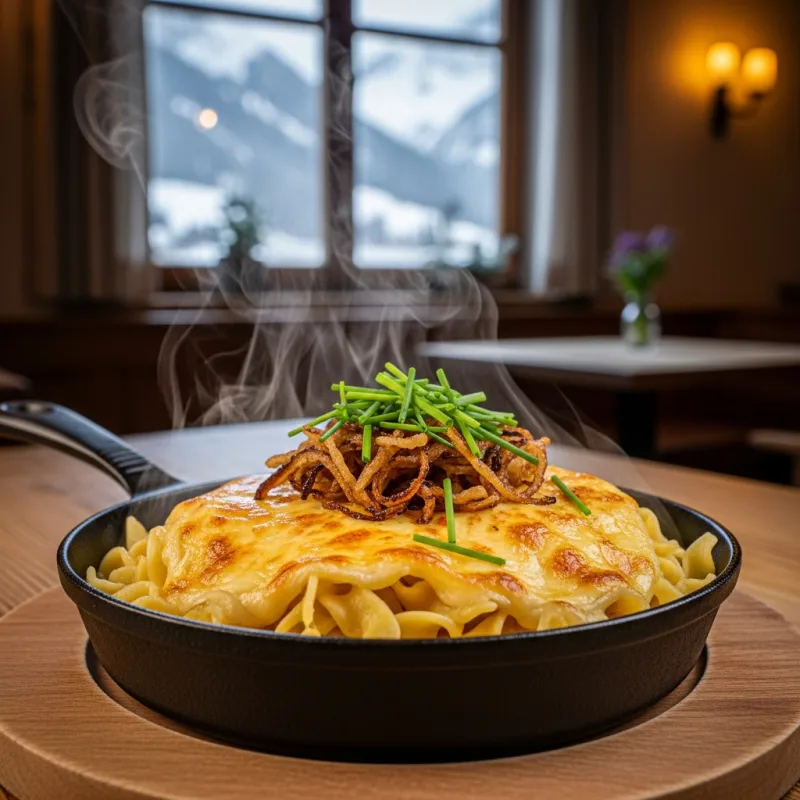
A cast-iron skillet of Pinzgauer Kasnocken with melted cheese and onions

Must Try Dish

Pinzgauer Kasnocken - Pinzgauer Kasnocken is a hearty Austrian alpine dish consisting of small, soft egg noodles pan-fried with pungent local Pinzgauer beer cheese and caramelized onions. The dish is traditionally served in a hot cast-iron skillet and garnished with fresh chives, offering a rich, savory flavor profile.
Food Experiences Title Icon

Food
Experiences

Discover cooking classes, tastings and local food tours

No food experience found
Maya, the human travel expert at TravelingWiz, offering curated, non-AI expertise

Maya’s Final Checklist for Bad Gastein

Logistics shouldn’t be the focus of your trip—the experience should. I’ve hand-vetted these essential partners to ensure your arrival, stay, and exploration are as smooth as an Athenian breeze.

Where to Stay

From boutique hotels to local apartments—compare thousands of options and find the perfect stay in the best neighborhood.

Air Travel

Getting there should be seamless. Compare the best routes and prices across top airlines to start your journey on the right note.

Local Guides

Connect with experts who know the destination best. Get personalized advice and insider tips to help you plan your perfect trip.

Travel Protection

The “Engineer’s” rule: always have a backup. Secure your trip with a plan that covers every “what if” and unexpected change.

Car Rentals

Explore at your own pace with total freedom. Compare reliable rental options and find the right vehicle for your adventure.

Visa Services

Don’t let paperwork slow you down. Get expert assistance with your application to ensure all your entry documents are in order.

FAQs

Bad Gastein is situated at an elevation of 1,002 meters (3,287 feet) above sea level.
The most efficient route is via the ÖBB train from Salzburg Hauptbahnhof directly to Bad Gastein station, which takes approximately 1.5 hours. Shuttle services and taxis are also available directly from the airport.
Yes, the Felsentherme in Bad Gastein and the Alpentherme in neighboring Bad Hofgastein operate year-round, utilizing the naturally heated thermal spring water.
While Bad Gastein has beginner slopes, the local terrain leans toward intermediate and advanced runs. Beginners often utilize the Angertal ski center located between Bad Gastein and Bad Hofgastein.
A car is not strictly necessary. The town is well-connected by the Tauern Railway, and local Postbuses and ski shuttles provide reliable transportation between the ski lifts, thermal baths, and neighboring villages.

Your Insights Matter

TravelingWiz grows through the stories of our community. If you’ve recently explored ,Bad Gastein share your tips and stories to help us perfect our guides for the next traveler.

Related Articles

Check out our related articles and blog posts to learn even more about the destination.

No related articles found

Don’t Travel Alone

Share with your friends and family

Where should we send your offline card?

We hate spam just as much as you do

newsletter_consent *