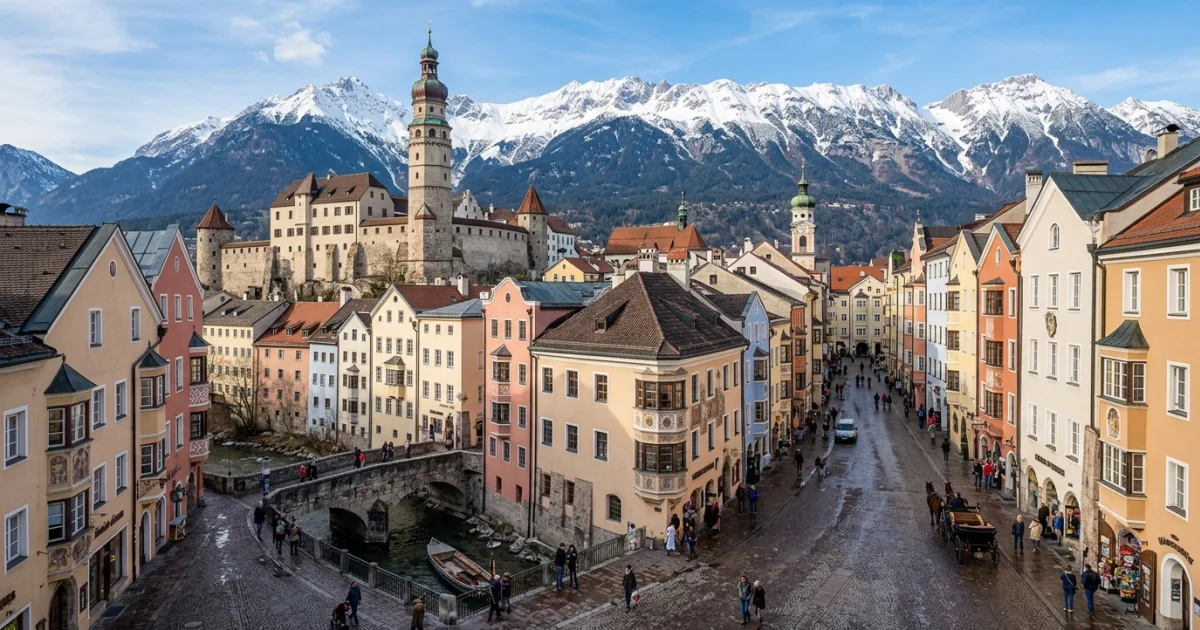
Stepping into Hall in Tirol feels like walking into a living museum. The town's historical significance is palpable in its architecture, from the grand Hasegg Castle to the intricate facades of the burgher houses in the Upper Town Square (Oberer Stadtplatz). The wealth generated by the local salt mines in the Middle Ages allowed Hall to become the commercial center of North Tyrol, even surpassing Innsbruck in economic importance for a time.
Today, the town is a vibrant cultural hub that honors its past while embracing the present. The Hall Mint Museum (Münze Hall) is a must-visit, offering fascinating insights into the history of coinage and the birthplace of the Taler. Beyond the town limits, the Karwendel Nature Park beckons with pristine alpine trails, making Hall a perfect destination that balances historical exploration with outdoor adventure.
Reasons to Visit
- Explore one of the largest intact medieval old towns in Austria.
- Visit the birthplace of the Taler coin at the Hall Mint Museum.
- Enjoy breathtaking views from the top of the iconic Mint Tower.
- Experience the magical Hall Advent Market during the winter season.
- Access world-class hiking and nature trails in the nearby Karwendel Alps.
Things to Avoid
- Avoid driving into the historic center, as streets are narrow and parking is strictly limited; use designated parking lots outside the old town.
- Don't rely solely on credit cards, especially when visiting smaller mountain huts or local bakeries.
- Avoid hiking in the Alps without checking the local weather forecast first.
Local Transportation Tips
Hall in Tirol is highly walkable, and the best way to explore the medieval old town is on foot. For traveling outside the town or to nearby Innsbruck, the regional public transport system (VVT) is excellent. Trains (S-Bahn) and buses run frequently, connecting Hall to Innsbruck in under 15 minutes. Bicycles are also a popular way to get around the Inn Valley.
Travel Etiquette
- Greet shopkeepers with a polite 'Grüß Gott' or 'Hallo' when entering and leaving a store.
- Tipping in restaurants is customary; round up the bill or leave about 5-10% for good service.
- Respect the quiet hours on Sundays; many shops and supermarkets will be closed.
- When hiking, stick to marked trails and greet fellow hikers with a friendly 'Servus' or 'Hallo'.
Recommended Age Group
Hall in Tirol offers a delightful mix of history and nature that appeals to various age groups.
- Babies (0-2 years): Neutral. While the town is peaceful, the cobblestone streets can make navigating with a standard stroller slightly bumpy.
- Kids (3-12 years): Recommended. Children will love exploring Hasegg Castle, climbing the Mint Tower, and the interactive exhibits at the Mint Museum.
- Teens (13-19 years): Recommended. The proximity to the Karwendel Alps provides excellent opportunities for hiking, mountain biking, and winter sports.
- Adults (20-64 years): Recommended. The rich history, stunning architecture, and authentic Tyrolean gastronomy make it a perfect cultural getaway.
- Seniors (65+ years): Recommended. The town is compact and walkable, offering a relaxed pace, though comfortable footwear is advised for the medieval streets.
Accessibility Level: Medium
- The main squares and many museums, including parts of the Mint Museum, offer wheelchair access, though some historical buildings have limitations.
- Cobblestone streets in the old town can be uneven and challenging for manual wheelchairs or walkers.
- Accessible restrooms are available in key public areas and larger restaurants.
- The local train station and regional buses are equipped with ramps and low-floor access for travelers with reduced mobility.
Did You Know?
The word 'Dollar' actually originates from Hall in Tirol! The silver coins minted here in the 15th century were called 'Talers' (from Joachimsthaler), which eventually evolved linguistically into the word 'Dollar' used worldwide today.
Cool Statistics
- Hall in Tirol's mint produced the world's first silver Taler coin in 1486.
- The town's medieval center is larger than that of neighboring Innsbruck.
- Hasegg Castle was originally built to protect the town's lucrative salt mines and mint.
- The Karwendel Nature Park, accessible from Hall, is the largest nature park in Austria, covering 727 square kilometers.






Buy a compatible power adapter for your trip