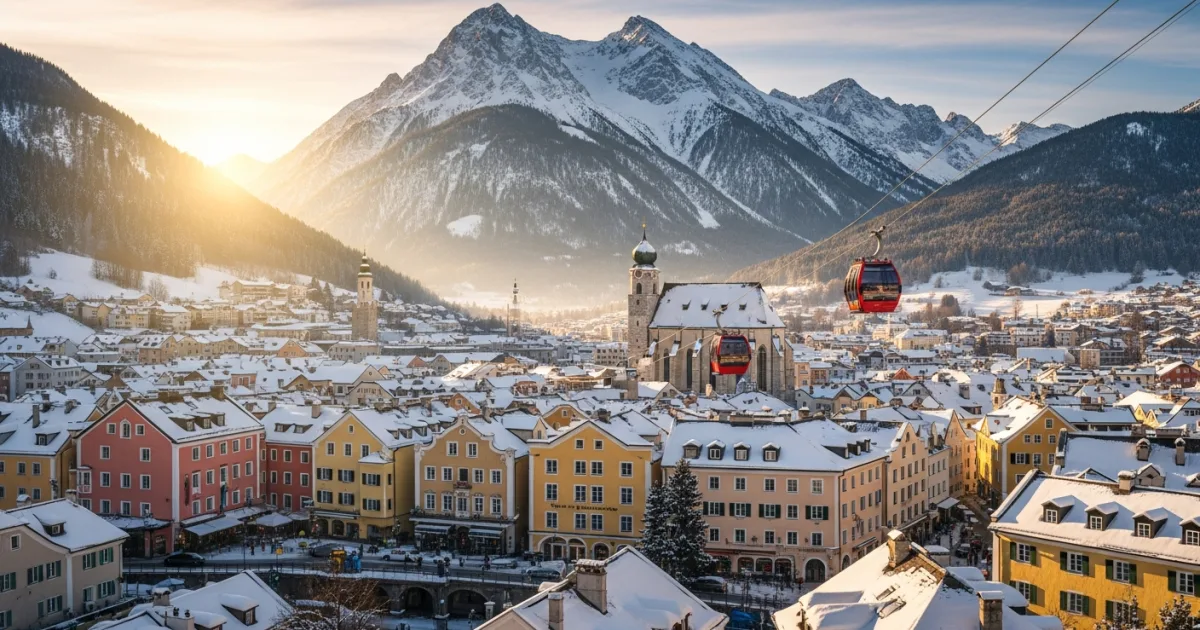
Kitzbühel operates as a primary economic hub in the Tyrol region, heavily reliant on winter and summer tourism. The municipality covers an area of 58.01 square kilometers and maintains a permanent population of approximately 8,200 residents. Transportation infrastructure includes a dedicated railway station connecting the town to Innsbruck and Salzburg, alongside a comprehensive network of free ski buses operating throughout the winter season.
The local climate is classified as humid continental, characterized by cold, snowy winters and mild, rainy summers, which directly supports its dual-season tourism model. Environmental conservation efforts in the region strictly regulate new construction to preserve the historical aesthetic of the town center, which features distinct Tyrolean architecture with overhanging eaves and frescoed facades dating back to the 16th century.
Reasons to Visit
- The Hahnenkamm Race, held annually in January, is the most prestigious event on the FIS Alpine Ski World Cup calendar.
- The KitzSki area provides access to 233 kilometers of meticulously groomed downhill pistes and 57 state-of-the-art cable cars.
- The medieval town center offers a pedestrian-friendly environment filled with luxury boutiques, cafes, and historical architecture.
- Schwarzsee, a moorland lake located 2 kilometers from the center, reaches 26°C in summer and is renowned for its mineral-rich, therapeutic waters.
Things to Avoid
- Avoid skiing off-piste without a certified local guide, as avalanche risks are present and terrain can be deceptively dangerous.
- Refrain from driving into the town center during peak winter months, as parking is severely limited and traffic congestion is common.
- Do not attempt to dine at popular restaurants in the medieval center during high season without securing reservations weeks in advance.
- Avoid walking on groomed cross-country ski tracks (Loipen) without skis, as this damages the tracks and incurs fines.
Local Transportation Tips
Public transportation in Kitzbühel is highly efficient and tailored to tourist needs. During the winter season, a comprehensive network of ski buses operates free of charge for individuals carrying ski equipment or a valid lift pass, connecting all major lift stations and surrounding villages. The Kitzbühel railway station provides direct ÖBB train connections to Innsbruck, Salzburg, and Munich, making regional travel straightforward. Taxis are readily available at designated ranks, though they operate at premium price points.
Travel Etiquette
- Tipping in restaurants and cafes is customary; rounding up the bill or adding 5-10% for good service is standard practice.
- Greet shopkeepers and restaurant staff with 'Grüß Gott' (formal greeting in Tyrol) upon entering, and say 'Auf Wiedersehen' when leaving.
- Strictly adhere to the FIS Rules of Conduct on the ski slopes, including yielding to skiers below you and controlling your speed.
- Respect the quiet hours (Ruhezeit) typically observed between 10:00 PM and 6:00 AM in residential areas and hotels.
Recommended Age Group
Kitzbühel provides a versatile environment suitable for various demographics, though its primary infrastructure caters to active individuals and luxury travelers.
- Babies (0-2 years): Neutral. While luxury hotels offer childcare, the cold winter climate and high-altitude environment limit outdoor activities for infants.
- Kids (3-12 years): Recommended. The resort features excellent ski schools, dedicated children's slopes, and family-friendly summer activities at the alpine lakes.
- Teens (13-19 years): Recommended. Extensive snow parks, advanced ski terrain, and summer mountain biking trails provide high engagement for teenagers.
- Adults (20-64 years): Recommended. The combination of world-class winter sports, luxury shopping, fine dining, and vibrant après-ski nightlife is ideal for adults.
- Seniors (65+ years): Recommended. Accessible cable cars, well-maintained walking paths, thermal spas, and high-end hospitality cater well to senior travelers.
Accessibility Level: Medium
- Kitzbühel's pedestrianized medieval center features cobblestone streets, which present moderate challenges for wheelchair users.
- The local ski lift infrastructure includes 57 modern cable cars, many of which are fully wheelchair accessible and accommodate adaptive skiing equipment.
- Public transportation relies on low-floor buses equipped with ramps, ensuring compliance with European accessibility standards.
- Major luxury hotels and newly constructed facilities strictly adhere to Austrian barrier-free building regulations, offering adapted rooms and elevators.
Did You Know?
The Streif ski run on the Hahnenkamm mountain is considered the most demanding downhill track in the world, featuring gradients of up to 85% and forcing racers to reach speeds exceeding 140 kilometers per hour.
Cool Statistics
- Kitzbühel offers 233 kilometers of ski slopes serviced by 57 cable cars and lifts.
- The town sits at an elevation of 762 meters above sea level.
- The annual Hahnenkamm race attracts over 80,000 spectators to the town over a single weekend.
- The Kitzbühel Alps region features over 1,000 kilometers of marked summer hiking trails.






Buy a compatible power adapter for your trip