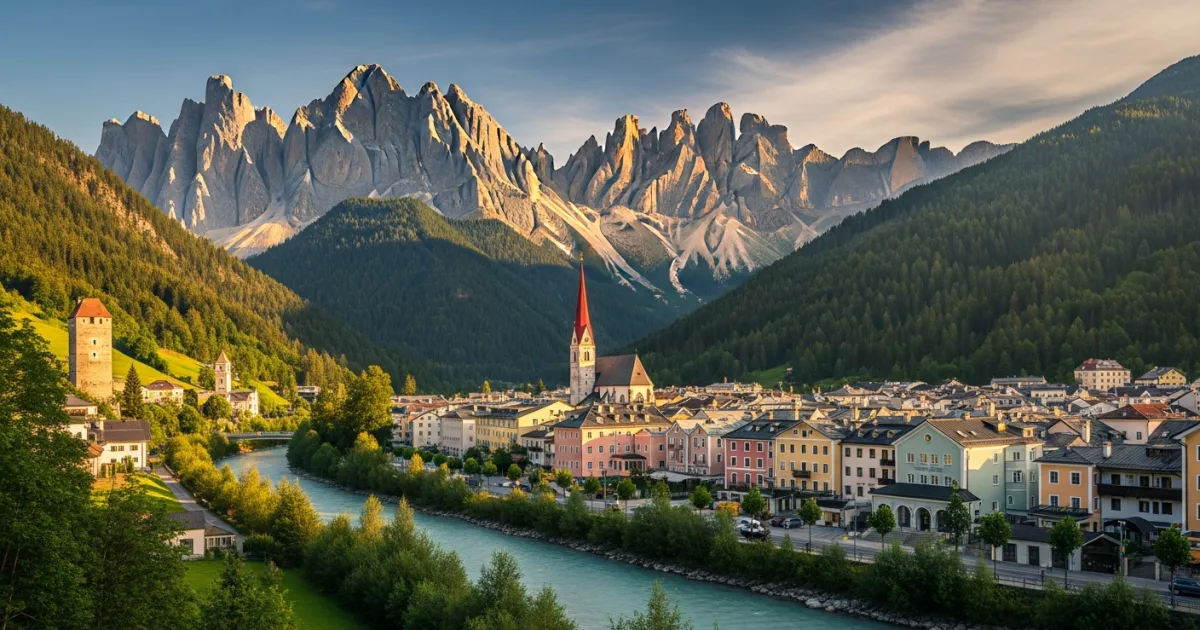
Lienz functions as the economic and cultural center of East Tyrol, maintaining a population of nearly 12,000. The city sits at an altitude of 673 meters, strategically positioned at the junction of the Drau, Isel, and Möll valleys. Historical development was heavily influenced by the Counts of Görz, who constructed Schloss Bruck in the 13th century to control regional trade routes. Modern Lienz relies heavily on tourism, agriculture, and light manufacturing. The Mediterranean climate influence results in warmer temperatures compared to North Tyrol, fostering a unique alpine-south environment.
Reasons to Visit
- Schloss Bruck houses the Museum of the City of Lienz, featuring the Albin Egger-Lienz gallery and historical artifacts.
- The Lienz Dolomites offer over 400 kilometers of marked hiking trails and numerous climbing routes for outdoor enthusiasts.
- The Drau Cycle Path provides a 366-kilometer paved route starting near Lienz and extending into Slovenia, ideal for multi-day cycling.
- Zettersfeld and Hochstein ski resorts provide 40 kilometers of alpine pistes directly accessible from the city limits.
Things to Avoid
- Unprepared alpine ascents account for the majority of local emergency rescues; always check weather forecasts and carry appropriate gear.
- Driving in the pedestrianized Hauptplatz (Main Square) incurs strict municipal fines and should be avoided.
- Many local businesses and supermarkets close strictly at 18:00 on weekdays and remain closed on Sundays, requiring advance planning for supplies.
Local Transportation Tips
Public transportation within Lienz relies on a municipal bus network operated by Postbus, connecting the train station to peripheral districts and ski lifts. The Lienz railway station serves as a major hub for the Drautalbahn, providing direct connections to Villach, Carinthia, and regional trains to Italy. Bicycle infrastructure is highly developed, with dedicated lanes integrated into the urban grid and extensive rental facilities available near the transit center.
Travel Etiquette
- Greeting shopkeepers with 'Grüß Gott' upon entering and leaving is standard Austrian etiquette.
- Tipping in restaurants typically involves rounding up the bill by 5 to 10 percent, handed directly to the server rather than left on the table.
- Punctuality is strictly observed for public transport, guided tours, and business appointments.
- When hiking, it is customary to greet fellow hikers on the trail with a brief 'Hallo' or 'Servus'.
Recommended Age Group
Lienz offers a diverse range of activities that cater to various age demographics, heavily focused on outdoor recreation and historical exploration.
- Babies (0-2 years): Neutral. Stroller access is excellent in the flat town center, but alpine trails and historical sites like Schloss Bruck present mobility challenges.
- Kids (3-12 years): Recommended. The Osttirodler Alpine Coaster, easy cycling paths along the Drau river, and family-friendly ski slopes at Zettersfeld offer excellent entertainment.
- Teens (13-19 years): Recommended. Adventure sports such as white-water rafting on the Isel river, mountain biking, and climbing parks provide high engagement.
- Adults (20-64 years): Recommended. Extensive hiking networks, historical sites, and local gastronomy cater perfectly to active adult travelers.
- Seniors (65+ years): Recommended. The flat valley floor, accessible town square, and scenic cable cars allow for low-impact exploration of the alpine environment.
Accessibility Level: Medium
- The central Hauptplatz (Main Square) and surrounding pedestrian zones are flat and fully paved, offering excellent wheelchair accessibility.
- The Lienz railway station is equipped with elevators and tactile paving for visually impaired travelers.
- Schloss Bruck features steep access paths and uneven historical flooring, making it challenging for visitors with severe mobility impairments.
- Several modern cable cars at Zettersfeld are designed to accommodate wheelchairs, allowing access to high-altitude panoramic views.
Did You Know?
Lienz is the only district capital in the Austrian state of Tyrol that does not share a direct geographical border with North Tyrol, requiring transit through the state of Salzburg or the country of Italy to reach the state capital, Innsbruck.
Cool Statistics
- Lienz records an average of 2,070 sunshine hours annually, making it one of Austria's sunniest cities.
- Schloss Bruck was completed in 1277 and served as the residential fortress for the Counts of Görz until 1500.
- The Osttirodler Alpine Coaster descends 2.7 kilometers from the Hochstein mountain directly into the city.
- The municipality covers an area of exactly 15.94 square kilometers.







Buy a compatible power adapter for your trip