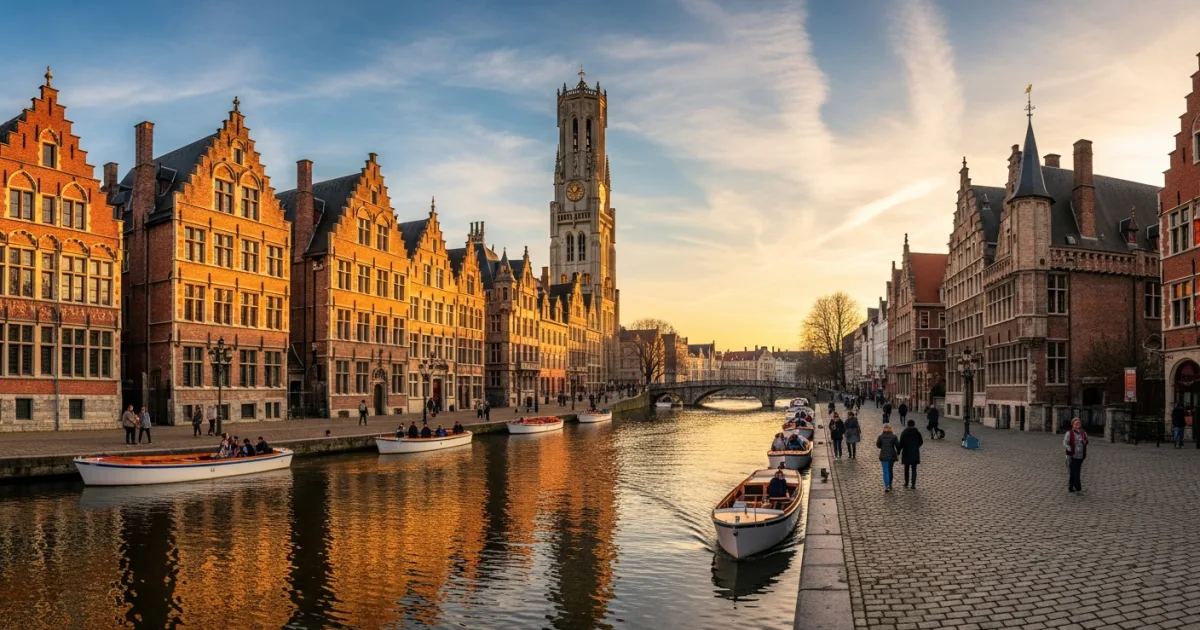
East Flanders is a region that effortlessly bridges the gap between a rich, storied past and a lively, modern present. At its heart lies Ghent, a city that boasts more listed historical buildings than any other Belgian city, yet pulses with the youthful energy of a major university town. Here, you can stand before the awe-inspiring Gravensteen (Castle of the Counts) in the morning and enjoy cutting-edge contemporary art or a vibrant music scene by night.
Beyond the capital, the province unfolds into a tapestry of lush landscapes and hidden gems. The Leie region, often referred to as the 'Golden River', has inspired countless artists with its tranquil waters and picturesque villages like Sint-Martens-Latem. Meanwhile, towns like Aalst and Sint-Niklaas offer deep dives into local folklore, from vibrant carnival celebrations to the largest market square in the country. Whether you are navigating the waterways by boat, cycling through the flat, scenic countryside, or simply indulging in a local brewery, East Flanders promises an authentic and unforgettable Belgian experience.
Reasons to Visit
- Medieval Architecture: Explore impeccably preserved castles, belfries, and guildhalls, particularly in Ghent.
- Culinary Delights: Indulge in authentic Belgian waffles, chocolates, and local dishes like Waterzooi.
- Beer Culture: Visit traditional breweries and taste a wide array of world-renowned Belgian craft beers.
- Cycling Paradise: Enjoy hundreds of kilometers of flat, well-marked cycling nodes through beautiful countryside.
- Art and History: View masterpieces like the Ghent Altarpiece (The Adoration of the Mystic Lamb) by the Van Eyck brothers.
Things to Avoid
- Walking in Bike Lanes: Locals use bicycles for daily commuting; walking in designated bike lanes can be dangerous and is frowned upon.
- Only Visiting Ghent: While Ghent is spectacular, missing out on the surrounding countryside and smaller towns means missing the full East Flanders experience.
- Assuming Everyone Speaks French: East Flanders is in the Flemish (Dutch-speaking) part of Belgium. While many speak French, addressing locals in English or Dutch is preferred.
- Overpacking: Cobblestone streets make dragging heavy, wheeled luggage difficult. Pack light and use a backpack if possible.
Local Transportation Tips
East Flanders boasts a highly efficient and integrated public transportation network. The Belgian national railway (SNCB/NMBS) connects major cities like Ghent, Aalst, and Sint-Niklaas with frequent, reliable service. Within the cities, De Lijn operates an extensive network of trams and buses. For a truly local experience, cycling is arguably the best way to get around. The region is incredibly flat and features a 'node' system (knooppunten) that makes navigating rural bike paths incredibly simple. Bike rentals are widely available at train stations and city centers.
Travel Etiquette
- Greetings: A handshake is the standard greeting. Close friends may greet with a kiss on one cheek.
- Tipping: Service is included in restaurant and taxi bills. Tipping is not obligatory, but rounding up or leaving small change for exceptional service is appreciated.
- Punctuality: Belgians value punctuality. Arrive on time for tours, reservations, and meetings.
- Dining: Wait to be seated at formal restaurants. Keep your hands on the table (not in your lap) while eating, but keep your elbows off the table.
Recommended Age Group
East Flanders is a versatile destination that caters to a wide range of ages and interests, offering everything from interactive museums to serene nature walks.
- Babies (0-2 years): Neutral. While cities are safe and have good amenities, cobblestone streets can make navigating with a stroller challenging.
- Kids (3-12 years): Recommended. Castles like Gravensteen capture the imagination, and there are numerous parks, boat rides, and family-friendly museums.
- Teens (13-19 years): Recommended. The vibrant student atmosphere in Ghent, along with street art tours and cycling adventures, appeals greatly to teenagers.
- Adults (20-64 years): Recommended. Excellent for history buffs, foodies, and beer enthusiasts looking for a mix of culture, gastronomy, and nightlife.
- Seniors (65+ years): Recommended. The flat terrain, excellent public transport, and abundance of accessible historical sites make it a comfortable and enriching destination.
Accessibility Level: Medium
- Many major museums and attractions in Ghent and other cities are wheelchair accessible and offer elevators or ramps.
- Public transportation, including newer trams and buses, are generally equipped with low floors and ramps for easy boarding.
- Cobblestone streets in historic centers can pose a challenge for mobility devices; however, main pathways are often smoothed out.
- Accessible public restrooms are available in major train stations, museums, and larger restaurants.
- The official Visit Flanders website provides detailed accessibility guides for various accommodations and attractions.
Did You Know?
Did you know that Ghent's famous 'Gravensteen' castle was once used as a cotton mill? Built in 1180 by Philip of Alsace, the imposing fortress served various purposes over the centuries, including a court, a prison, and a factory during the Industrial Revolution, before being restored to its medieval glory in the late 19th century.
Cool Statistics
- Ghent has the largest designated car-free city center in Belgium.
- The province of East Flanders covers an area of approximately 3,000 square kilometers.
- The Ghent Altarpiece is considered the most frequently stolen artwork in history, having been stolen, entirely or in part, six times.
- Sint-Niklaas, a city in East Flanders, boasts the largest market square in Belgium, covering 3.19 hectares.




Buy a compatible power adapter for your trip