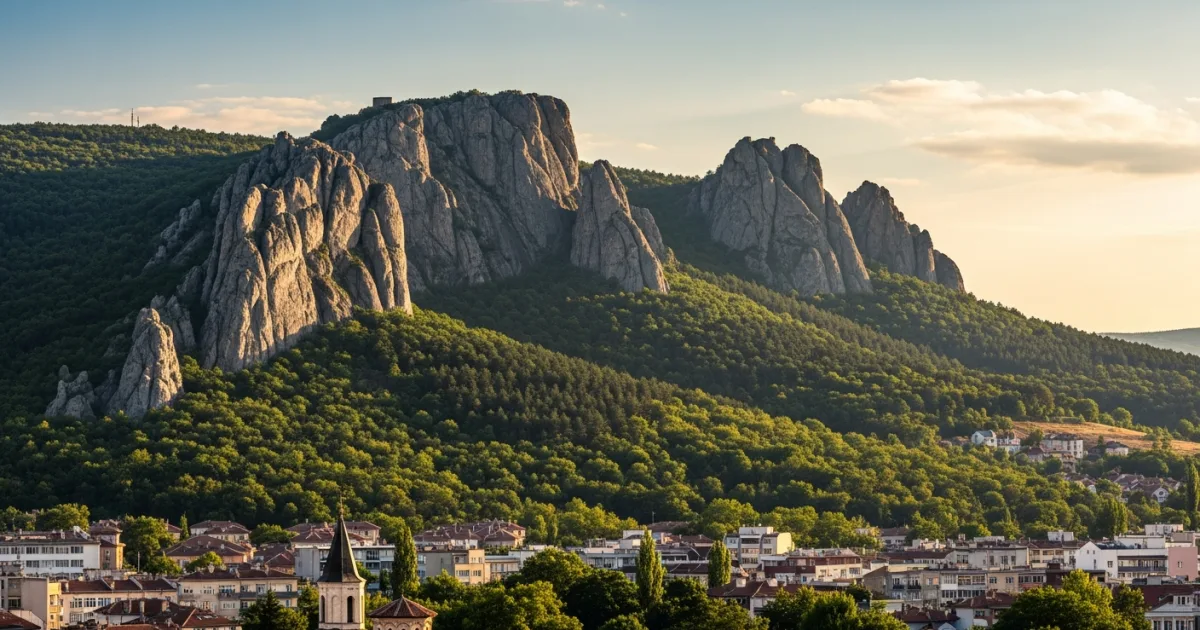
Vratsa, the administrative and economic center of Vratsa Province, is a city that beautifully marries urban life with dramatic natural landscapes. Dominated by the towering Vratsa Rocks, part of the Vrachanski Balkan Nature Park, the city is a haven for outdoor enthusiasts. Beyond its natural allure, Vratsa boasts a rich history, evident in its archaeological finds, historical monuments, and the regional historical museum. It serves as an excellent base for exploring the wider northwestern Bulgarian region, offering a blend of adventure, culture, and relaxation.
Reasons to Visit
- Explore the stunning Vratsa Rocks and Vrachanski Balkan Nature Park.
- Discover the magical ice formations of Ledenika Cave.
- Delve into local history at the Regional Historical Museum.
- Enjoy hiking, climbing, and other outdoor sports in a picturesque setting.
- Experience authentic Bulgarian hospitality and cuisine at affordable prices.
- Visit the numerous monasteries and churches in the surrounding area.
Things to Avoid
- Avoid hiking off marked trails, especially in unfamiliar or rugged terrain.
- Do not underestimate the mountain weather; it can change rapidly.
- Be cautious of stray dogs, particularly in rural areas.
- Avoid displaying excessive wealth or leaving valuables unattended.
- Do not drink tap water unless confirmed safe; bottled water is recommended.
Local Transportation Tips
Getting around Vratsa is relatively easy. The city center is quite walkable, allowing you to explore many attractions on foot. For longer distances or reaching the Vratsa Balkan Nature Park, local buses are available and connect various parts of the city and its surroundings. Taxis are also an option, generally affordable, but it's advisable to agree on a price beforehand or ensure the meter is used. For exploring the wider Vratsa Province, renting a car offers the most flexibility.
Travel Etiquette
- Greetings are important; a simple 'Zdraveyte' (Hello) is appreciated.
- When entering a home or a religious site, it's polite to remove your shoes.
- Tipping is customary in restaurants and for services, usually around 10%.
- Respect local customs and traditions, especially when visiting monasteries or churches.
- Bulgarians often nod for 'yes' and shake their head for 'no', which can be confusing for foreigners. Observe local body language carefully.
Recommended Age Group
Vratsa offers a diverse range of activities and attractions, making it a suitable destination for travelers of all ages, from the very young to seniors, with options catering to various interests and mobility levels.
- Babies (0-2 years): Recommended. While outdoor adventures might be limited, the city offers parks and a relaxed pace. Stroller-friendly paths are available in the city center.
- Kids (3-12 years): Recommended. Children will enjoy the wonder of Ledenika Cave, easy nature walks, and exploring the historical museum. Parks and open spaces provide room for play.
- Teens (13-19 years): Recommended. Teens can engage in more adventurous activities like hiking, rock climbing (with proper guidance), and exploring historical sites. The natural beauty offers great photography opportunities.
- Adults (20-64 years): Recommended. Vratsa is ideal for adults seeking outdoor adventure, cultural immersion, and relaxation. Hiking, caving, historical tours, and local cuisine are major draws.
- Seniors (65+ years): Recommended. Many attractions are accessible, including parts of Ledenika Cave and the historical museum. Gentle walks in the city and scenic drives offer enjoyable experiences, though some mountain trails may be challenging.
Accessibility Level: Medium
- The city center of Vratsa generally has paved sidewalks, but some older areas or natural sites may have uneven terrain.
- Ledenika Cave has paved paths and some stairs; accessibility might be challenging for those with severe mobility issues, though efforts have been made to improve it.
- Public transportation may not be fully accessible for wheelchair users. Taxis might be a better option.
- Many hotels and restaurants in the city are modernizing and improving accessibility, but it's advisable to check in advance.
- For outdoor activities in the Vratsa Balkan, accessibility varies greatly depending on the trail difficulty.
Did You Know?
The Vratsa Rocks are home to some of the highest and most challenging rock climbing routes in Bulgaria, attracting climbers from all over Europe. The region is also famous for its unique karst formations and over 500 caves, with Ledenika Cave being one of the most spectacular and accessible.
Cool Statistics
- Vratsa is located approximately 110 km north of Sofia, the capital of Bulgaria.
- The Vrachanski Balkan Nature Park covers an area of over 30,000 hectares.
- Ledenika Cave is one of Bulgaria's most visited caves, featuring 10 halls and impressive ice formations in winter.
- The highest point in the Vratsa Balkan is the peak of Beglichka, at 1,481 meters above sea level.
- Vratsa has a population of around 50,000 people.







Buy a compatible power adapter for your trip