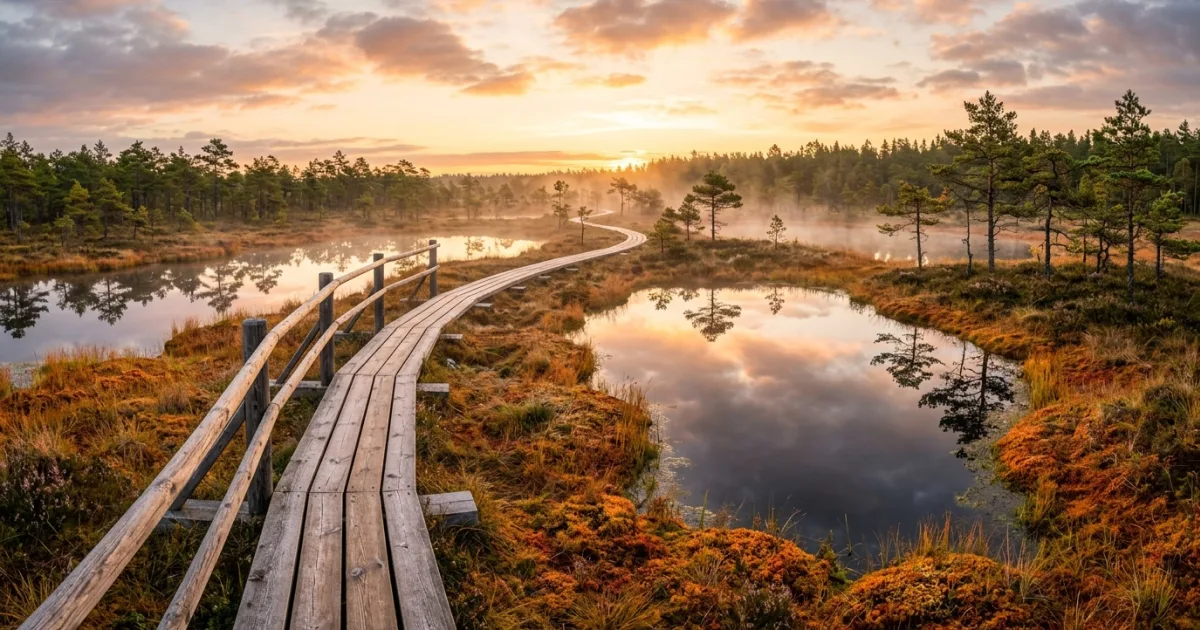
Northern Estonia is defined by the striking contrast between its rugged Baltic coastline and tranquil inland forests. Bordered by the Gulf of Finland to the north, this region features dramatic limestone cliffs such as the Ontika and Pakri bluffs, where waterfalls tumble directly toward boulder-strewn shores. Inland, centuries-old raised peat bogs like Viru and Kõnnu Suursoo offer mystical landscapes traversed by wooden boardwalks, where morning mist hangs low over dark, glassy bog pools.
Historically, the area served as the agricultural and aristocratic stronghold of Baltic-German nobility, leaving behind preserved neoclassical manor estates including Palmse, Sagadi, and Vihula. Farther east along the coast lie maritime gems like Käsmu—famed as the 'Captains' Village'—and the fortified border outpost of Narva, home to Hermann Castle facing Russia across the river. Whether soaking in a wood-heated riverside sauna, hiking ancient coastal forests, or touring medieval bastions, Northern Estonia presents a serene and unspoiled side of northern Europe.
Reasons to Visit
- Explore Lahemaa National Park, Estonia's oldest and largest national park spanning pristine coastlines and primeval woodlands.
- Walk the elevated wooden boardwalks of Viru Bog and swim in clear, natural peat pools at sunrise.
- Discover grand Baltic-German manor estates like Palmse and Sagadi surrounded by landscaped parklands.
- Admire dramatic coastal cascades including Jägala Waterfall and Valaste Waterfall along high limestone bluffs.
- Experience authentic Estonian sauna culture in tranquil coastal and lakeside settings.
- Tour historical fortifications such as Rakvere Castle and Narva's Hermann Fortress.
Things to Avoid
- Do not step off marked wooden boardwalks into sensitive bog ecosystems, as peat ground takes decades to recover from trampling.
- Avoid driving without vigilance on rural roads between dusk and dawn due to frequent elk and deer crossings.
- Do not forget to keep your car headlights on at all times, as daytime running lights are mandatory across Estonia.
- Avoid expecting loud nightlife outside of central urban hubs; the region prioritizes quiet countryside retreats and early morning nature walks.
Local Transportation Tips
Renting a car from Tallinn Airport or downtown Tallinn is the most flexible way to navigate Northern Estonia. Roads are well-paved, clearly signposted, and lightly trafficked. For public transit travelers, Elron trains connect Tallinn with Tapa, Rakvere, and Narva quickly and affordably. Regional buses operated via the Peatus network run to key villages like Käsmu and Loksa, though frequencies are limited on weekends. Ride-hailing services like Bolt operate reliably in regional centers such as Rakvere and Narva but are unavailable in rural nature reserves.
Travel Etiquette
- Respect silence in nature reserves and bogs; loud music and shouting disturb both wildlife and other hikers.
- Remove your footwear immediately upon entering private Estonian homes and traditional guesthouses.
- Shower thoroughly before entering shared public or private saunas, and sit on a clean linen towel on the sauna bench.
- Be punctual for restaurant bookings and tours, as Estonians place high value on timeliness.
Recommended Age Group
Northern Estonia's gentle terrain, high safety standards, and peaceful atmosphere make it accessible to diverse travelers, though certain outdoor trails require moderate mobility.
- Babies (0-2 years): Recommended. Extremely safe and clean environment; wide bog boardwalks accommodate sturdy all-terrain strollers with ease.
- Kids (3-12 years): Recommended. Interactive castle experiences at Rakvere, open beachcombing, and accessible nature boardwalks provide wonderful family outdoor adventures.
- Teens (13-19 years): Recommended. Great for active teenagers who enjoy canoeing, sea kayaking, wild bog swimming, and atmospheric fortress tours.
- Adults (20-64 years): Recommended. Ideal for road trippers, wellness seekers, romantic couples, and photographers seeking Nordic landscapes and manor retreats.
- Seniors (65+ years): Recommended. Flat nature trails, well-preserved heritage estates, smooth road networks, and tranquil accommodations make it effortless for mature travelers.
Accessibility Level: Medium
- The initial section of the Viru Bog trail includes a wide, flat wooden boardwalk and accessible viewing platform suitable for wheelchairs and strollers.
- Major manor houses like Sagadi and Palmse have step-free grounds and accessible visitor reception centers, though upper mansion floors may involve historic staircases.
- Paved parking areas and modern accessible restrooms are available at key RMK nature centers throughout Lahemaa.
- The promenade along the Narva River and paths around modern coastal harbors are smooth and barrier-free.
Did You Know?
Viru Bog and the surrounding wetlands of Northern Estonia act as vast natural carbon sinks and water purifiers, with peat layers that have accumulated slowly over more than 5,000 years.
Cool Statistics
- Contains Lahemaa National Park, covering over 747 square kilometers of protected coastal wilderness and marine reserve.
- Features Valaste Waterfall, Estonia's highest waterfall, plunging more than 30 meters over the Ontika limestone cliff.
- Offers over 500 kilometers of marked RMK hiking trails equipped with complimentary wilderness camping shelters.






Buy a compatible power adapter for your trip