Val-d'Oise is an administrative department situated directly north of Paris within the Île-de-France region, defined geographically by the Oise River meandering toward its confluence with the Seine. The department strikes a distinctive balance between historical preservation and natural preservation, hosting the sweeping open countryside of the Vexin Français Regional Nature Park across its western flank. Historically, the area provided inspiration to pivotal artistic movements, drawing Impressionist and post-Impressionist luminaries who sought refuge from urban centers to paint directly en plein air.
Beyond its artistic fame, Val-d'Oise is steeped in medieval and Renaissance architectural treasures. From the Cistercian grandeur of Royaumont Abbey founded by Saint Louis to the fortified towers of La Roche-Guyon embedded into limestone cliffs along the Seine, the region rewards visitors with immersive historical narratives without the dense crowds typical of central Paris. Its well-maintained public transport connections and scenic rural byways make it an exceptional destination for cultural exploration and outdoor adventures.
Reasons to Visit
- Walk in the footsteps of Vincent van Gogh in Auvers-sur-Oise and visit his room at the Auberge Ravoux.
- Explore the National Museum of the Renaissance housed inside the magnificent Château d'Écouen.
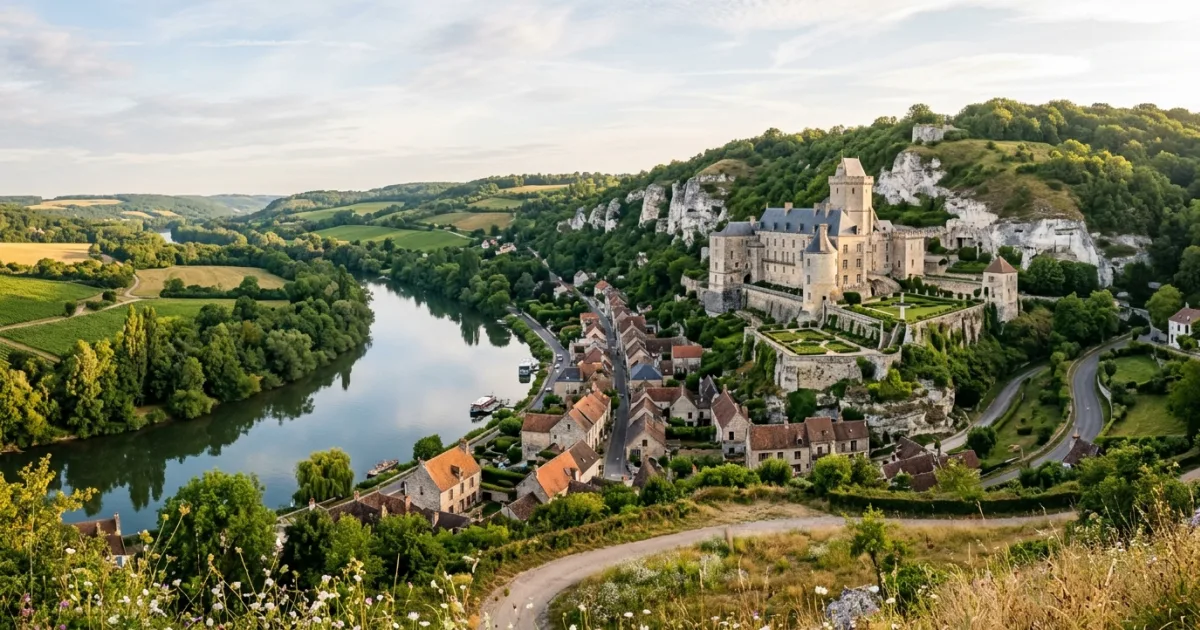
- Hike through the troglodyte dwellings and riverside cliffs of La Roche-Guyon, one of the Most Beautiful Villages of France.
- Discover the serene cloistered gardens and medieval history of Royaumont Abbey.
- Enjoy peaceful outdoor recreation including cycling and kayaking throughout the Vexin Français Regional Nature Park.
Things to Avoid
- Avoid relying solely on public buses in remote corners of the Vexin on Sundays, as schedules can be limited.
- Do not rush through Auvers-sur-Oise in an hour; take time to follow the marked walking trail linking the actual painting sites.
- Avoid skipping cash entirely; small family-run village bakeries often maintain minimum card purchase thresholds.
- Do not leave exploration to Paris-facing suburbs alone; travel deeper into the rural west and north for authentic charm.
Local Transportation Tips
Val-d'Oise is integrated into the Île-de-France public transit network operated by SNCF Transilien and RATP. Trains on Line H link Paris Gare du Nord to Pontoise, Auvers-sur-Oise, and Écouen, while Line J links Paris Saint-Lazare to western towns. Regional bus lines serve smaller municipalities, though renting a car or bringing a bicycle is recommended for full flexibility when exploring the countryside of the Vexin Français.
Travel Etiquette
- Always greet shopkeepers and hosts with a courteous 'Bonjour Madame' or 'Bonjour Monsieur' upon entering.
- Speak quietly on regional trains and in village public spaces to respect local tranquility.
- Ask permission before photographing artists painting outdoors or private residential gardens.
- Keep to designated footpaths when trekking through farmland and conservation zones in nature reserves.
Recommended Age Group
Val-d'Oise provides a varied landscape of historical landmarks, quiet villages, and nature parks suited to different generations.
- Babies (0-2 years): Neutral. Cobblestone village streets and steep trails at cliffside fortresses can present challenges for strollers, though valley parklands are accommodating.
- Kids (3-12 years): Recommended. Children enjoy exploring the medieval tunnels at La Roche-Guyon, open lawns at regional châteaux, and farm workshops in the Vexin.
- Teens (13-19 years): Recommended. Great for teenagers interested in art history, photography, outdoor cycling, and river sports like kayaking along the Oise.
- Adults (20-64 years): Recommended. Outstanding destination for cultural history, wine and dining, hiking, and exploring Impressionist art routes.
- Seniors (65+ years): Recommended. Gentle garden walks, world-class Renaissance museums, and peaceful rural retreats provide a comfortable, leisurely travel experience.
Accessibility Level: Medium
- Major museum sites such as the Musée de la Renaissance (Château d'Écouen) feature ramps and elevators, though historic stone grounds require caution.
- Central train stations in larger towns like Pontoise and Cergy offer step-free access and platform assistance.
- Certain historic attractions like the keep at La Roche-Guyon contain steep rock-hewn steps that are not wheelchair accessible.
- Adapted regional transit services are available across key routes; advance booking is recommended for specialized assistance.
Did You Know?
Vincent van Gogh produced more than 75 paintings during his intense 70-day stay in Auvers-sur-Oise before his death in July 1890, averaging more than one masterpiece per day.
Cool Statistics
- Over 50% of Val-d'Oise is composed of protected agricultural and natural forest land.
- The Vexin Français Regional Nature Park encompasses 71 municipalities within the department.
- Château de La Roche-Guyon features an intact 12th-century medieval keep connected to the lower palace by a subterranean tunnel cut into chalk cliffs.






Buy a compatible power adapter for your trip