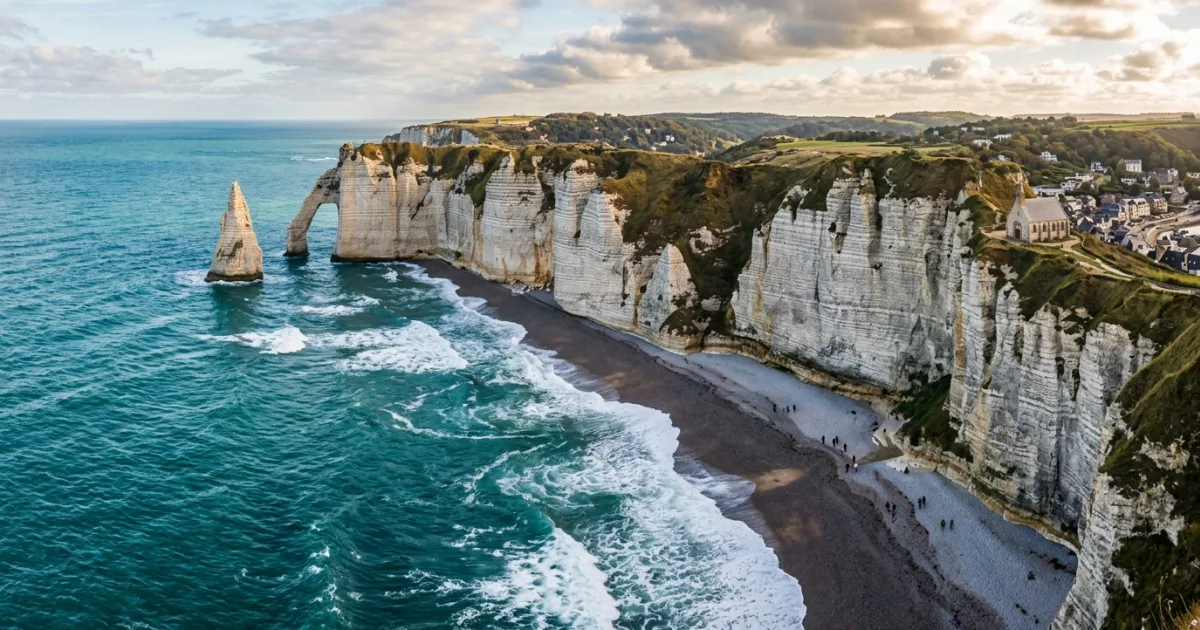
Seine-Maritime is a department of striking geographic and historical contrasts in Normandy, France. Bordered by the English Channel to the north and framed by the Seine River to the south, the region encompasses 130 kilometers of the dramatic Côte d'Albâtre. Here, sheer white chalk cliffs plunge directly into the turquoise sea, punctuated by picturesque fishing ports like Fécamp, Saint-Valery-en-Caux, and Dieppe.
Inland, Seine-Maritime gives way to the rolling plateau of the Pays de Caux and the lush valleys of the Pays de Bray. The regional capital of Rouen preserves an atmospheric medieval center featuring hundreds of half-timbered houses, the towering Cathédrale Notre-Dame, and sites honoring Joan of Arc. At the mouth of the Seine, Le Havre provides an architectural foil with its striking concrete urban grid rebuilt by Auguste Perret after World War II, illustrating the department's profound historical depth.
Reasons to Visit
- The iconic chalk formations and natural sea arches of Étretat along the Côte d'Albâtre.
- Rouen's historic core, marked by Gothic architecture, Claude Monet's inspirations, and the Gros-Horloge clock tower.
- Le Havre's UNESCO-listed modernist architecture and premier contemporary art collections at MuMa.
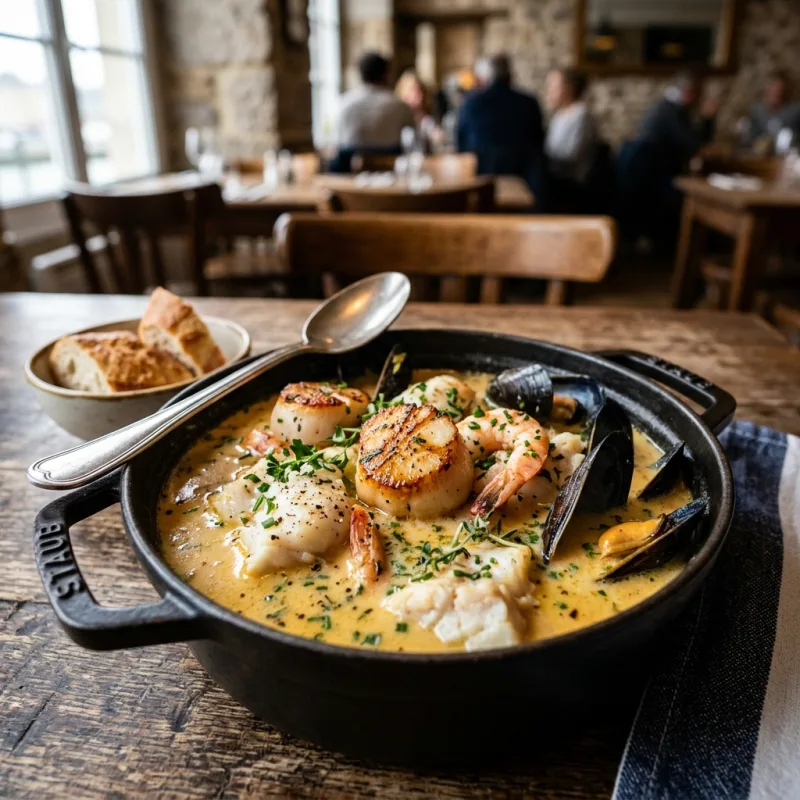
- Fresh coastal gastronomy featuring fresh Dieppe scallops, local cider, and pungent Neufchâtel cheese.
- The scenic meanders of the Boucles de la Seine Normande Regional Natural Park, home to historic abbeys like Jumièges.
Things to Avoid
- Do not walk near unstable cliff edges or climb on fragile chalk surfaces along coastal trails.
- Avoid attempting beach crossings past rocky headlands without checking updated local tide tables.
- Do not drive large vehicles through Rouen's central medieval lanes, which are narrow and largely pedestrianized.
- Do not rely entirely on public buses on Sundays when exploring rural towns in the Pays de Caux.
Local Transportation Tips
Seine-Maritime benefits from strong regional train links operated by SNCF Nomad, connecting Paris Saint-Lazare with Rouen, Yvetot, Le Havre, and Dieppe. For coastal hops and inland loops through the Seine Valley, renting a car is strongly recommended to navigate country roads easily. Urban centers like Rouen and Le Havre feature clean, modern tramway and bus networks, complemented by funiculars and extensive bicycle-sharing services.
Travel Etiquette
- Always greet shopkeepers and waitstaff with a polite 'Bonjour' before asking a question or requesting service.
- Respect protected natural reserves by staying on designated paths along the cliffs to prevent coastal erosion.
- Dress smartly when dining in formal restaurants, avoiding beachwear outside of coastal promenade areas.
- Tipping is discretionary in France; leaving 5% to 10% in cash for attentive dining service is appreciated but not mandatory.
Recommended Age Group
Seine-Maritime caters exceptionally well to diverse travel generations, blending historic walking routes, coastal nature, and accessible cultural hubs.
- Babies (0-2 years): Neutral. Pebble beaches and steep cliff trails present mobility hurdles for strollers, though urban centers like Rouen and Le Havre feature smooth pedestrian areas and baby-friendly amenities.
- Kids (3-12 years): Recommended. Children enjoy pebble shorelines, coastal cliff views, boat excursions, and interactive maritime museums in Fécamp and Dieppe.
- Teens (13-19 years): Recommended. Excellent opportunities for coastal kayaking, cycling the Seine valley, discovering Second World War history, and exploring Rouen's vibrant café culture.
- Adults (20-64 years): Recommended. Perfect balance of world-class Impressionist art, Michelin-starred and traditional dining, coastal trekking on the GR 21, and rich architectural history.
- Seniors (65+ years): Recommended. Accessible museums, flat pedestrian promenades in Le Havre and Dieppe, scenic driving routes, and comfortable cultural sightseeing make this a popular destination for mature travelers.
Accessibility Level: Medium
- Rouen and Le Havre feature low-floor tram systems and wheelchair-accessible bus fleets.
- Le Havre's postwar flat layout makes it one of the most wheelchair-accessible urban destinations in Normandy.
- Cliff paths at Étretat have steep slopes and uneven footing, but paved viewing points exist near public parking zones.
- Major historic monuments such as the Historial Jeanne d'Arc provide elevators and tactile visitor resources.
Did You Know?
The impressive white cliffs of Seine-Maritime are composed of microscopic plankton skeletons deposited over 80 million years ago during the Cretaceous period, interspersed with distinct horizontal bands of dark black flint stone.
Cool Statistics
- 130 kilometers of white chalk coastline along the Côte d'Albâtre.
- Over 2,000 preserved half-timbered houses within the city limits of Rouen.
- 1,000+ years of history at the ruined Abbey of Jumièges, famously called 'the most beautiful ruin in France' by Victor Hugo.






Buy a compatible power adapter for your trip