Disclosure: This site contains affiliate links. We may earn a commission if you make a purchase, at no extra cost to you.

>
>
>
Occitanie
The medieval fortified city of Carcassonne at sunset

Occitanie Overview & Key Highlights

Occitanie is a vast and diverse region in southern France, stretching from the Pyrenees mountains to the Mediterranean Sea. It encompasses historic cities like Toulouse and Montpellier, alongside breathtaking natural landscapes such as the Cévennes National Park and the Gorges du Tarn. Visitors are drawn to its rich tapestry of Roman ruins, medieval fortresses, and sun-drenched vineyards that produce some of the country's most celebrated wines. The region offers a slower pace of life compared to the bustling French Riviera, making it an ideal destination for those seeking authentic cultural immersion and scenic road trips. Traveling through Occitanie reveals a deep culinary heritage, highlighted by iconic dishes like cassoulet from Toulouse and fresh oysters from the Étang de Thau. Outdoor enthusiasts can hike the rugged trails of the Pyrenees, cycle along the historic Canal du Midi, or relax on the expansive sandy beaches of the Languedoc coast. The region's well-preserved historical sites, including the fortified city of Carcassonne and the ancient Pont du Gard aqueduct, provide a captivating journey through time. Whether exploring vibrant local markets or unwinding in a quiet countryside village, Occitanie delivers a multifaceted French experience.

Occitanie Travel Guide: Logistics & In-Depth Tips

Occitanie was formed in 2016 by merging the former regions of Languedoc-Roussillon and Midi-Pyrénées, creating a vast territory that rivals the size of some European countries. Its geography is incredibly diverse, bordered by the towering Pyrenees to the south, the Mediterranean Sea to the southeast, and the rugged Massif Central to the north. This geographical variety translates into a wealth of outdoor activities, from skiing and mountaineering to sailing and sunbathing.

Historically, the region is a treasure trove. It was a crucial part of the Roman Empire, leaving behind monumental structures like the Pont du Gard and the Arena of Nîmes. During the Middle Ages, it was the heartland of the Cathars, a religious group whose legacy is still visible in the dramatic, ruined castles perched on rocky crags. Today, Occitanie is celebrated for its relaxed 'art de vivre' (art of living), vibrant local markets, and a deep-seated pride in its unique cultural and linguistic heritage.

Reasons to Visit

  • Unmatched Historical Sites: Explore the fairy-tale walled city of Carcassonne and the remarkably preserved Roman monuments in Nîmes.
  • Diverse Natural Landscapes: Hike the dramatic peaks of the Pyrenees, navigate the deep Gorges du Tarn, or relax on the sandy Mediterranean beaches.
  • World-Class Gastronomy: Indulge in regional specialties like Cassoulet, Roquefort cheese, fresh oysters from Bouzigues, and truffles.
  • Exceptional Wine Regions: Tour the expansive vineyards of Languedoc-Roussillon, tasting everything from robust reds to the world's oldest sparkling wine in Limoux.
  • The Canal du Midi: Cycle or take a leisurely boat cruise along this historic, tree-lined 17th-century waterway, a UNESCO World Heritage site.

Things to Avoid

  • Driving in Historic City Centers: Cities like Toulouse and Montpellier have extensive pedestrian zones and complex one-way systems; park outside the center and use public transport.
  • Eating at Tourist Traps: Avoid restaurants located directly next to major monuments with multi-language menus; walk a few streets away for authentic, better-priced food.
  • Underestimating Driving Times: The region is vast, and winding mountain or country roads take much longer to navigate than highways.
  • Ignoring the Siesta: Many small shops and businesses in rural areas close between 12:00 PM and 2:00 PM for lunch.

Local Transportation Tips

Occitanie benefits from an excellent public transportation network. The SNCF operates high-speed TGV trains connecting Toulouse and Montpellier to Paris and other major French cities, while the regional TER (liO) trains efficiently link smaller towns. For exploring the expansive countryside, remote Cathar castles, and mountain ranges, renting a car is highly recommended. The road network is well-maintained, featuring fast 'autoroutes' (toll highways) and scenic 'routes départementales'. Additionally, cycling is incredibly popular, especially along the flat, paved paths of the Canal du Midi.

Travel Etiquette

  • Greetings: Always say 'Bonjour' (Good morning/Hello) when entering a shop or restaurant, and 'Au revoir' (Goodbye) when leaving.
  • Dining: Bread is typically placed directly on the table, not on a separate plate. Keep your hands (but not elbows) visible above the table while eating.
  • Tipping: Service is legally included in all restaurant bills ('service compris'), but leaving a small coin or rounding up the bill is a common gesture for good service.
  • Dress Code: French casual is generally neat and put-together. Avoid wearing beachwear or overly revealing clothing away from the immediate coastal areas.

Recommended Age Group

Occitanie is a highly versatile destination that caters beautifully to travelers of all ages, offering a mix of relaxation, education, and adventure.

  • Babies (0-2 years): Recommended. The relaxed pace of the countryside and coastal areas is great for families, though navigating medieval cobblestones with a stroller can be challenging.
  • Kids (3-12 years): Recommended. Children will love exploring the castle of Carcassonne, visiting the African Safari park near Toulouse, and playing on the Mediterranean beaches.
  • Teens (13-19 years): Recommended. Teens can enjoy outdoor adventures like kayaking in the Gorges du Tarn, hiking in the Pyrenees, and exploring the vibrant street art and café culture in Montpellier.
  • Adults (20-64 years): Recommended. Perfect for wine tasting, culinary tours, historical exploration, and scenic road trips through diverse landscapes.
  • Seniors (65+ years): Recommended. The region offers excellent slow travel opportunities, accessible museums, and comfortable river cruises, though care should be taken with steep inclines in historic hilltop villages.

Accessibility Level: Medium

  • Major cities like Toulouse and Montpellier have modern, accessible public transportation systems, including low-floor trams and buses.
  • Top attractions such as the Pont du Gard and the Toulouse-Lautrec Museum in Albi offer excellent wheelchair accessibility and adapted facilities.
  • Many medieval villages, including parts of Carcassonne and Rocamadour, feature steep inclines, uneven cobblestones, and stairs, which can present significant challenges for travelers with limited mobility.
  • The region's official tourism website provides specific guides and filters for 'Tourisme & Handicap' certified accommodations and sites.

Did You Know?

Occitanie is home to the highest number of UNESCO World Heritage sites of any region in France, boasting eight distinct locations including the Episcopal City of Albi, the Canal du Midi, and the Causses and the Cévennes.

Cool Statistics

  • Occitanie features over 270,000 hectares of vineyards, making it the largest wine-producing region in the world by area.
  • The region encompasses 2 National Parks (Pyrenees and Cévennes) and 6 Regional Nature Parks.
  • The Pont du Gard, located in Occitanie, is the highest of all elevated Roman aqueducts and one of the best-preserved.
  • Toulouse, the region's capital, is the center of the European aerospace industry and the headquarters of Airbus.


Address:

Occitanie, France

Find Nearby Accommodations

Basic Info

address icon

COUNTRY & Region

France,
Europe

ACCESSIBILITY LEVEL​

Medium
Currency icon

LOCAL CURRENCY​

Euro (EUR)
Price level icon
Medium
Safety Level icon

SAFETY LEVEL

Duration icon

Recommended Duration

• 1-7 days
• More than a week

Electricity

electricity icon

Electricity

220-240V, 
50Hz
Plug Socket icon

Plug Type

• Type C (Round pin)
• Type E (Two round pins with earth pin)
Plug types
Click To View Plug Types
Occitanie is part of our
Slow Travel & Nature collection

Things To Do In Occitanie

Total: 1

Panoramic view of the medieval Cité de Carcassonne in Aude, France
Aude is home to the UNESCO-listed Cité de Carcassonne. Plan your trip with our 2026 guide to Cathar castles and vineyards.

Activities To Do In Occitanie

Best Time To Visit Occitanie

The best time to visit Occitanie is during the shoulder seasons of spring (April to June) and autumn (September to October). During these months, the weather is pleasantly warm, the landscapes are vibrant, and the major tourist sites are less crowded. Summer (July and August) is peak season, offering hot beach weather and numerous festivals, but it can be very busy and hot. Winter is ideal for skiing in the Pyrenees or enjoying quiet city breaks in Toulouse and Montpellier.

  • Spring (April - June): Blooming landscapes, mild temperatures, ideal for hiking and sightseeing.
  • Summer (July - August): Hot and sunny, perfect for coastal visits, but expect larger crowds and higher prices.
  • Autumn (September - October): Grape harvest season, comfortable weather, and beautiful fall foliage in the mountains.
  • Winter (November - March): Cooler temperatures, quiet medieval towns, and excellent skiing in the Pyrenees.

Average Temperatures Per Month

Remember to check the weather forecast a few days before the trip and before heading to the airport.

Safety Level icon

Safety Level

Occitanie is generally a very safe region for travelers. Violent crime is rare. However, as in any popular tourist destination, petty crime such as pickpocketing can occur in crowded areas, major train stations, and tourist hotspots in cities like Toulouse and Montpellier. Keep your valuables secure and be mindful of your surroundings. If renting a car, do not leave luggage or valuables visible inside the vehicle when parked.

The rating is based on multi-year peace, crime, and security indices. Before you go, always verify current conditions through official government travel advisories.

Emergency Numbers

Police: 17
Ambulance: 15

No internet needed • Includes local translations • Free for TravelingWiz readers

Spoken Languages

French is the official and primary language. Occitan and Catalan are recognized regional languages but are rarely spoken as a primary language today. English is commonly understood in major tourist areas, hotels, and by younger generations, but learning a few basic French phrases is highly appreciated.

Learn The Language

  • Bonjour (Hello / Good morning)
  • Merci (Thank you)
  • S’il vous plaît (Please)
  • Où sont les toilettes? (Where are the toilets?)
  • L’addition, s’il vous plaît (The bill, please)
  • Parlez-vous anglais? (Do you speak English?)
  • Combien ça coûte? (How much does it cost?)
  • Au revoir (Goodbye)
Travel Booking Partner - TravelingWiz

Trip Cost & Budgeting for Occitanie, 2026

Everything you need to know about money while traveling
Is Occitanie expensive for tourists in 2026? No, Occitanie is generally considered a moderately priced destination compared to Paris or the French Riviera. Based on our Human Verified prices, you can expect to pay around 3.00 EUR for a cappuccino, 5.50 EUR for a pint of domestic beer, and about 20.00 EUR for a standard main meal at a mid-range restaurant. Use the data table below to calculate your specific daily budget based on your travel style. With TravelingWiz's Human Verified data, a typical traveler should expect to spend around $160 USD per day for a mid-range trip in Occitanie. Click the Trip Cost Calculator button below the table to work out your personal budget for this trip.
Currency icon

LOCAL CURRENCY​:

Euro (EUR)
Price level icon
Medium
Credit cards are widely accepted across Occitanie, though carrying some cash is recommended for small village markets and bakeries.

Per person, per day – pocket cash for small purchases.

Local: 30
Euro (EUR)
≈ 35 USD

Full daily spend estimation (accommodation, food, transportation, attractions).

Travel Style
Euro (EUR)
≈ USD ($)
Budget
75
86
Mid-range
140
161
Comfort
310
357

The Prices, Daily costs, and calculator results are estimates for planning purposes only. Actual costs may vary based on season, booking timing, personal spending habits, and currency fluctuations. TravelingWiz cannot be held responsible for discrepancies between these estimates and your final trip expenses.

  • Use the regional liO train and bus network, which offers incredibly cheap tickets (often just 1 to 2 EUR) for traveling between towns.
  • Opt for the menu du jour (lunch menu of the day) at local bistros for a high-quality, multi-course meal at a fraction of the dinner price.
  • Purchase a city pass, like the Toulouse Pass Tourisme, to get free public transit and discounted museum entries.
  • Explore the region's world-class vineyards in Languedoc or Gaillac by visiting local estates directly for free or very low-cost wine tastings.

Pre-Order Tickets

Avoid disappointment when tickets sell out — and skip the long lines by booking online in advance. You’ll often save up to 20% too.
Save up to 20%

Travel Discounts & Coupons

Save on hotels, attractions, transport, and gear — find verified discounts for smarter travel spending.
Verified Coupons

What To Pack

  • Comfortable walking shoes for cobblestone streets and medieval villages.
  • Lightweight, breathable clothing for hot Mediterranean summers.
  • A light jacket or sweater for cooler evenings, especially in the Pyrenees or Cévennes.
  • Sunscreen, sunglasses, and a wide-brimmed hat for sun protection.
  • A universal power adapter for Type C and Type E outlets.
  • A reusable water bottle to stay hydrated during outdoor excursions.
  • A swimsuit for the Mediterranean beaches or river swimming in the gorges.
We couldn't find tips for Occitanie.
If you got any, please share

Recommended Itineraries for Traveling to Occitanie

We couldn't find itineraries for Occitanie.
you can contact us for custom trip plan

Food & Drink Highlights

Local Food Overview

Occitanie boasts a rich and hearty culinary tradition deeply rooted in its agricultural heritage. The region is famous for its robust meats, flavorful cheeses, and world-class wines, offering a distinct contrast to the lighter Mediterranean fare found further east.
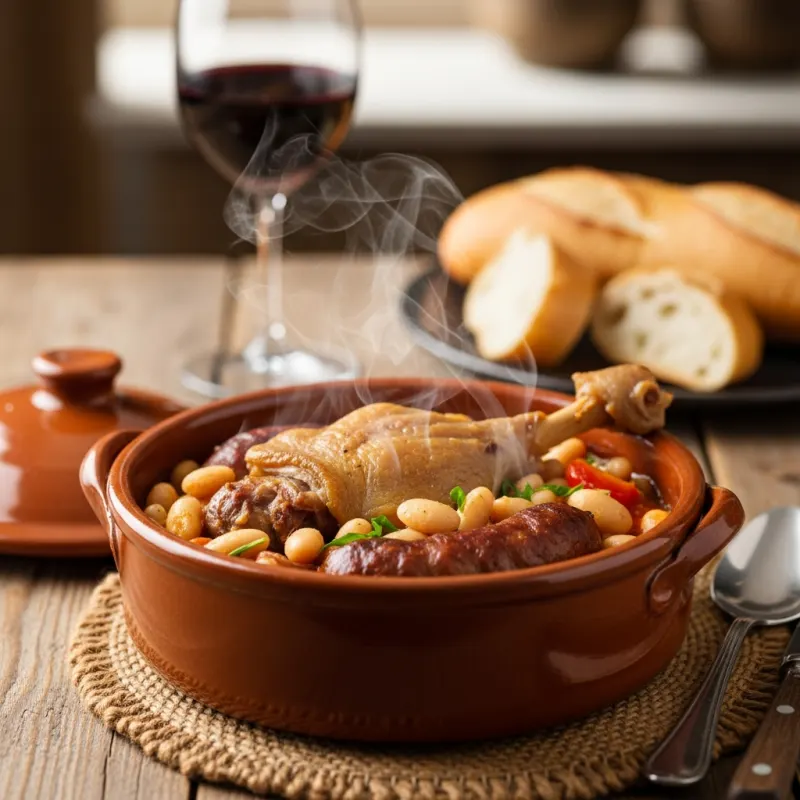
Traditional French Cassoulet in a clay pot

Must Try Dish

Cassoulet - A rich, slow-cooked casserole originating in the south of France, containing meat, pork skin, and white beans. It is a hearty and deeply flavorful dish that perfectly represents the rustic culinary traditions of the region.
Food Experiences Title Icon

Food
Experiences

Discover cooking classes, tastings and local food tours

No food experience found
Maya, the human travel expert at TravelingWiz, offering curated, non-AI expertise

Maya’s Final Checklist for Occitanie

Logistics shouldn’t be the focus of your trip—the experience should. I’ve hand-vetted these essential partners to ensure your arrival, stay, and exploration are as smooth as an Athenian breeze.

Where to Stay

From boutique hotels to local apartments—compare thousands of options and find the perfect stay in the best neighborhood.

Air Travel

Getting there should be seamless. Compare the best routes and prices across top airlines to start your journey on the right note.

Local Guides

Connect with experts who know the destination best. Get personalized advice and insider tips to help you plan your perfect trip.

Travel Protection

The “Engineer’s” rule: always have a backup. Secure your trip with a plan that covers every “what if” and unexpected change.

Car Rentals

Explore at your own pace with total freedom. Compare reliable rental options and find the right vehicle for your adventure.

Visa Services

Don’t let paperwork slow you down. Get expert assistance with your application to ensure all your entry documents are in order.

FAQs

Toulouse is the administrative capital and the largest city in the Occitanie region.
While major cities like Toulouse, Montpellier, and Nîmes are well-connected by train, renting a car is highly recommended to explore the region’s rural villages, castles, and natural parks.
The region generally enjoys a Mediterranean climate with hot, dry summers and mild winters, though the mountainous areas (Pyrenees and Cévennes) experience cooler temperatures and winter snow.
Absolutely. Occitanie includes the Languedoc-Roussillon wine region, which is the largest wine-producing area in the world, known for its excellent red blends, crisp whites, and sparkling wines like Blanquette de Limoux.
Top historical sites include the medieval Cité de Carcassonne, the Roman aqueduct Pont du Gard, the Roman arena in Nîmes, and the historic Albi Cathedral.
The best time to visit is during the shoulder seasons of spring (April to June) and autumn (September to October). During these months, you will experience pleasantly warm weather, fewer crowds at major landmarks, and scenic landscapes. Summer is ideal for Mediterranean beaches, while winter caters to skiing in the Pyrenees.
Yes, tap water throughout Occitanie and the rest of France meets strict European health and safety standards and is completely safe to drink. You can comfortably refill your reusable water bottle at hotel taps, restaurants, and public water fountains across the region during your daily sightseeing excursions.
Occitanie boasts a rich culinary heritage. You should try cassoulet, a slow-cooked bean and meat stew from Toulouse or Castelnaudary, alongside world-famous Roquefort blue cheese. Along the Mediterranean coast, sample fresh oysters from the Étang de Thau or Bouzigues, and seek out local black truffles paired with regional Languedoc wines.
No, Occitanie is generally much more affordable than Paris or the French Riviera. Accommodation, dining, and transportation offer great value, especially outside peak summer months. For a detailed breakdown of estimated daily expenses and exact prices for meals and activities, check the Budget section on this page.

Your Insights Matter

TravelingWiz grows through the stories of our community. If you’ve recently explored ,Occitanie share your tips and stories to help us perfect our guides for the next traveler.

Related Articles

Check out our related articles and blog posts to learn even more about the destination.

No related articles found

Don’t Travel Alone

Share with your friends and family

Where should we send your offline card?

We hate spam just as much as you do

newsletter_consent *