The department of Gard presents a captivating geographic and cultural transition between Provence and Languedoc. Its southern boundary touches the Mediterranean at Port Camargue, while its northern perimeter rises into the dramatic granite ridges of the Cévennes National Park. This geographic variance creates diverse microclimates that have sustained human habitation since prehistoric times.
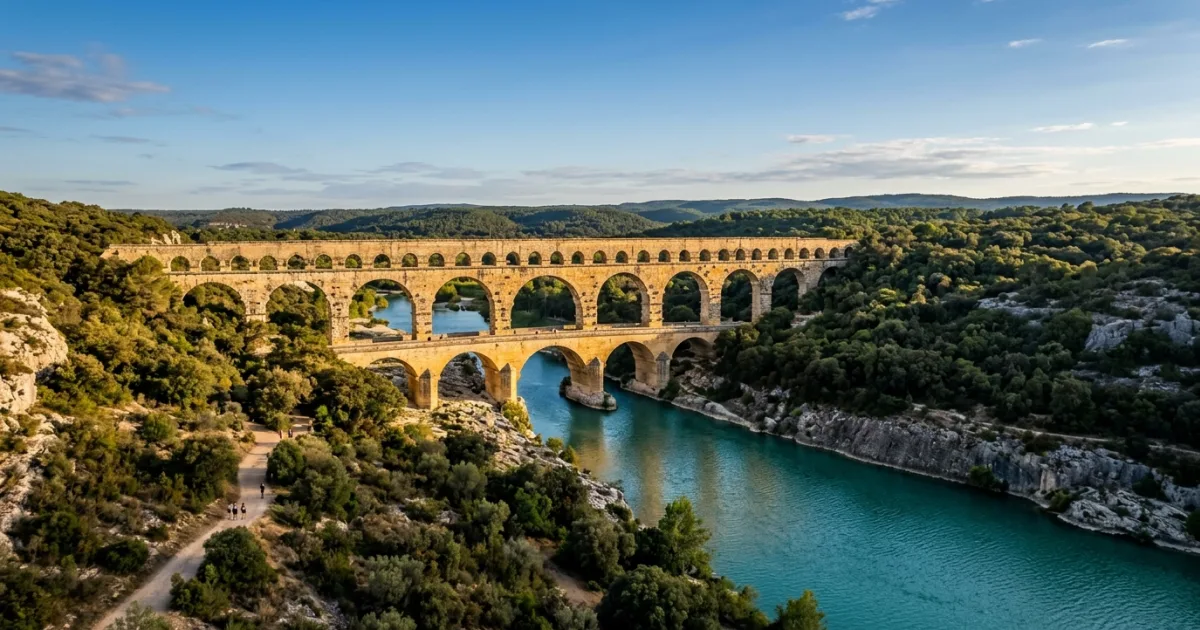
Roman civilization stamped its architectural authority deeply across Gard. Nîmes boasts the Maison Carrée, one of the world's best-preserved classical Roman temples, and an oval amphitheater still utilized for cultural performances. Spanning the Gardon River, the Pont du Gard stands as a three-tiered testament to Roman hydraulic engineering, originally supplying over 40,000 cubic meters of water daily to the city of Nîmes.
Beyond ancient ruins, Gard's medieval heritage surfaces in preserved towns like Uzès, celebrated for its ducal palace, and Aigues-Mortes, surrounded by 13th-century ramparts adjacent to vibrant pink salt evaporation flats. The interior countryside invites road trips through vineyards, olive groves, and deep limestone gorges, making it one of southern France's most versatile cultural and active destinations.
Reasons to Visit
- Explore ancient Roman architecture, including the Pont du Gard and the amphitheater of Nîmes.
- Hike and paddle through the limestone cliffs of the Gorges du Gardon biosphere reserve.
- Wander the vibrant Saturday provencal market and medieval streets of Uzès.
- Experience coastal Camargue culture, wild white horses, and flamingo sanctuaries near Aigues-Mortes.
- Sample regional culinary delicacies, including AOC Costières de Nîmes wines and Pélardon cheese.
Things to Avoid
- Avoid driving through narrow village centers in larger vehicles during weekly market mornings.
- Do not swim in the Gardon River during or immediately after heavy mountain rainfalls due to flash flood risks.
- Avoid leaving valuables visible in rental cars at remote hiking trail parking lots.
- Do not skip sun and hydration protection when hiking limestone scrubland during midday summer heat.
Local Transportation Tips
Regional travel is anchored by the SNCF train line running through Nîmes Centre and Nîmes Pont du Gard TGV stations, connecting the department directly to Paris, Lyon, and Marseille. The regional liO bus network connects regional towns like Uzès and Pont du Gard at low fares (€1.50 per journey). However, navigating rural vineyards, high Cévennes mountain passes, and river valleys requires a personal vehicle or rental car.
Travel Etiquette
- Always greet shop owners and restaurant staff with a polite 'Bonjour Madame' or 'Bonjour Monsieur' upon entering.
- Observe designated swimming areas along rivers to protect fragile riparian zones and local flora.
- Dress respectfully when visiting historic cathedrals, abbeys, and rural chapels.
- Do not handle fresh fruit and vegetables at traditional markets directly unless invited to do so by the merchant.
Recommended Age Group
Gard accommodates travelers of varying ages, provided itineraries match regional physical demands.
- Babies (0-2 years): Neutral. Cobblestone streets in medieval villages and uneven rocky riverbeds can make pushchair use challenging; baby carriers are recommended.
- Kids (3-12 years): Recommended. Children enjoy interactive Roman history exhibits, paddling on the Gardon River, and exploring the medieval towers of Aigues-Mortes.
- Teens (13-19 years): Recommended. Excellent options for active pursuits such as canyoning, rock climbing, kayaking, and coastal cycling.
- Adults (20-64 years): Recommended. A premier region for wine tasting, historical sightseeing, farm-to-table dining, and rural exploration.
- Seniors (65+ years): Recommended. Accessible Roman monuments, comfortable rail connections, and leisurely cultural tours across historic towns provide an enriching experience.
Accessibility Level: Medium
- The modern Pont du Gard visitor centers, paths to direct viewing points, and museum spaces provide step-free, wheelchair-accessible ramps and facilities.
- Nîmes features flat urban avenues around the Roman monuments, with step-free access available at the Musée de la Romanité and parts of the Arena.
- Medieval hilltop hamlets such as La Roque-sur-Cèze and Vézénobres have steep inclines, uneven cobblestone paving, and limited handrails.
Did You Know?
The denim fabric used globally for jeans traces its origins directly to the city of Nîmes; the term 'denim' is an Anglicized contraction of 'de Nîmes' (from Nîmes), referencing the sturdy twill serge fabric historically woven by local textile artisans.
Cool Statistics
- The Pont du Gard rises 48.8 meters (160 feet) high, making it the highest known ancient Roman aqueduct bridge.
- Cévennes National Park forms part of one of Europe's largest International Dark Sky Reserves.
- The department encompasses more than 300 days of sunshine annually.







Buy a compatible power adapter for your trip