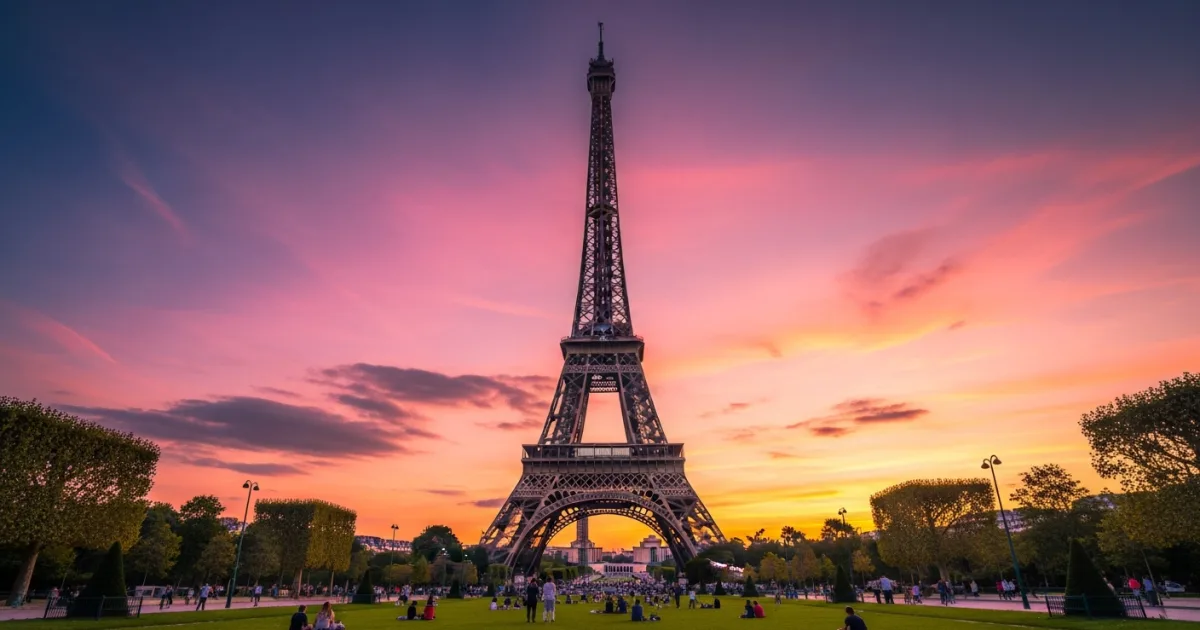
Beyond its striking silhouette, the Eiffel Tower is a marvel of 19th-century engineering. It consists of three levels accessible to the public, each offering distinct experiences. The first floor features a thrilling glass floor and historical exhibits, while the second floor boasts some of the best unobstructed views of Paris. The summit, accessible only by elevator, includes a recreation of Gustave Eiffel's private office and a champagne bar. The surrounding areas, including the Trocadéro and the Seine riverbanks, provide perfect vantage points for admiring the tower's nightly sparkling light show, which occurs for five minutes every hour on the hour after sunset.
Reasons to Visit
- Experience unparalleled, 360-degree panoramic views of the entire city of Paris.
- Witness a masterpiece of structural engineering and a globally recognized cultural icon.
- Enjoy the romantic ambiance, especially during the evening sparkling light show.
- Dine at world-class restaurants located directly on the tower, such as Le Jules Verne.
Things to Avoid
- Avoid buying tickets from unauthorized street vendors to prevent scams.
- Do not leave your bags or pockets unattended, as pickpockets operate in the crowded areas beneath the tower.
- Avoid visiting during peak afternoon hours in the middle of summer if you want to escape massive crowds.
Local Transportation Tips
The Eiffel Tower is highly accessible via Paris's extensive public transportation network. The closest Metro stations are Bir-Hakeim (Line 6), Trocadéro (Lines 6 and 9), and École Militaire (Line 8). The RER C train also stops at the nearby Champ de Mars - Tour Eiffel station. Additionally, several bus routes and the Batobus river ferry service drop passengers off just a short walk from the monument.
Travel Etiquette
- Be respectful of the security personnel and follow all screening procedures upon entry.
- Keep noise levels reasonable, especially in the enclosed elevator spaces.
- Dispose of your trash properly in the provided bins to help keep the monument clean.
Recommended Age Group
The Eiffel Tower is a captivating destination for visitors of almost all ages, offering unique experiences from the ground up to the summit.
- Babies (0-2 years): Neutral. While the surrounding park is pleasant, strollers can be cumbersome in elevators and crowds.
- Kids (3-12 years): Recommended. Children will be thrilled by the sheer size of the tower and the exciting elevator ride to the top.
- Teens (13-19 years): Recommended. The iconic status and incredible photo opportunities make it a highly engaging experience for teenagers.
- Adults (20-64 years): Recommended. Adults can fully appreciate the engineering marvel, historical significance, and romantic atmosphere.
- Seniors (65+ years): Recommended. Elevators provide accessible routes to the viewing decks, allowing seniors to enjoy the panoramic views comfortably.
Accessibility Level: Medium
- The first and second floors are fully accessible to wheelchair users via the elevators.
- For safety reasons in case of an emergency evacuation, wheelchair users are not permitted to access the summit.
- Accessible restrooms are available on the ground floor, first floor, and second floor.
- Discounted admission rates are available for visitors with disabilities and their accompanying caregivers.
Did You Know?
The Eiffel Tower was originally intended to be a temporary installation for the 1889 World's Fair and was almost torn down in 1909. It was saved because its height proved incredibly useful for radiotelegraphy antennas, playing a crucial role in intercepting enemy communications during World War I.
Cool Statistics
- The tower is composed of 18,038 individual iron parts fastened together by 2.5 million rivets.
- It weighs approximately 10,100 metric tons.
- Due to thermal expansion, the tower can grow up to 15 centimeters (6 inches) taller during the summer.
- It receives nearly 7 million visitors annually, making it the most-visited paid monument in the world.






Buy a compatible power adapter for your trip