Disclosure: This site contains affiliate links. We may earn a commission if you make a purchase, at no extra cost to you.
Shatili

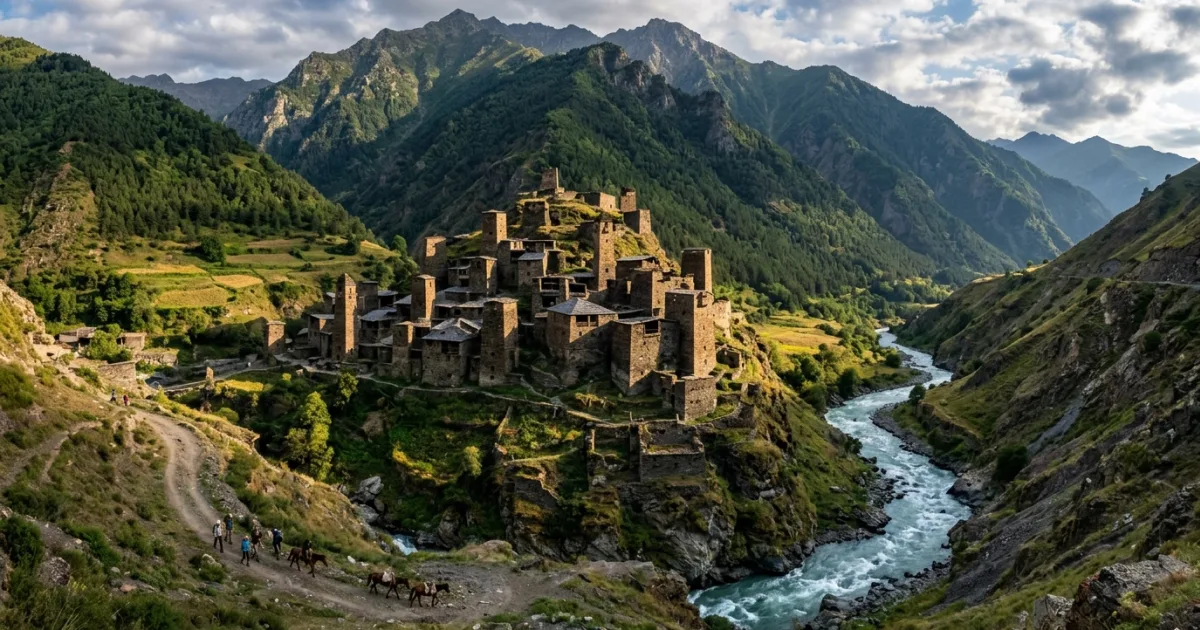
Panoramic view of the medieval stone fortress village of Shatili in the Caucasus Mountains of Georgia

Basic Info

COUNTRY & Region

Georgia,
Europe

ACCESSIBILITY LEVEL​

  • High: Widely accessible with good facilities for disabilities.
  • Medium: Some accessible options, but limitations exist.
  • Low: Limited accessibility; many barriers for disabilities.
Low

LOCAL CURRENCY​

Georgian Lari (GEL)

Price Level

Low – budget‑friendly basics

Medium – moderate mid‑range costs

High – pricey lodging, dining & transport

Low

SAFETY LEVEL

5 shields = Excellent – very low crime or conflict.

4 shields = Safe – low risk, routine care.

3 shields = Relatively safe – use normal street smarts.

2 shields = Use caution – higher crime or periodic unrest.

1 shields = Avoid – active conflict or extreme danger.

Scores are derived from multi-year peace, homicide and security indices blended into a single 1-to-5 scale.

Recommended Duration

1-7 days, Full day

Shatili Overview & Key Highlights

Shatili is a fortified medieval stone village situated in the deep gorge of the Arghuni River within the historic highland province of Khevsureti, Georgia. Perched at an altitude of approximately 1,400 meters just kilometers from the Chechen border, the settlement is a singular complex of interconnected stone flat-roofed towers, residential fortresses, and terraced masonry that served as both residential quarters and a defensive barrier against northern Caucasian invasions for centuries. Reaching Shatili requires navigating the dramatic, unpaved Datvisjvari Pass (2,676 meters), which remains buried under deep snow from late October until early June. Travelers venture here to immerse themselves in ancient Khevsur pagan-Christian traditions, hike untamed mountain passes toward Mutso and Omalo, and experience dramatic isolation where mobile signal is limited and life revolves around stone towers and alpine wilderness.

Shatili Travel Guide: Logistics & In-Depth Tips

Shatili stands as one of the most astonishing architectural and historical monuments in the Caucasus. Located in Georgia's Mtskheta-Mtianeti region, tucked along the northern slopes of the Greater Caucasus crest, this fortified village was engineered between the 10th and 14th centuries as a unified stone bulwark against northern incursions. The village consists of around sixty distinct towers seamlessly joined together by exterior defensive stone walls, elevated walkways, and timber bridges, functioning historically as a single fortress city capable of holding hundreds of Khevsur warriors and their livestock during sieges.

Today, Shatili provides an unmatched glimpse into medieval highland life. Travelers who make the rugged journey encounter ancient slate-roofed structures rising dramatically against sheer river cliffs, surrounded by untouched alpine scenery. Beyond the historical complex itself, the valley serves as a gateway to the tomb complexes of Anatori, the dramatic cliff-top fortress of Mutso, and legendary trans-Caucasus trekking routes into Tusheti.

Reasons to Visit

  • Witness an intact, world-class medieval fortified stone village clinging to vertical cliff walls.
  • Experience profound tranquility and star-filled night skies entirely free from artificial light pollution.
  • Embark on world-class alpine treks through the Arghuni valley and across the formidable Atsunta Pass.
  • Sample ancient Khevsur mountain gastronomy, including UNESCO-recognized Dambalkhacho.
  • Explore nearby Mutso, a dramatic mountain citadel perched atop sheer jagged peaks.

Things to Avoid

  • Do not attempt the drive across Datvisjvari Pass in a standard two-wheel-drive sedan or low-clearance vehicle.
  • Avoid touching or disturbing human remains inside the historic medieval plague houses at nearby Anatori.
  • Do not travel into Khevsureti without sufficient physical cash in Georgian Lari.
  • Avoid walking carelessly near unprotected rooftop edges and sheer drop-offs within the stone towers.
  • Do not enter local sacred pagan-Christian shrines (Khati) where signage explicitly restricts access.

Local Transportation Tips

Shatili has no local public transit, taxi ranks, or paved inner-village roads. Public transport from Tbilisi is limited to seasonal shared 4WD marshrutkas running twice weekly from Didube Station during peak summer months. Most travelers hire private 4WD vehicles (commonly Mitsubishi Delicas) or join specialized multi-day highland driving tours. Within Shatili and the surrounding valley, travel is exclusively on foot or via chartered local off-road vehicles for day trips to Mutso and Ardoti.

Travel Etiquette

  • Respect sacred mountain shrines known as 'Khati' or 'Jvari'; many maintain historic religious taboos, such as separate prayer zones for men and women.
  • Always greet guesthouse owners and village elders with polite respect; highland hospitality is deeply bound to honor.
  • Dress modestly when exploring cultural monuments and local historical sanctuaries.
  • Carry all non-biodegradable waste out of the valley, as remote mountain waste management facilities are severely constrained.

Recommended Age Group

Due to rough terrain, high-altitude mountain drives, and sheer fortress drops without railings, Shatili is best suited for experienced travelers and active individuals.

  • Babies (0-2 years): Not Recommended. Rugged unpaved roads, absent medical facilities, and extreme altitude changes present significant logistical risks.
  • Kids (3-12 years): Neutral. Older children with mountain hiking experience can appreciate the fortress adventure, but parents must maintain constant vigilance along unguarded stone parapets.
  • Teens (13-19 years): Recommended. Adventurous teenagers will enjoy the living-history atmosphere, trekking opportunities, and off-grid exploration.
  • Adults (20-64 years): Recommended. Perfect for active hikers, photographers, history enthusiasts, and off-road explorers.
  • Seniors (65+ years): Neutral. Demands solid physical mobility, balance, and stamina to navigate steep, uneven stone steps and multi-hour unpaved road journeys.

Accessibility Level: Low

  • Shatili is entirely inaccessible for wheelchair users, relying on ancient natural rock stairs, rough slate ladders, and steep gravel slopes.
  • Interior corridors of the fortress complex involve tight crawl spaces, low timber doorways, and unprotected vertical edges.
  • Road transport into the village requires enduring 5 to 7 hours of turbulent, unpaved off-road conditions across high mountain terrain.

Did You Know?

During devastating historical cholera and plague epidemics, infected residents of the Shatili region voluntarily isolated themselves in stone houses at nearby Anatori, sitting on open slate benches until death to prevent the disease from spreading to the fortress settlement.

Cool Statistics

  • Altitude: Approximately 1,400 meters (4,593 feet) above sea level
  • Number of interconnected fortified stone towers: Over 60 individual structures
  • Permanent winter residents: Less than 15 people braving the isolated cold months
  • Distance from Russian border: Under 4 kilometers as the crow flies

Address:

Shatili, Georgia

Find Nearby Accommodations

Electricity

220-240V, 
50Hz

Plug Type

Type C (Round pin), Type F (Two round pins with earth clips)
Plug types
Click To View Plug Types
Shatili is part of our
Coolcation collection

Activities To Do In Shatili

Best Time To Visit Shatili

Shatili is physically accessible only during the brief summer and early autumn window due to heavy snow blocking the high-mountain Datvisjvari Pass.

  • June to early July: The Datvisjvari Pass typically opens; lush green alpine meadows and roaring rivers welcome early hikers, though road conditions can be muddy.
  • Late July to August: The driest and warmest period, offering optimal trail visibility, open mountain passes to Mutso, and pleasant daytime temperatures hovering around 20°C to 24°C.
  • September to early October: Crisp mountain air, vibrant golden autumn foliage across Khevsureti, and minimal tourist presence before the first seasonal snowfall closes the pass until spring.
  • Late October to May: Village is effectively cut off by heavy snow; roads are impassable, and only a handful of local residents remain through winter.

Average Temperatures Per Month

Average monthly temperaturesMonthly source values, with Celsius and Fahrenheit equivalents in the following data table.-10°14°-1°30°8°46°16°61°25°77°JanJan: -5°C / 23°FFebFeb: -3°C / 27°FMarMar: 1°C / 34°FAprApr: 7°C / 45°FMayMay: 10°C / 50°FJunJun: 16°C / 61°FJulJul: 18°C / 64°FAugAug: 18°C / 64°FSepSep: 14°C / 57°FOctOct: 9°C / 48°FNovNov: 4°C / 39°FDecDec: -2°C / 28°F
View temperature data
Average monthly temperatures
Month°C°F
Jan-523
Feb-327
Mar134
Apr745
May1050
Jun1661
Jul1864
Aug1864
Sep1457
Oct948
Nov439
Dec-228

Remember to check the weather forecast a few days before the trip and before heading to the airport.

Safety Level

5 shields = Excellent – very low crime or conflict.

4 shields = Safe – low risk, routine care.

3 shields = Relatively safe – use normal street smarts.

2 shields = Use caution – higher crime or periodic unrest.

1 shields = Avoid – active conflict or extreme danger.

Scores are derived from multi-year peace, homicide and security indices blended into a single 1-to-5 scale.

Shatili boasts virtually nonexistent violent crime, but severe natural and infrastructural hazards demand caution. The single road crossing Datvisjvari Pass is prone to rockfalls, landslides, and dense fog; only traverse it with an experienced 4WD driver. Within the fortress itself, pathways consist of uneven, slick slate stones without safety barriers or handrails, overlooking sheer vertical drops. Exercise extreme care around mountain streams and avoid wandering close to the Chechen/Russian border demarcation line without standard registration papers.

The rating is based on multi-year peace, crime, and security indices. Before you go, always verify current conditions through official government travel advisories.

Emergency Numbers

Police: 112
Ambulance: 112

No internet needed • Includes local translations • Free for TravelingWiz readers

Spoken Languages

Georgian, Khevsur dialect; limited Russian among older locals, minimal English in guesthouses.
Travel Booking Partner - TravelingWiz

Learn The Language

  • Gamarjoba: Hello
  • Madloba: Thank you
  • Ki / Ara: Yes / No
  • Tu sheidzleba: Please
  • Gtxovt damexmarot: Please help me
  • Ra girs?: How much does it cost?
  • Tsqali: Water
  • Nakhvamdis: Goodbye

Trip Cost & Budgeting for Shatili, 2026

Everything you need to know about money while traveling
Is Shatili expensive for tourists in 2026? No, Shatili remains a very budget-friendly destination in Georgia's high Caucasus. Visitors enjoy Human Verified prices, where you can expect to pay around 7 GEL for a coffee, 6 GEL for a pint of local beer, and 30 GEL for a hearty main meal in a guesthouse. Use the data table below to calculate your specific daily budget based on your travel style.

LOCAL CURRENCY​:

Georgian Lari (GEL)

Price Level:

Low – budget‑friendly basics

Medium – moderate mid‑range costs

High – pricey lodging, dining & transport

Low

Cards Vs. Cash

Cash is essential in Shatili as card payments are rarely accepted in this remote mountain village.

How Much Cash to Carry (on you)

Per person, per day – pocket cash for small purchases.

Local: 20
Georgian Lari (GEL)
≈ 38 USD

Average Daily Costs (per person)

Full daily spend estimation (accommodation, food, transportation, attractions).

Travel Style
Georgian Lari (GEL)
≈ USD ($)
Budget
115
25
Mid-range
210
55
Comfort
460
110
Note

The Prices, Daily costs, and calculator results are estimates for planning purposes only. Actual costs may vary based on season, booking timing, personal spending habits, and currency fluctuations. TravelingWiz cannot be held responsible for discrepancies between these estimates and your final trip expenses.

Best Value Tips

  • • Book guesthouses with half-board included, as home-cooked mountain meals offer superior value.
  • • Share a 4x4 vehicle or take the local seasonal marshrutka from Tbilisi to cut transport expenses.
  • • Withdraw sufficient GEL cash in Tbilisi before traveling, as there are no ATMs in Shatili.
  • • Purchase trail snacks and supplies in larger cities where prices are lower than remote mountain posts.

Tours & Tickets

Explore tours, attractions, and ticket options to plan your visit.
Plan ahead

Travel Offers & Coupons

Browse travel offers and coupons from our affiliate partners.
Affiliate partner offers

What To Pack

  • Sturdy high-traction waterproof hiking boots for slippery slate pathways and rocky descents
  • Windproof, waterproof shell jacket and thermal base layers due to rapid alpine weather shifts
  • Substantial Georgian Lari cash in small denominations (no ATMs exist in the region)
  • Portable power bank and universal charging cables (frequent mountain power cuts occur)
  • High-SPF sunscreen, polarized sunglasses, and lip balm for high-altitude UV reflection
  • Offline GPS maps (such as Maps.me or Gaia GPS) and offline language packs
  • Personal basic medical kit including rehydration salts, altitude remedies, and blister patches
Only the good stuff!
Browse recommended travel gear
Check out our free packing list tool

Recommended Itineraries for Traveling to Shatili

Take your itinerary with you

Choose a ready-made itinerary, plan your own trip, and keep TravelingWiz by your side while you travel.

Get the TravelingWiz app

Food & Drink Highlights

Local Food Overview

Highland Khevsurian cuisine is forged by severe alpine conditions, centered around preserved dairy, sheep meat, and hand-milled flours. Key staples include Khevsurian khinkali, distinguished by hand-chopped fatty mutton or beef delicately seasoned with wild mountain thyme (chabretzi), and dambalkhacho, a rare dried curd cheese fermented in clay pots until covered in a delicate penicillium mold rind, recognized as UNESCO Intangible Cultural Heritage.

Must Try Dish

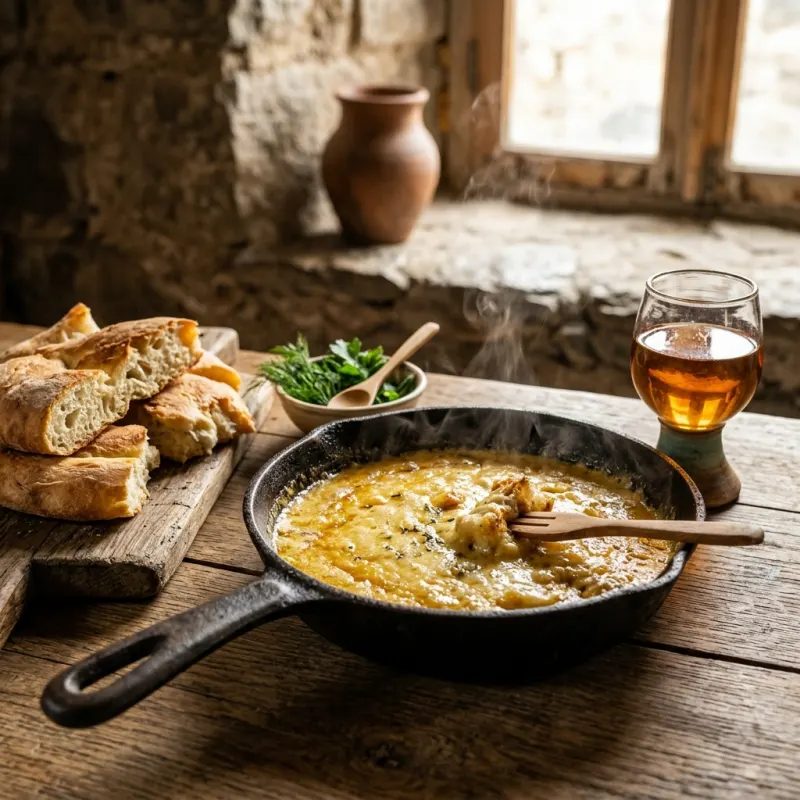
Dambalkhacho - A heritage highland cottage cheese curd kneaded with butter and salt, aged in clay jars until mold-ripened, then melted into a rich, earthy fondue eaten with hot bread.
Melted Georgian Dambalkhacho cheese fondue served in a rustic skillet with bread in Shatili

Maya’s Final Checklist for Shatili

Logistics shouldn’t be the focus of your trip—the experience should. I’ve hand-vetted these essential partners to ensure your arrival, stay, and exploration are as smooth as an Athenian breeze.

Maya, the human travel expert at TravelingWiz, offering curated, non-AI expertise

Where to Stay

Compare accommodation options and choose a stay that suits your plans and budget.

Air Travel

Compare flight options and find a route that fits your plans.

Local Guides

Connect with local guides for personalized help planning and exploring.

Travel Protection

The “Engineer’s” rule: always have a backup. Secure your trip with a plan that covers every “what if” and unexpected change.

Car Rentals

Compare rental options and choose a car that suits your trip.

Visa Information

Don’t let paperwork slow you down. Get expert assistance with your application to ensure all your entry documents are in order.

FAQs

The road over the 2,676-meter Datvisjvari Pass typically opens in late May or early June and closes with the first heavy winter snowfall in mid-to-late October.
No. The drive requires a high-clearance 4WD vehicle (such as a Mitsubishi Delica or Toyota Land Cruiser) due to deep ruts, exposed shale rock, river crossings, and unpaved shelf roads.
There are no operational pharmacies or specialized hospitals in Shatili. A regional first-aid paramedic station handles basic triage, but serious injuries require military or medical helicopter evacuation to Tbilisi.
Magti provides decent 3G/4G coverage in open parts of the village, but inside the thick medieval stone towers, signals drop completely. Many guesthouses offer slow satellite Wi-Fi.
Yes. A famous multi-day wilderness trek connects Shatili to Omalo via Mutso, the Atsunta Pass (3,431 meters), and Girevi, typically requiring 4 to 5 days of backcountry hiking.

Your Insights Matter

TravelingWiz grows through the stories of our community. If you’ve recently explored ,Shatili share your tips and stories to help us perfect our guides for the next traveler.

Where should we send your offline card?

We hate spam just as much as you do

newsletter_consent *