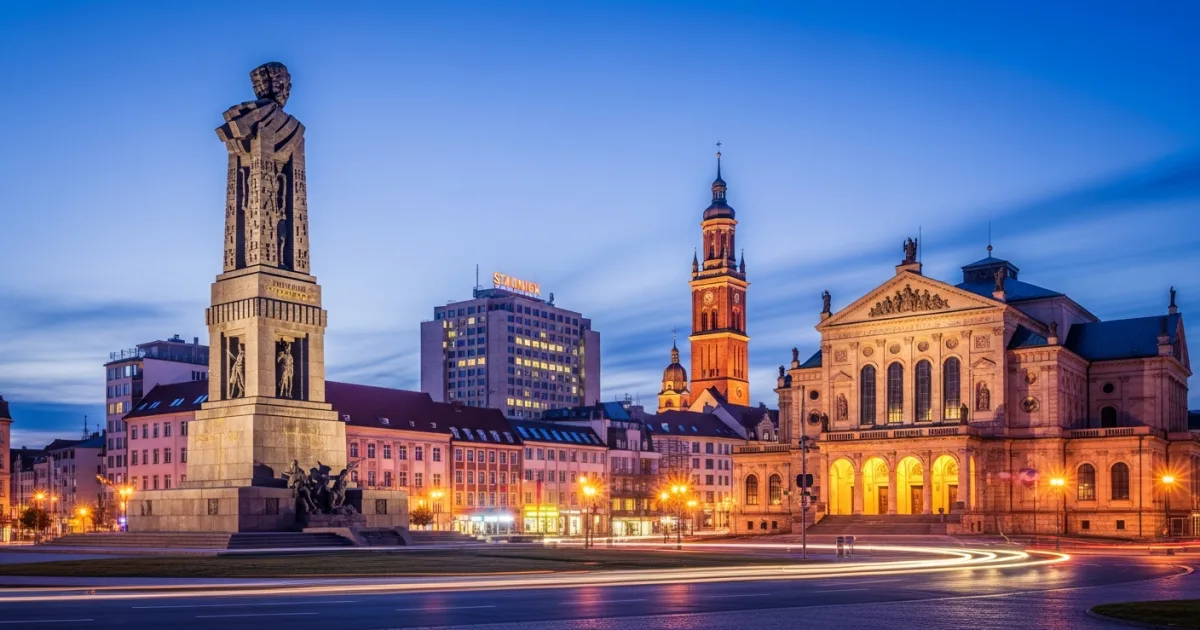
Chemnitz is a city of reinvention. Heavily damaged during World War II and subsequently rebuilt during the GDR era, the city presents a unique architectural timeline. You will find beautifully restored Gründerzeit neighborhoods like Kassberg, one of the largest contiguous Art Nouveau and Belle Époque districts in Europe, standing in contrast to socialist-era modernist structures and contemporary glass facades.
Art and history enthusiasts will be captivated by the Museum Gunzenhauser, which houses one of the most significant collections of modern art in Germany, and the Chemnitz Industrial Museum, which brings the city's manufacturing legacy to life. With its upcoming status as the 2025 European Capital of Culture, Chemnitz is rapidly evolving, offering a dynamic calendar of festivals, urban art projects, and community events that showcase its forward-thinking spirit.
Reasons to Visit
- European Capital of Culture 2025: Experience a city buzzing with new exhibitions, cultural festivals, and international events.
- Industrial Heritage: Discover the fascinating history of Saxon engineering and textiles at the Industriemuseum.
- Architectural Diversity: Marvel at the mix of Art Nouveau in the Kassberg district, Bauhaus designs like Villa Esche, and socialist modernism.
- World-Class Art: Visit the Museum Gunzenhauser for an incredible collection of Expressionist works, including pieces by Otto Dix.
- The Karl Marx Monument: See the iconic 7.1-meter-tall bronze bust, affectionately known by locals as 'Nischel' (head).
Things to Avoid
- Jaywalking: Waiting for the green pedestrian light (Ampelmännchen) is strictly observed in Germany; crossing on red can result in fines and disapproving looks.
- Assuming everyone prefers English: While many speak English, starting a conversation with a polite 'Sprechen Sie Englisch?' is highly appreciated.
- Forgetting to validate tickets: If you buy a paper ticket for the tram or bus, ensure you stamp it in the validation machine before your ride begins.
- Shopping on Sundays: Almost all shops, supermarkets, and pharmacies are closed on Sundays in Germany, so plan your purchases accordingly.
Local Transportation Tips
Chemnitz boasts a highly efficient public transportation network managed by CVAG, featuring an extensive system of trams and buses that connect all major attractions and neighborhoods. The central transfer point is the 'Zentralhaltestelle' in the city center. Tickets can be purchased at machines at major stops or via mobile apps. The city center itself is very pedestrian-friendly, and cycling is becoming increasingly popular with expanding bike lanes.
Travel Etiquette
- Punctuality: Germans value punctuality highly. Arrive on time for tours, reservations, and meetings.
- Greetings: A firm handshake is the standard greeting. When entering small shops or waiting rooms, it is polite to say 'Guten Tag' (Good day) and 'Auf Wiedersehen' (Goodbye) when leaving.
- Tipping: Service is included in the bill, but it is customary to round up or add 5-10% for good service. Hand the tip directly to the server when paying, rather than leaving it on the table.
- Recycling: Germany has a strict recycling system (Pfand). Do not throw away plastic bottles or cans with a recycling logo; return them to a supermarket machine for a deposit refund.
Recommended Age Group
Chemnitz offers a variety of attractions that cater to different age groups, making it a versatile destination for families, solo travelers, and older adults alike.
- Babies (0-2 years): Neutral. The city is stroller-friendly with plenty of parks, but there are limited specific attractions geared toward infants.
- Kids (3-12 years): Recommended. Children will enjoy the Parkeisenbahn (miniature park railway), the Kosmonautenzentrum, and the interactive exhibits at the smac (State Museum of Archaeology).
- Teens (13-19 years): Recommended. Teens can appreciate the urban street art, the fascinating industrial history, and the vibrant shopping areas in the city center.
- Adults (20-64 years): Recommended. Adults will love the rich cultural scene, world-class art galleries, historic architecture, and local Saxon breweries.
- Seniors (65+ years): Recommended. The city center is flat and highly walkable, public transport is accessible, and the museums and historical sites offer a relaxed pace for exploration.
Accessibility Level: Medium
- Most major museums, including the Industriemuseum and smac, are fully wheelchair accessible with ramps and elevators.
- The CVAG public transport system utilizes modern, low-floor trams and buses, making boarding easier for travelers with mobility issues.
- The city center and major pedestrian zones are paved and generally flat, facilitating easy navigation for wheelchair users and those with strollers.
- Accessible public restrooms are available in major shopping centers, museums, and near the central station.
Did You Know?
Did you know that from 1953 to 1990, Chemnitz was officially named 'Karl-Marx-Stadt' by the East German government? Despite the name change, Karl Marx himself never actually visited the city.
Cool Statistics
- The Karl Marx Monument in Chemnitz weighs approximately 40 tons and is the second-largest portrait bust in the world.
- The Kassberg district is home to over 480 protected historical buildings, making it one of Europe's largest Art Nouveau neighborhoods.
- Chemnitz has over 1,000 hectares of parks and green spaces, making it one of the greenest cities in Germany.
- The city's Industrial Museum is housed in a former foundry dating back to 1907.







Buy a compatible power adapter for your trip