Corfu, known in Greek as Kerkyra, occupies a strategic maritime location near the entrance of the Adriatic Sea just off the coast of Epirus and southern Albania. Unlike the whitewashed, arid landscapes typical of the Cyclades, Corfu is celebrated for its lush evergreen interior blanketed by millions of olive trees planted during Venetian rule. The island spans roughly 580 square kilometers, hosting diverse geographical regions that transition from rolling agricultural lowlands in the south to the dramatic 906-meter limestone peak of Mount Pantokrator in the north.
The cultural identity of Corfu is deeply tied to its historical position under the Republic of Venice from 1386 to 1797, followed by periods of French administration and a British protectorate prior to uniting with Greece in 1864. This legacy produced a distinctive architectural blend in Corfu Old Town, featuring tall neoclassical apartments with pastel facades, arched arcades along the Liston promenade modeled after the Rue de Rivoli in Paris, and formidable defensive forts. Beyond its urban core, Corfu's coastline features crystal-clear emerald bays, sea grottos, and tranquil fishing harbors that make it one of Greece's most versatile island destinations.
Reasons to Visit
- UNESCO-Listed Old Town: Stroll through pedestrianized medieval 'kantounia' alleys flanked by Venetian fortifications, neoclassical palaces, and the Spianada, one of Europe's largest public squares.
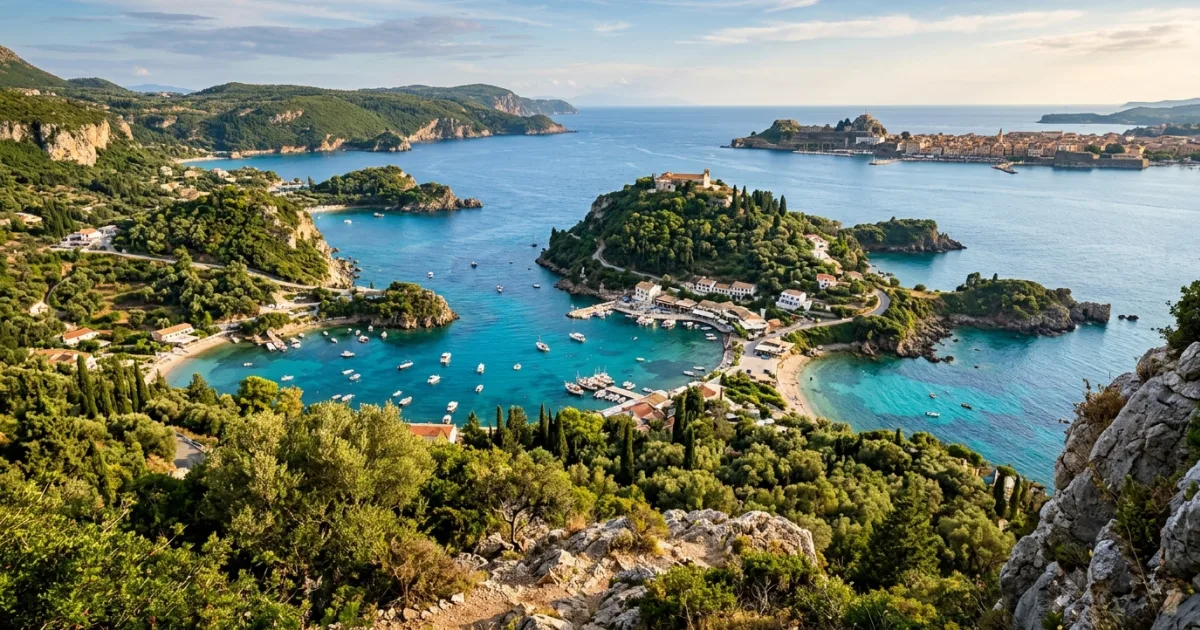
- World-Class Coastal Scenery: Discover spectacular natural landmarks such as the multi-coved bays of Paleokastritsa, the sculpted white sandstone formations of Canal d'Amour, and the cliffs of Cape Drastis.
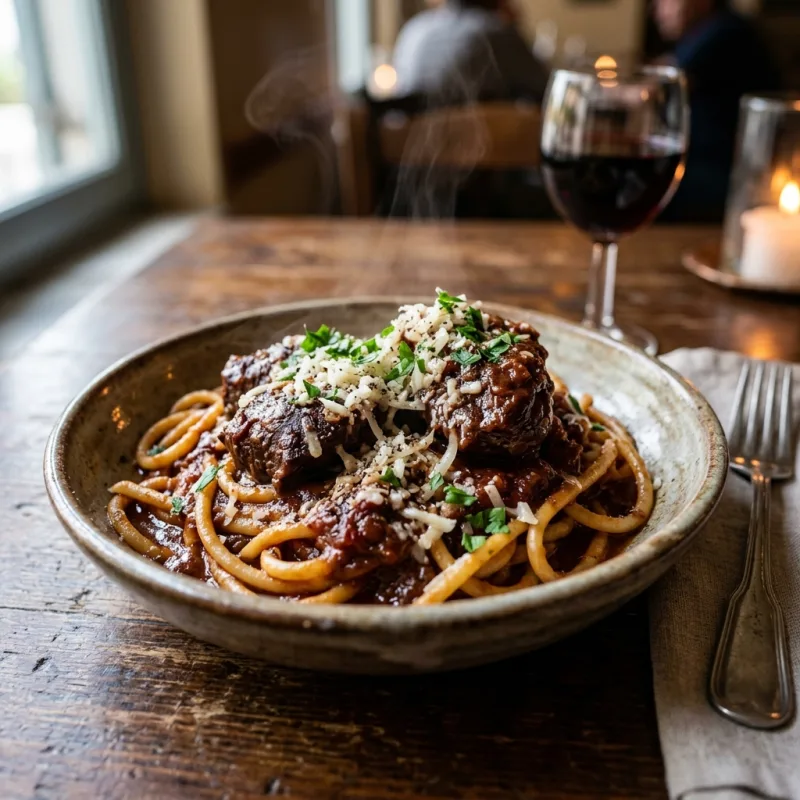
- Unique Venetian-Greek Gastronomy: Taste signature heritage recipes including Pastitsada, Sofrito (veal cooked in garlic, parsley, and white wine), and Bourdeto (spicy fish stew).
- Rich Royal and Literary History: Tour the Achilleion Palace built by Empress Elisabeth of Austria, Mon Repos estate (the birthplace of Prince Philip), and locations connected to Gerald and Lawrence Durrell.
- Vibrant Music Culture: Experience the island's renowned philharmonic marching bands, which perform throughout the year and form the centerpiece of Corfu's famous Easter celebrations.
Things to Avoid
- Avoid driving large SUVs or wide vans; rural roads are narrow, steeply winding, and parking in historical settlements is extremely restricted.
- Do not rely entirely on credit cards in remote mountain villages or on small boat rentals, where signal drops can disrupt card readers.
- Avoid booking beach resorts in Kavos unless you are specifically seeking an intense, youth-oriented nightlife strip.
- Do not flush toilet paper down the plumbing systems anywhere on the island, as vintage Greek sewer pipes clog easily; always use the provided bins.
- Avoid walking in smooth-soled flip-flops across Corfu Town's marble paving stones, particularly after rain, as they become exceptionally slick.
Local Transportation Tips
Local transportation in Corfu operates via two distinct networks: Blue Buses and Green Buses. Blue Buses (Astiko KTEL) serve Corfu Town and the immediate metropolitan suburbs, including routes to the airport, the Port of Corfu, Benitses, and the Achilleion Palace. Tickets cost between €1.20 and €1.70 when bought at kiosks and must be validated upon boarding.
Green Buses (Yperastiko KTEL) connect the central station in Corfu Town with regional villages and coastal resorts across the north and south, with fares typically between €2.50 and €5.00 depending on distance. For maximum flexibility when visiting secluded bays, hiring a small rental car, scooter, or quad bike is recommended. Licensed radio taxis are available, but rates to outlying villages are fixed or metered at higher regional tariffs, making pre-negotiated or booked transfers advisable for late-night journeys.
Travel Etiquette
- Dress respectfully when entering Greek Orthodox churches and monasteries; cover bare shoulders and knees, and remove hats indoors.
- Greet shopkeepers and taverna owners with a polite 'Kalimera' (good morning) or 'Kalispera' (good afternoon) when entering premises.
- Tipping is customary in restaurants; rounding up the bill or leaving 5% to 10% in cash for attentive service is appreciated by servers.
- Do not make the 'moutza' gesture (extending an open palm towards someone's face with fingers spread), as it is considered deeply offensive in Greek culture.
- Respect the traditional afternoon quiet hours (mesimeri), typically observed between 3:00 PM and 5:30 PM, particularly in residential and village areas.
Recommended Age Group
Corfu provides varied activities suitable for multi-generational travel, though certain terrain features require advance planning depending on traveler mobility.
- Babies (0-2 years): Neutral. Cobblestone alleyways and stepped streets in Corfu Town are difficult to navigate with traditional strollers, though calmer resort areas offer convenient family amenities.
- Kids (3-12 years): Recommended. Shallow, calm waters at bays like Agios Gordios, boat excursions to sea grottos, and expansive waterparks like Aqualand provide engaging outdoor entertainment.
- Teens (13-19 years): Recommended. Watersports, sea kayaking, scuba diving, and historical fortresses offer varied activities, balanced by safe, walkable evening town centers.
- Adults (20-64 years): Recommended. Ideal for cultural exploration, culinary discoveries, hiking scenic trails, and enjoying sophisticated seaside dining and historic boutique stays.
- Seniors (65+ years): Recommended. High-quality accommodations, rich museum collections, and relaxed coastal cruises suit mature travelers, though sturdy footwear is needed for uneven historical paving.
Accessibility Level: Medium
- Corfu Old Town features largely flat pedestrian zones, but historical cobblestones, high stone curbs, and occasional steps make wheelchair navigation challenging in side alleys.
- The Spianada and the Liston promenade offer wide, step-free access suitable for wheelchairs and mobility scooters.
- Several major organized beaches (including Dassia and Paleokastritsa) feature seasonal SEATRAC ramps providing unassisted sea access for wheelchair users.
- Public buses have limited low-floor wheelchair accessibility; booking specialized accessible private vans in advance is recommended for cross-island transport.
- Historical sites like the Old Fortress include ramp access to the lower grounds, but reaching the summit lighthouse involves steep, uneven stone pathways.
Did You Know?
Corfu is home to the only operational cricket pitch in Greece. The sport was introduced during the British protectorate between 1814 and 1864, and matches are still played today right on the grass of the Spianada square in the center of Corfu Town.
Cool Statistics
- Over 4 million olive trees cover Corfu, many dating back to Venetian decrees offering financial subsidies for planting them in the 16th century.
- The island features roughly 220 kilometers (136 miles) of continuous marked hiking path known as the Corfu Trail, traversing from south to north.
- Corfu Town's Old Fortress was originally engineered on a rocky promontory that was artificially separated from the town by a sea moat called the Contrafossa for military defense.






Buy a compatible power adapter for your trip