Kefalonia represents the grand scale of the Ionian Sea, defined by soaring elevations, limestone karsts, and verdant valleys. The island's geography is anchored by Mount Ainos, a protected national park rising to 1,628 meters that shelters the rare Abies cephalonica fir tree and wild horses. Surrounding this dramatic spine are hundreds of picturesque coves, subterranean caverns, and coastal plains that have nurtured thriving agricultural and maritime communities for millennia.
Its modern architecture tells a story of rebirth. While a massive earthquake in 1953 leveled many southern communities, villages like Fiskardo in the far north survived intact, preserving pastel Venetian waterfront mansions. In Argostoli, Lixouri, and Sami, rebuilding efforts preserved wide avenues, spacious public squares, and a welcoming, laid-back island atmosphere. Whether exploring underground lakes illuminated by midday sunbeams or savoring local Robola wine on a high-altitude terrace, Kefalonia delivers quintessential Greek island relaxation without overwhelming commercialization.
Reasons to Visit
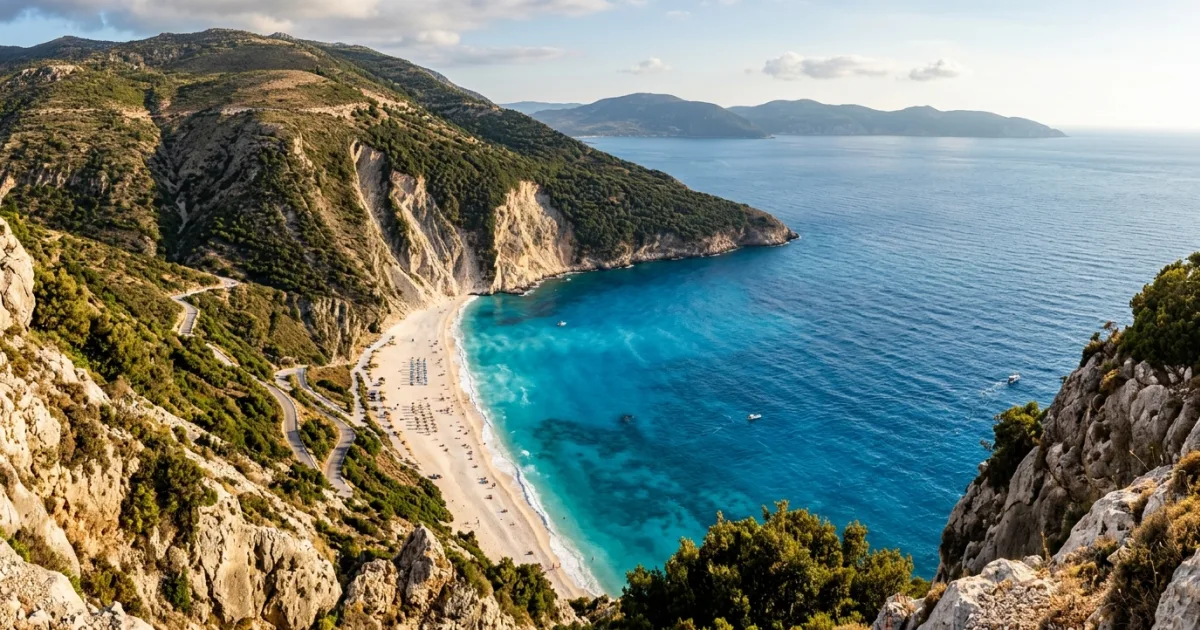
- Spectacular world-class beaches ranging from the iconic white cliffs of Myrtos to the reddish sands of Xi Beach.
- Fascinating geological sites including the sunken cavern lake of Melissani and the stalactite-filled Drogarati Cave.
- Picturesque coastal villages like pastel-hued Fiskardo and the dramatic isthmus settlement of Assos.
- Unique indigenous wine culture highlighted by dry, crisp, mineral-forward PDO Robola whites.
- Rich marine wildlife, offering frequent sightings of wild loggerhead turtles swimming along Argostoli harbor.
Things to Avoid
- Avoid attempting to rely exclusively on public transit to visit remote beaches and historical sights.
- Avoid swimming past designated zones at Myrtos Beach when waves or undertow flags indicate dangerous currents.
- Avoid driving aggressively on narrow, winding mountain roads, which frequently feature falling stones or crossing goats.
- Avoid booking accommodations without checking distances, as crossing from the Paliki peninsula to northern Fiskardo takes well over an hour.
Local Transportation Tips
Renting an automobile or scooter is strongly recommended to explore Kefalonia efficiently. KTEL public buses connect major hubs like Argostoli, Sami, and Poros, but routes to secluded beaches and scenic villages are infrequent. A regular passenger and vehicle ferry operates across the gulf between Argostoli and Lixouri, departing roughly every 30 to 60 minutes and cutting driving time substantially.
Travel Etiquette
- Dress modestly with covered shoulders and knees when visiting monasteries and historic churches like the Monastery of Agios Gerasimos.
- A tip of 5% to 10% in cash is standard practice and appreciated in tavernas and cafes for attentive service.
- Respect midday quiet hours (Messimeri), generally observed between 3:00 PM and 5:30 PM, particularly in small residential villages.
Recommended Age Group
Kefalonia provides diverse vacation activities suitable for nearly all generations, especially those who appreciate coastal road trips and nature.
- Babies (0-2 years): Recommended. Calm shallow beaches like Makris Gialos and child-friendly seaside promenades in Argostoli make travel with infants straightforward.
- Kids (3-12 years): Recommended. Children will love viewing harbor sea turtles, riding the small rowboats inside Melissani Cave, and swimming at gently sloping sandy beaches.
- Teens (13-19 years): Recommended. Outstanding opportunities for sea kayaking, boat rentals, cliff photography, and water sports keep teenagers engaged.
- Adults (20-64 years): Recommended. Perfect balance of scenic driving, romantic dining, wine tastings, hiking trails, and relaxing coastal beach bars.
- Seniors (65+ years): Recommended. While some beaches have steep steps, harbor towns, scenic lookouts, and cultural monasteries offer accessible and comfortable leisure.
Accessibility Level: Medium
- Certain major beaches like Makris Gialos offer seasonal SeaTrac mobility ramps allowing independent ocean access for wheelchair users.
- Harbor towns such as Argostoli and Lixouri have level, paved waterfront promenades with barrier-free sidewalk access.
- Natural cave sites like Drogarati feature long staircases and are not wheelchair accessible, whereas Melissani Cave has a ramped access tunnel leading to the boat launch.
Did You Know?
Kefalonia features a curious geological phenomenon known as Katavothres near Argostoli, where seawater flows naturally into underground sinkholes on one side of the island, travels completely beneath Mount Ainos, and re-emerges across the island at Melissani Lake and Karavomylos two weeks later.
Cool Statistics
- Mount Ainos peaks at 1,628 meters (5,341 feet), making Kefalonia the tallest island in the Ionian archipelago.
- Melissani Cave Lake sits roughly 20 meters below ground surface level and has a depth reaching up to 30 meters.
- Kefalonia covers approximately 773 square kilometers, making it the sixth-largest island in Greece.






Buy a compatible power adapter for your trip